AI in Investment Banking: What Actually Works in Live Markets

Explore how AI in investment banking powers real-time trading, voice intelligence, and agentic workflows, helping teams execute faster while staying compliant.
Investment banking teams are under constant pressure to move faster without compromising accuracy, whether that means responding to clients in real time, preparing deal materials under tight timelines, or managing risk signals across fragmented systems. Conversations around AI in investment banking have shifted from experimentation to execution because teams need infrastructure that keeps pace with live markets.
Discover the explosive growth of AI in BFSI, projected to reach $119 Billion by 2033, and it becomes clear why firms are prioritizing technologies that reduce operational drag while keeping workflows compliant.
Today, AI in investment banking is less about flashy demos and more about practical gains across voice communication, analysis, and collaboration between desks. CTOs, product leaders, and operations teams are looking for AI that fits naturally into existing trading, advisory, and client interaction environments without adding latency or complexity.
In this guide, we break down where AI is driving measurable results, how modern architectures support real-time operations, and what forward-looking teams are building next.
Key Takeaways
Execution-Focused AI Adoption: AI in investment banking now powers origination signals, compliance monitoring, and trading intelligence, shifting workflows toward continuous machine-assisted execution rather than periodic analyst-driven processes.
Lifecycle-Wide ROI Visibility: Measurable gains appear across front, middle, and back offices through faster deal sourcing, proactive risk surveillance, and automated operational pipelines that compress execution timelines.
Voice-Native Infrastructure Rising: Streaming STT, incremental TTS, and real-time multimodal reasoning are turning voice into a primary interface for research access, compliance checks, and advisory collaboration.
Agentic Systems Redefining Operations: Multi-agent orchestration automates document flows, contract analysis, and workflow routing, reducing manual coordination while maintaining auditability across complex investment banking processes.
Small-Model Architecture Advantage: Specialized models like Pulse STT, Lightning TTS, Hydra, and Electron allow low-latency, on-prem deployments with strong governance, making them well-suited for regulated financial environments.
What AI in Investment Banking Means Today
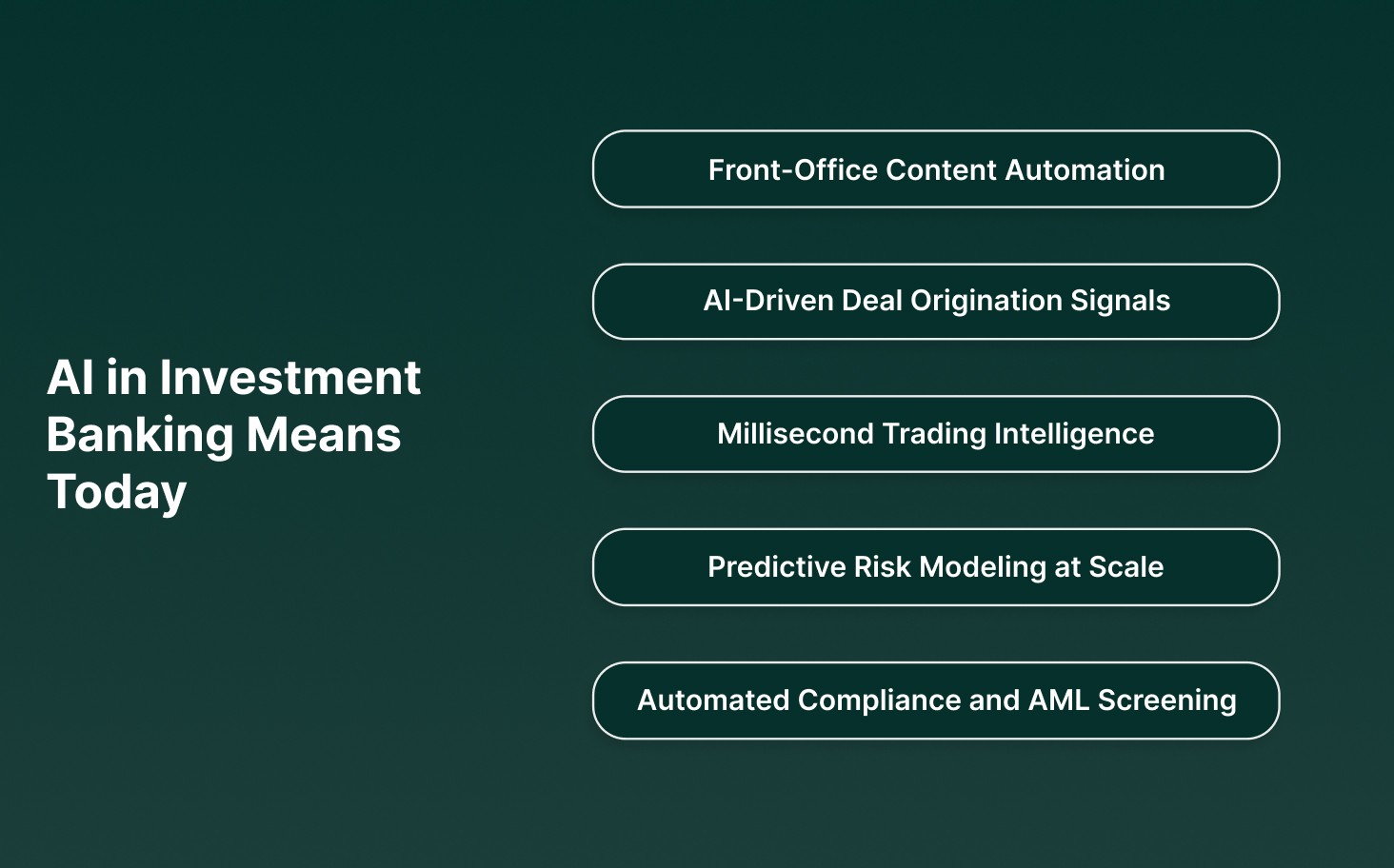
AI in investment banking has shifted from experimentation to core execution infrastructure. Models now drive front-office workflows, risk surveillance, and operational throughput rather than acting as side tools for analysts.
Core capabilities defining modern AI deployment in investment banking workflows include:
Front-Office Content Automation: LLM pipelines generate pitchbooks, CIM drafts, and due diligence summaries using structured deal data and internal templates, reducing manual modeling cycles.
AI-Driven Deal Origination Signals: NLP engines parse filings, earnings transcripts, and sector news to surface M&A (Mergers and Acquisitions) triggers such as leadership shifts, capital raises, or valuation anomalies.
Millisecond Trading Intelligence: Reinforcement learning models optimize order routing by monitoring liquidity depth, volatility spikes, and microstructure patterns in real time.
Predictive Risk Modeling at Scale: Ensemble models simulate macro stress scenarios, flagging VaR deviations and portfolio concentration risks before regulatory thresholds are breached.
Automated Compliance and AML Screening: Graph ML and anomaly detection track transaction networks, reducing false positives while maintaining audit trails aligned with regulatory expectations.
AI adoption now centers on execution speed and signal accuracy, shifting investment banking toward continuous, machine-assisted workflows rather than periodic manual analysis cycles.
See how leading financial teams forecast risk, behavior, and outcomes with 9 Types of Predictive Analytics in Banking Used by Top Teams
Where AI Delivers Measurable Impact Across the Investment Banking Lifecycle
AI creates measurable impact by embedding machine intelligence into origination, risk, and operations workflows, converting latency, manual review cycles, and fragmented data into quantifiable performance gains.
Front-Office Execution: Origination, Research, And Trading Intelligence
AI reduces front-office friction by automating data synthesis, accelerating signal discovery, and allowing traders and bankers to act on structured insights rather than manually compiled information flows.
Performance indicators that investment banks monitor to quantify front-office AI execution impact include:
Deal Signal Precision: Entity-resolution models correlate filings, capital flows, and insider transactions to rank acquisition probability scores, helping bankers prioritize outreach using probabilistic lead scoring models.
Research Acceleration: Retrieval-augmented LLM pipelines synthesize earnings transcripts, analyst notes, and macro datasets into structured thesis drafts without manual spreadsheet stitching or fragmented research workflows.
Execution Optimization: Reinforcement learning engines dynamically adjust execution algorithms based on order book imbalance, volatility regimes, and liquidity fragmentation across venues to minimize market impact during trades.
What it means for business: Front-office teams shift from document production toward strategic advisory, allowing higher deal throughput per banker while maintaining institutional research depth and execution discipline across markets.
Metrics to measure: Track lead-to-mandate conversion rates, execution slippage reduction percentages, research cycle duration, analyst hours saved per deal, and incremental revenue generated from faster market response times.
Middle-Office Intelligence: Risk Surveillance And Regulatory Control
AI strengthens governance by continuously scanning transactions, communications, and portfolio exposures, allowing compliance teams to detect emerging risks earlier without scaling headcount or increasing manual monitoring workloads.
Risk and compliance performance indicators reflecting AI-driven middle-office transformation include:
Real-Time Exposure Monitoring: Graph-based risk engines model counterparty relationships across portfolios, flagging hidden concentration risks before exceeding internal risk appetite thresholds or triggering regulatory scrutiny.
Behavioral Anomaly Detection: Sequence models analyze trader activity patterns, identifying deviations from historical execution behavior that could indicate compliance breaches or unauthorized trading strategies.
Regulatory Document Intelligence: NLP systems map regulatory clauses to internal workflows, auto-validating disclosures, and flagging inconsistencies in prospectuses or financial statements prior to submission deadlines.
What it means for business: Compliance transitions from reactive auditing toward continuous surveillance, lowering regulatory exposure while allowing faster approvals for deals, underwriting processes, and cross-border transactions.
Metrics to measure: Measure reduction in manual compliance reviews, false-positive alert rates, time-to-clear regulatory filings, audit trail completeness, and anomaly detection precision compared with legacy rule-based monitoring systems.
Back-Office Automation: Operational Throughput And Data Infrastructure
AI transforms operational layers by orchestrating document pipelines, identity verification, and reconciliation processes, allowing banks to scale transaction volume without proportionally increasing operational headcount or processing delays.
Operational performance signals that demonstrate AI-driven back-office efficiency gains include:
Multimodal Document Processing: Vision-language models extract structured financial data from scanned filings, contracts, and onboarding forms, reducing reconciliation errors across settlement and reporting workflows.
Identity and KYC Automation: Biometric verification models validate client identity using video and document checks, allowing faster onboarding while maintaining regulatory compliance across jurisdictions.
Workflow Orchestration Agents: Autonomous agents coordinate approvals, update CRM records, and synchronize downstream systems, minimizing manual handoffs between operations, legal, and finance teams.
What it means for business: Operations teams reduce processing bottlenecks and settlement delays, allowing investment banks to scale deal volume while preserving auditability and operational resilience across complex transaction lifecycles.
Metrics to measure: Monitor onboarding cycle time, reconciliation error rates, manual intervention frequency, processing cost per transaction, and end-to-end workflow completion time across automated operational pipelines.
Across the investment banking lifecycle, AI delivers measurable gains by compressing execution timelines, strengthening regulatory oversight, and scaling operational throughput without sacrificing data accuracy or institutional governance.
Run real-time banking conversations with ultra-low latency speech, full-duplex voice interaction, and on-prem control using Smallest AI’s Lightning TTS, Pulse STT, and Hydra voice infrastructure.
Real-Time Voice AI Architecture for Investment Banking Systems
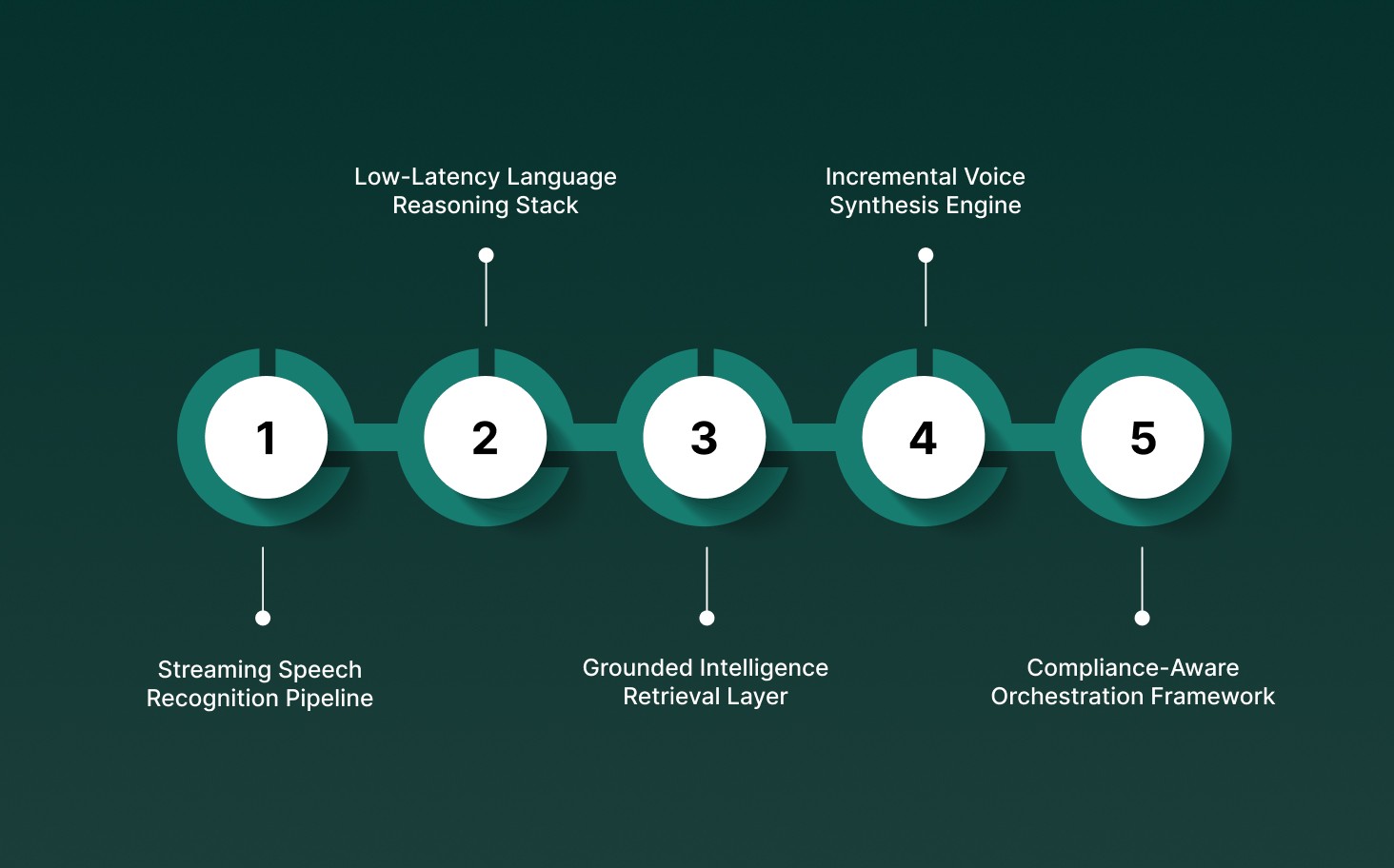
Real-time voice AI in investment banking combines streaming ASR, low-latency language reasoning, and responsive synthesis layers to allow compliance-ready conversations without breaking trading workflows or client call momentum.
Core architectural components banks deploy to maintain sub-second conversational responsiveness across voice-driven workflows include:
Streaming Speech Recognition Pipeline: Conformer-CTC and state-space ASR models transcribe audio continuously, allowing live transcript feeds during client calls instead of delayed batch processing workflows.
Low-Latency Language Reasoning Stack: Quantized LLM inference with speculative decoding reduces token generation delays, allowing voice copilots to respond while traders or bankers are still speaking.
Grounded Intelligence Retrieval Layer: RAG systems connect live transcripts with internal research notes, compliance policies, and deal memos to generate context-aware responses aligned with institutional data sources.
Incremental Voice Synthesis Engine: Sentence-level streaming TTS generates audio in fragments, maintaining conversational flow and avoiding unnatural pauses that disrupt advisory discussions or compliance monitoring sessions.
Compliance-Aware Orchestration Framework: Semantic turn detection, encrypted call archiving, and PII redaction pipelines maintain regulatory readiness under frameworks like MiFID II while preserving conversational speed.
Voice-native architectures shift investment banking interfaces from dashboards to dialogue, allowing bankers to access analytics, compliance checks, and research insights through real-time spoken interaction.
Discover how real-time speech intelligence fits into modern banking workflows in Voice AI for Banks & Financial Services: Use Cases, Architecture & Best Practices
Agentic AI Workflows in Investment Banking Operations
Agentic AI workflows shift banking operations from manual coordination to autonomous execution, where specialized agents handle document flows, validations, compliance checks, and task routing across systems in real time.
Operational workflows where agentic systems deliver structured execution across investment banking environments include:
Autonomous Loan Lifecycle Management: Agents orchestrate borrower outreach, missing-document detection, underwriting preparation, and escalation logic through CRM integrations, reducing operational bottlenecks during high-volume lending cycles.
Clause Extraction And Contract Intelligence: Legal-review agents parse commercial agreements using NLP pipelines, tagging covenant breaches, repayment triggers, and risk clauses while pushing structured outputs into risk management dashboards.
Transaction Validation Pipelines: Payment agents cross-verify SWIFT messages, settlement data, and reconciliation logs against policy engines, flagging anomalies before funds move through clearing or custody workflows.
Meeting Intelligence And Workflow Sync: Collaboration agents convert internal call transcripts into CRM updates, deal pipeline actions, and compliance audit notes, minimizing manual follow-ups across distributed advisory teams.
Multi-Agent Decision Routing: Orchestration layers route tasks between intake agents, pricing agents, and compliance agents based on semantic context, reducing handoff friction across origination and operational teams.
Agentic workflows redefine operational execution in investment banking by turning fragmented processes into coordinated AI-driven pipelines, freeing bankers to focus on strategic negotiation, client relationships, and complex deal structuring.
Responsible AI and Regulatory Alignment in High-Risk Financial Environments
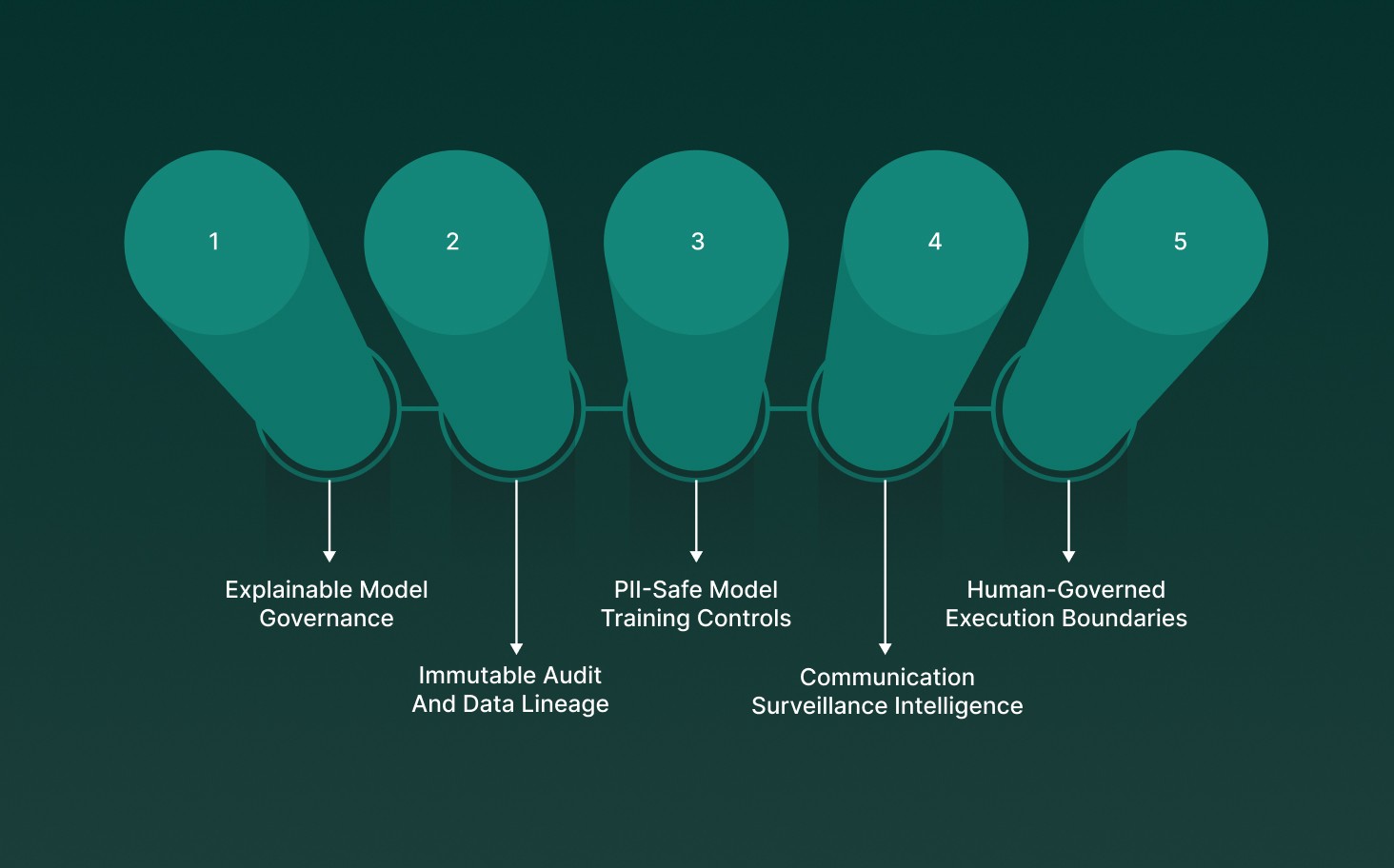
Responsible AI in investment banking focuses on auditability, governance, and controlled automation so models operate within regulatory boundaries while supporting high-stakes decision workflows across trading, advisory, and compliance teams.
Core governance practices that investment banks apply to maintain regulatory alignment while deploying AI across sensitive financial processes include:
Explainable Model Governance: Feature-attribution methods like SHAP scoring create traceable risk explanations, allowing compliance teams to validate pricing decisions or anomaly alerts during regulatory audits without reverse engineering models.
Immutable Audit And Data Lineage: Blockchain-backed logs or tamper-proof event streams record prompts, model outputs, and reviewer actions, making sure that the investigators can reconstruct decision paths across multi-agent financial workflows.
PII-Safe Model Training Controls: Token-level redaction pipelines and differential privacy layers prevent client identifiers from leaking into model outputs, reducing exposure under GDPR, CCPA, and cross-border data transfer rules.
Communication Surveillance Intelligence: Multimodal monitoring models analyze voice calls and video meetings for conduct-risk signals, tagging conversations with contextual risk scores aligned to MiFID II supervisory requirements.
Human-Governed Execution Boundaries: Approval gates route AI-generated actions through compliance officers or risk analysts before execution, preventing unauthorized trade recommendations or automated regulatory disclosures without oversight.
Responsible AI frameworks anchor trust in high-risk financial environments by combining technical guardrails with operational governance, allowing scalable automation without compromising regulatory integrity or client confidentiality.
Implementation Blueprint for AI in Investment Banking Teams
Deploying AI across investment banking teams demands sequencing from readiness to workforce adoption, combining measurable pilots, compliant architecture, and real-time voice intelligence for revenue-linked outcomes.
Execution stages investment banks follow when moving from experimentation toward production-grade AI systems across advisory, trading, and operations workflows include:
Workflow Prioritization Mapping: Score deal lifecycle tasks using latency sensitivity, regulatory exposure, and revenue impact, then rank pilots such as earnings-call intelligence or pre-trade risk summarization.
Voice-First Infrastructure Planning: Introduce streaming STT pipelines with sub-300ms transcription to capture live banker calls, feeding contextual signals into CRM scoring and compliance tagging engines.
Model Routing And Cost Control: Deploy task-based routing where lightweight models handle transcript classification while larger reasoning models activate only for valuation or advisory synthesis workloads.
Operational Guardrails And Approval Chains: Configure policy engines that pause AI outputs, triggering pricing changes or risk flags until human supervisors validate reasoning paths through structured audit workflows.
Team Enablement and Prompt Engineering: Train analysts to design structured prompts referencing internal datasets, allowing faster iteration cycles without exposing sensitive deal information outside secure environments.
AI rollout succeeds when architecture, governance, and human workflows advance together, turning isolated tools into repeatable operating models that scale across mandates without slowing execution speed.
See how modern automation stacks evolve from RPA to real-time AI orchestration in Digital Transformation in Banking: Benefits, Tools & Use Cases
Why Smallest AI’s Small-Model Approach Fits the Future of Investment Banking AI
Investment banking workflows demand millisecond responsiveness, strict data control, and specialized intelligence. Smallest AI’s small-model architecture aligns with these constraints by prioritizing latency, modularity, and domain-specific execution.
Strategic advantages of Smallest AI’s small-model ecosystem for real-time investment banking environments span voice intelligence, multimodal reasoning, and infrastructure efficiency:
Low-Latency Voice Intelligence: Pulse STT achieves sub-70ms time-to-first-transcript, allowing traders and advisors to capture live deal conversations without blocking execution workflows or delaying downstream analytics pipelines.
Real-Time Multimodal Decisioning: Hydra’s full-duplex speech model processes voice and text simultaneously, allowing bankers to interrupt, clarify, and refine prompts during active client calls without waiting for turn completion.
Context-Aware Speech Output: Lightning TTS generates emotionally adaptive voice responses across 30+ languages, supporting multilingual client engagement and internal advisor copilots that maintain conversational realism during high-pressure discussions.
Agentic Workflow Orchestration: Atoms allows modular agent creation with voice, chat, and email channels unified, allowing IB teams to automate outreach, compliance logging, and meeting follow-ups without building separate orchestration layers.
Small-model architectures reduce inference overhead while improving control and responsiveness. For investment banking teams balancing speed, governance, and scale, this approach aligns tightly with how real-world AI systems must operate.
Final Thoughts!
Investment banking is entering a phase where AI adoption is defined by precision and speed rather than experimentation. The teams gaining traction are the ones building systems that react instantly to voice, data, and market context while staying aligned with regulatory guardrails. Success will come from combining human judgment with AI systems that feel native to daily workflows instead of being layered on top. The real advantage lies in how intelligently banks design the infrastructure that supports decision flow.
That is where Smallest AI comes in, bringing small, specialized models, real-time speech intelligence, and full-duplex multimodal architecture built for production-grade financial environments. From ultra-low latency STT with Pulse to hyper-realistic Lightning TTS and asynchronous Hydra workflows, the focus stays on performance that scales without complexity.
If your team is planning the next phase of AI in investment banking, explore how Smallest AI helps build faster, smarter, and voice-first systems designed for modern trading and advisory operations. Get in touch with us!
Frequently asked questions
How does investment banking AI handle low-latency decision workflows during live market events?
What makes generative AI investment banking use cases different from traditional NLP automation?
Can AI for investment banking operate fully on-premise to meet regulatory constraints?
How does AI in finance and investment banking manage multilingual client communications without losing accuracy?
Why are banks shifting from large monolithic models toward specialized AI in investment banking architectures?