Top Alternatives to ElevenLabs in 2026

Top ElevenLabs alternatives ranked for enterprise use in 2026. Latency, voice quality, data ownership, and pricing, the honest breakdown with a full comparison.
Introduction
ElevenLabs built its reputation on one thing: expressive, cinematic voice output. For content creators making audiobooks and podcasts, it's excellent. But for enterprises building real-time voice agents, contact centers, and production-grade speech products, ElevenLabs increasingly shows its limits — latency that degrades under concurrent load, voice cloning locked behind paid tiers, a 2025 Terms of Service update that claims broad rights over user voice data, and monthly character quotas that make cost planning a guessing game.
If you're reading this, you've likely hit one of those walls. This guide cuts through the noise. We evaluated 11 ElevenLabs alternatives across the criteria that matter for enterprise use: production latency, voice quality, cloning capability, language support, pricing transparency, and compliance.
Here's the honest breakdown.
Quick Comparison Table
Tool | Best For | Latency | Voice Cloning | Languages | Starting Price |
smallest.ai | Real-time agents, enterprise TTS | <200ms | Instant, free tier | 16 | Free |
Resemble AI | Brand voice, enterprise | ~300ms | Yes (paid) | 8 | $0.006/min |
PlayHT | Content creators, multilingual | ~350ms | Yes (paid) | 142 | $31.20/mo |
Murf AI | Corporate narration | ~400ms | Yes (paid) | 20+ | $19/mo |
WellSaid Labs | Enterprise brand voice | ~400ms | Limited | 1 (EN) | Custom |
Cartesia | Low-latency agents | ~90ms | Yes | 15 | $4/mo |
OpenAI TTS | Developers, OpenAI stack | ~350ms | No | 6 | $15/1M chars |
Google Cloud TTS | Scale, enterprise, multilingual | ~300ms | Limited | 30+ | Pay-as-you-go |
Azure TTS | Microsoft stack | ~300ms | Yes | 140+ | Pay-as-you-go |
Deepgram Aura | Contact center, ASR stack | ~250ms | No | 10 | $0.0150/1K chars |
AssemblyAI | Transcription-first teams | N/A (STT) | No | 99+ | $0.65/hr audio |
1. smallest.ai — Best ElevenLabs Alternative for Enterprise Production
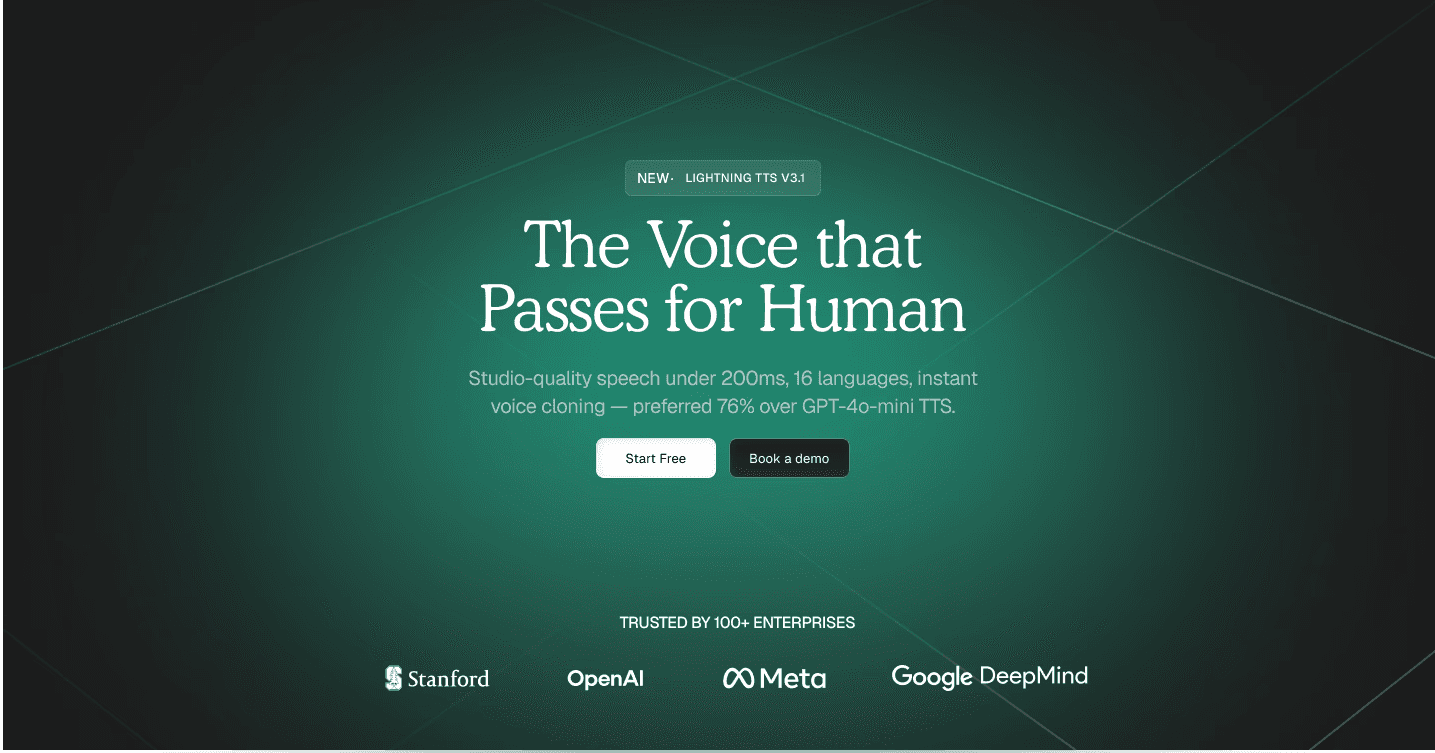
The verdict: If you're building real-time voice agents, contact centers, or any product where latency and reliability matter more than theatrical delivery — smallest.ai is the strongest ElevenLabs alternative available.
smallest.ai's Lightning TTS v3.1 was built from the ground up for production environments, not creative content. The differences show up where it matters: sub-200ms latency that holds under concurrent load (not just in lab conditions), instant voice cloning from 10 seconds of audio on the free tier, and a data ownership model that doesn't claim perpetual rights over your voice.
In independent blind preference tests, Lightning was preferred 76% of the time over GPT-4o mini TTS. At 44.1kHz audio quality, it matches ElevenLabs on output fidelity — but outperforms it substantially on production reliability.
Where it wins over ElevenLabs:
Production latency holds under concurrent load — ElevenLabs' quoted 75ms degrades significantly in real-world traffic
Voice cloning available on the free tier — ElevenLabs gates this behind paid plans
No perpetual data licensing claims — ElevenLabs' 2025 ToS update raised serious concerns for enterprise legal teams
HIPAA-ready and SOC 2 Type II certified — critical for healthcare and financial services deployments
Where ElevenLabs still has an edge:
Larger pre-built voice library (400K+ vs. smaller catalogue)
Broader language support (29 vs. 16)
Better for purely creative/narration use cases where latency is less critical
Pricing: Free tier with real voice cloning output. Usage-based paid plans — no expiring character quotas. Best for: Voice agents, contact centers, healthcare, financial services, high-volume enterprise TTS.
2. Resemble AI- Best for Custom Brand Voice
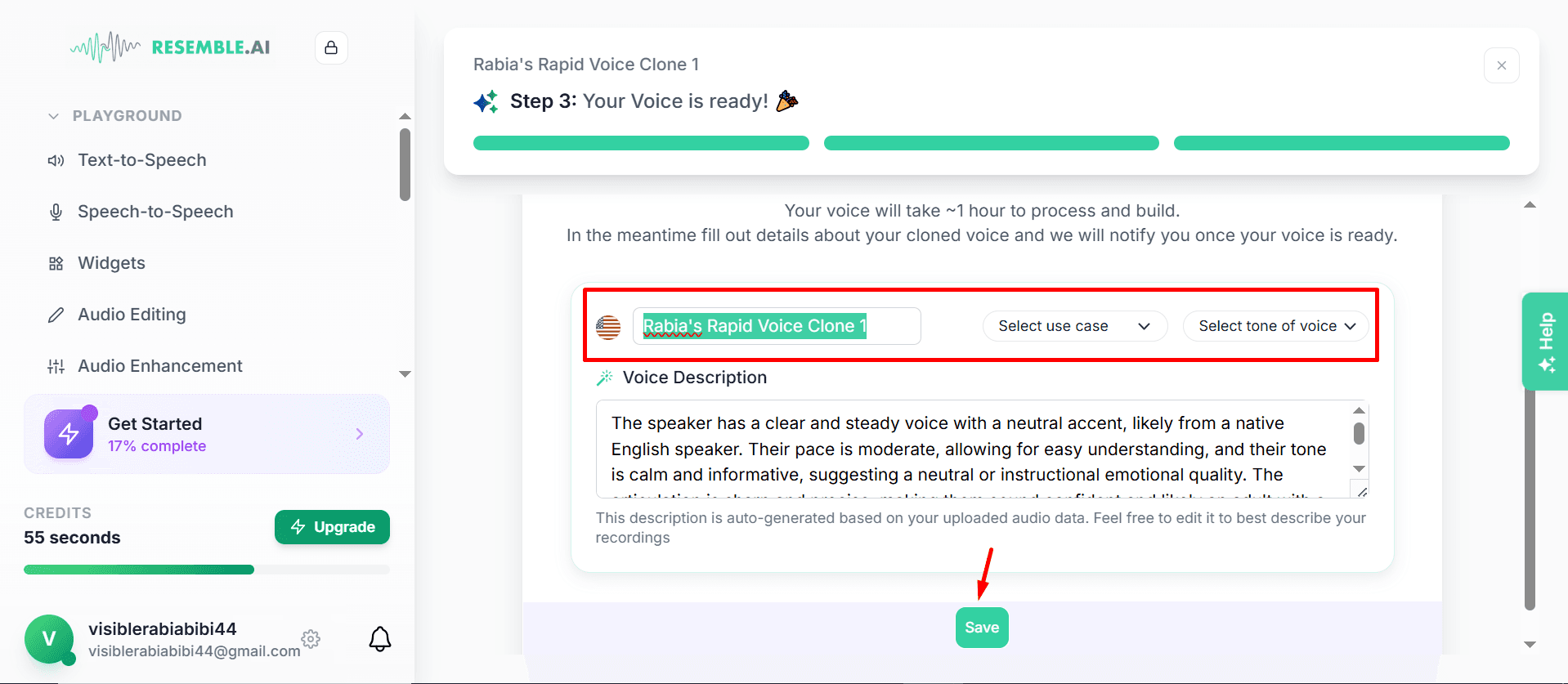
Resemble AI is a mature enterprise voice platform with a strong reputation for high-fidelity brand voice cloning. It offers two cloning tiers — Rapid (minutes of audio) and Pro (higher accuracy, more data) — and a pay-as-you-go billing model that suits variable usage patterns.
The API is well-documented and enterprise-grade security controls (SOC 2) make it a credible option for regulated industries. The main limitations for enterprise teams: audio quality caps at 22kHz (below ElevenLabs and smallest.ai's 44.1kHz), latency runs around 300ms, and the per-second billing model can become expensive at high volume.
Pros: Mature API, strong cloning fidelity, good enterprise security, transparent per-second pricing Cons: 22kHz audio quality, per-second billing unpredictable at scale, fewer languages than competitors
Pricing: Pay-as-you-go from ~$0.006/min. Pro cloning requires enterprise contact. Best for: Teams that need high-fidelity brand voice cloning with flexible, usage-based pricing.
3. PlayHT-Best for Multilingual Content at Scale

PlayHT's standout feature is cross-language voice cloning — clone a voice in English and deploy it in 140+ other languages. For global content teams producing localised audio at scale, this is genuinely useful. Enterprise plans also support on-premise deployment for data-sensitive organisations.
For real-time applications, PlayHT is less compelling. Latency runs around 350ms, audio quality is 24kHz, and pricing gets complex at high volume. The free plan is restrictive, and voice cloning isn't included until higher tiers.
Pros: 142 languages, cross-language cloning, on-prem option for enterprise Cons: 24kHz audio quality, latency not optimised for real-time, complex tiered pricing
Pricing: From $31.20/month. Enterprise pricing on request. Best for: Global content teams needing multilingual voice at scale.
4. Murf AI — Best for Corporate Narration Teams
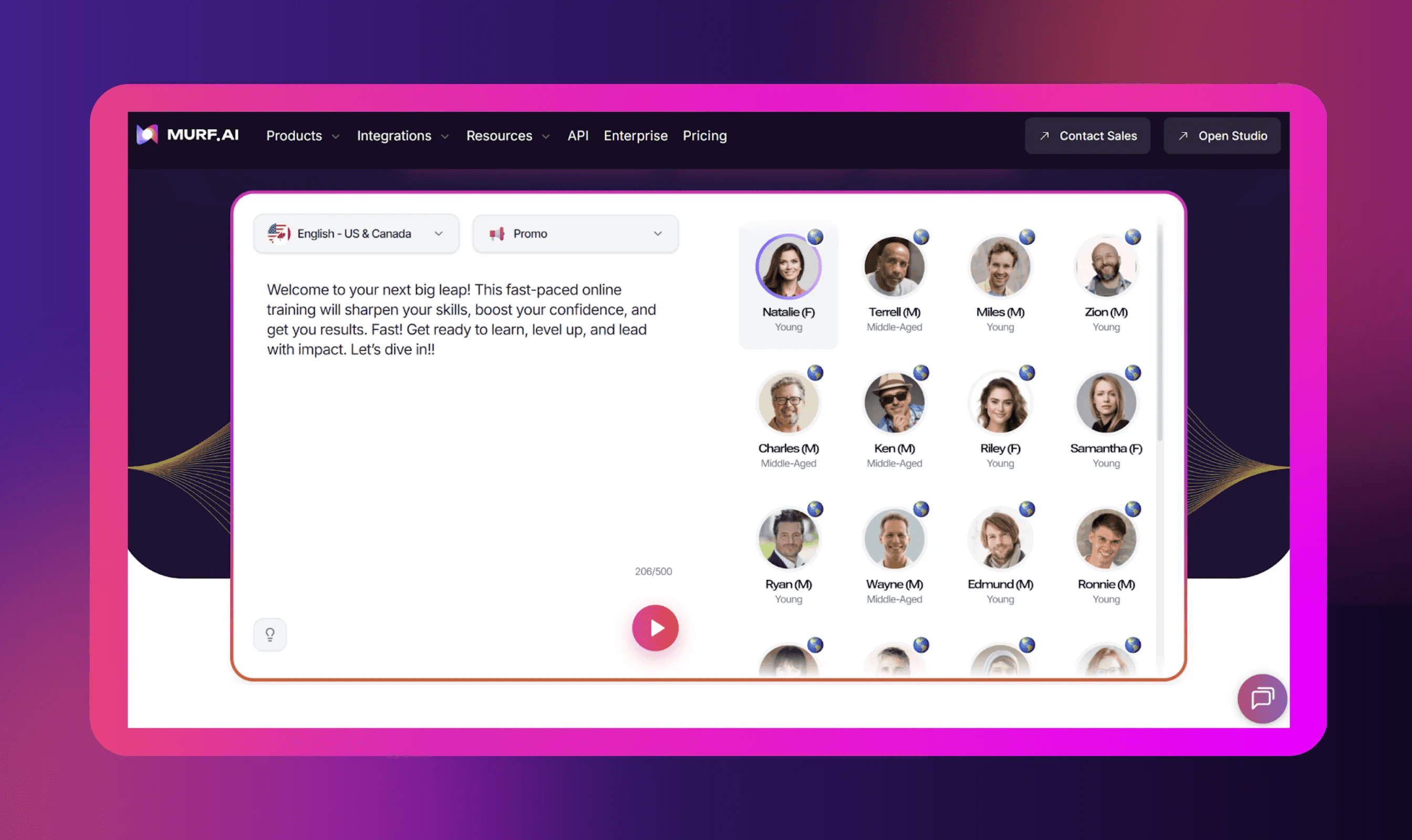
Murf is a polished, non-technical voice generation platform — primarily aimed at L&D, marketing, and corporate communications teams who need professional voiceovers without a recording studio. The interface is clean, the voice quality is solid, and it offers studio-grade features like pitch control, emphasis, and multi-speaker scripts.
For developers or technical teams, Murf is less suitable. The API is limited compared to developer-first platforms, and latency and concurrency aren't priorities in its architecture. Voice cloning requires a paid plan and significant recording time.
Pros: Clean UX, strong for non-technical teams, good corporate voice library, 20+ languages Cons: Limited API capabilities, not built for real-time, higher cost for API access
Pricing: From $19/month. API access on higher tiers. Best for: L&D, corporate communications, and marketing teams producing narration content.
5. WellSaid Labs — Best for Regulated Enterprise Brand Voice
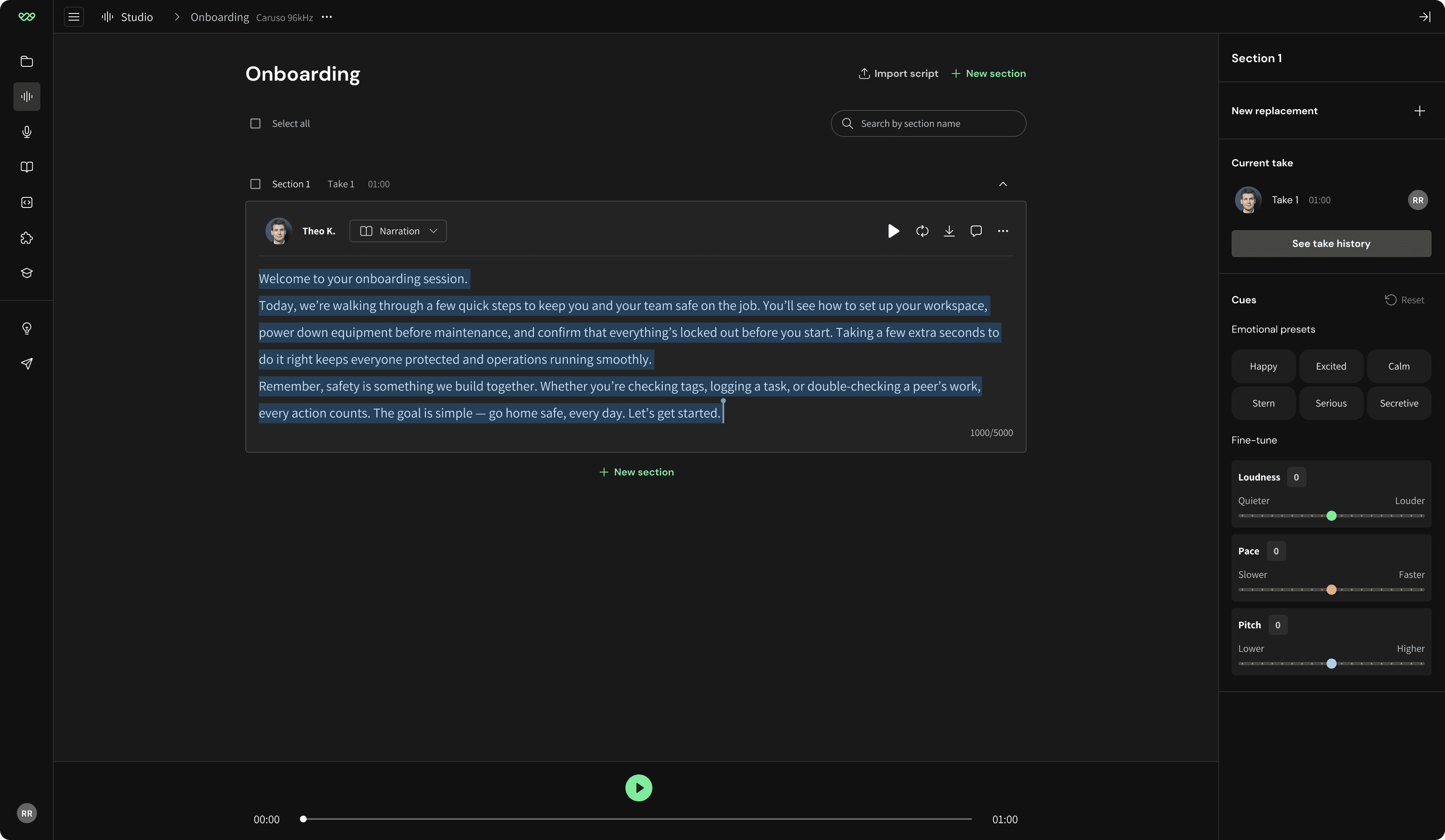
WellSaid Labs focuses exclusively on enterprise customers who need brand-consistent, compliance-ready voice generation. Strict content moderation, SSO, security reviews, and custom contracts make it one of the few platforms that large financial and healthcare organisations can deploy without a separate security review process.
The tradeoffs are significant: English-only, no real voice cloning in the traditional sense, and pricing is entirely custom (typically enterprise-contract level). For global or developer-focused teams, it's too restrictive. For a large regulated enterprise that needs a consistent branded voice in English and nothing else, it's a strong fit.
Pros: Enterprise-grade security, SOC 2, strict content controls, reliable brand voice consistency Cons: English only, no API self-serve, custom pricing only, no real-time optimisation
Pricing: Custom enterprise contracts only. Best for: Large regulated enterprises (finance, insurance, pharma) needing English brand voice.
6. Cartesia — Best Low-Latency Option for Voice Agents
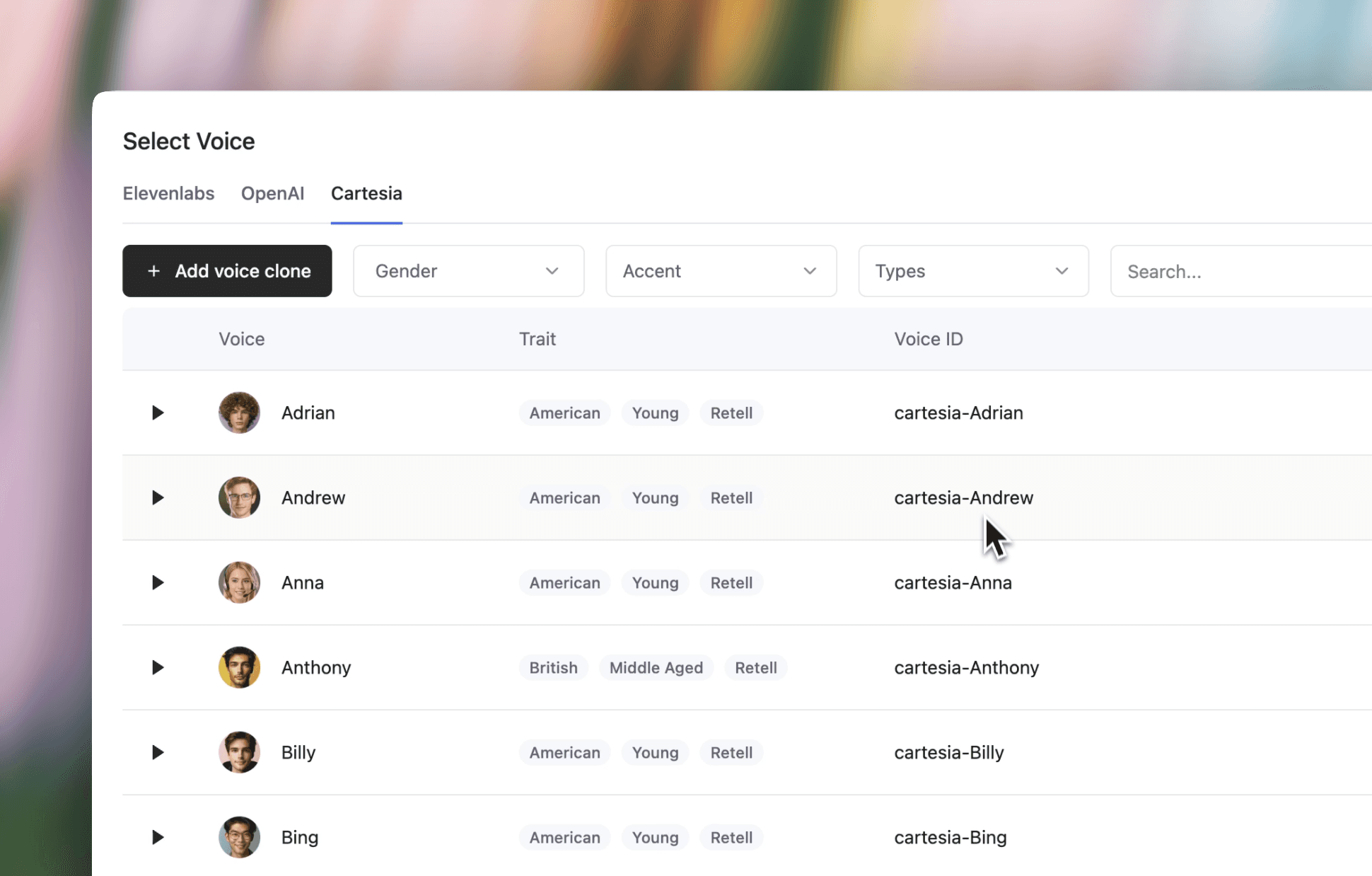
Cartesia is the closest competitor to smallest.ai on latency — they quote ~90ms for voice synthesis, which is genuinely impressive. The platform is developer-focused, supports rapid voice cloning, and is purpose-built for real-time conversational applications. For teams specifically optimising for the absolute lowest possible TTS latency, Cartesia is worth evaluating directly against smallest.ai.
The limitations: smaller language set (15 languages), smaller company with less enterprise track record, and voice quality- while good, doesn't match 44.1kHz output in direct comparisons. Free plan is personal use only.
Pros: Exceptional latency (~90ms), developer-focused, real-time streaming, voice cloning Cons: Personal-use-only free tier, smaller language set, less enterprise-proven
Pricing: From $4/month. Usage-based at scale. Best for: Developer teams where TTS latency is the single most important variable.
7. OpenAI TTS — Best for Teams Already in the OpenAI Ecosystem
OpenAI's TTS API is a sensible default for teams already using GPT-4 or Whisper — one provider, one billing relationship, and solid voice quality at a reasonable price point. The voices are clean and professional, and for straightforward TTS use cases without real-time requirements, it works well.
The limitations are clear: only 6 languages, no voice cloning, and audio output at 24kHz. For enterprise teams building voice-first products, it's underpowered. It's best understood as a convenient bundled option, not a specialist voice platform.
Pros: Easy integration for OpenAI users, solid quality, predictable pricing, good documentation Cons: 6 languages only, no voice cloning, 24kHz audio, not optimised for real-time agents
Pricing: $15/1M characters. Best for: Teams using OpenAI's API stack who need basic TTS without switching providers.
8. Google Cloud TTS- Best for Global Scale and Language Coverage
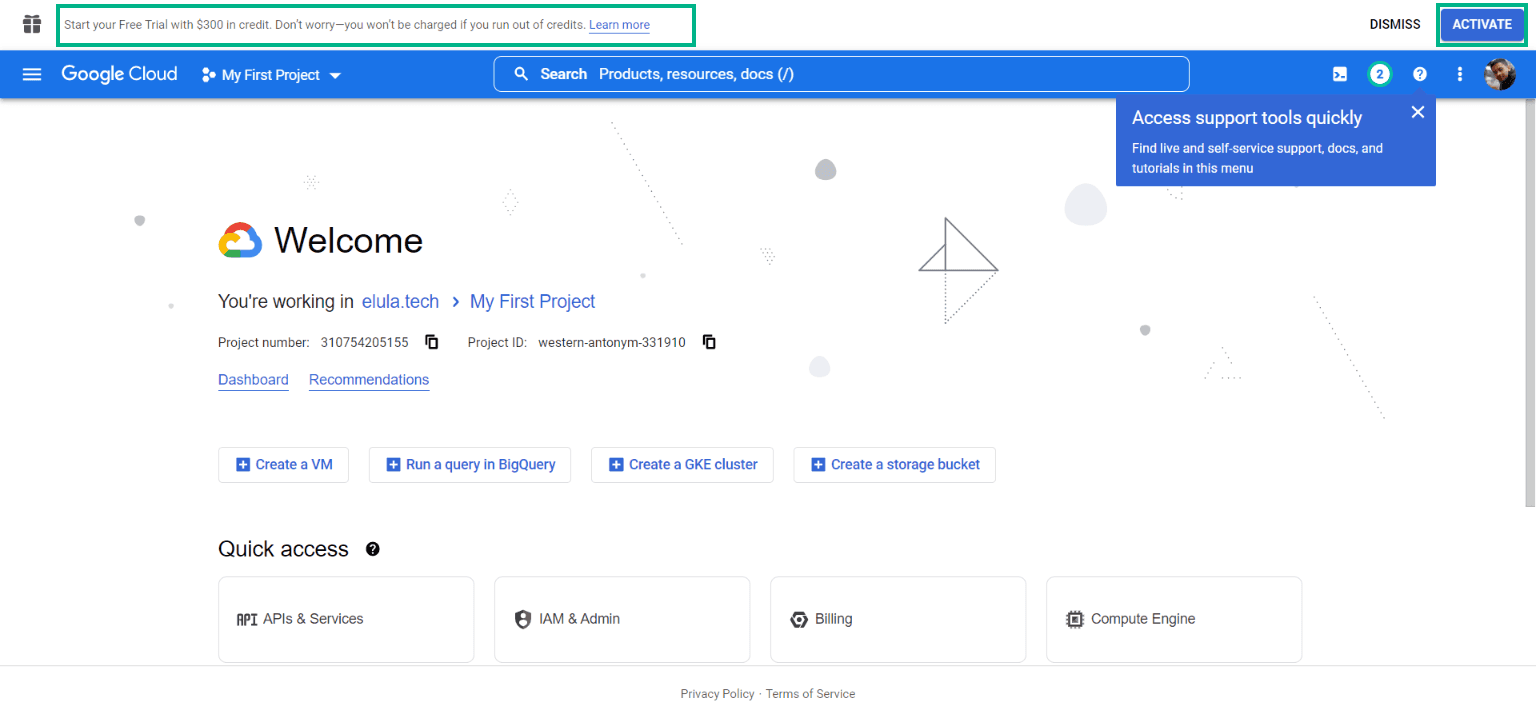
Google Cloud TTS is the most mature large-scale TTS infrastructure available — 30+ languages, 220+ voices, deep integration with Google Cloud services, and proven uptime for enterprise workloads. If you need a TTS solution that covers rare languages or that integrates tightly with GCP infrastructure, it's difficult to beat on coverage.
For voice quality and real-time performance, it's less competitive. Studio voices are higher quality but significantly more expensive. Latency runs ~300ms. Custom voice cloning is possible but requires a lengthy approval process and significant audio data.
Pros: 30+ languages, 220+ voices, proven enterprise scale, GCP integration Cons: Complex pricing tiers, custom voice cloning is slow and expensive, quality varies by voice tier
Pricing: Pay-as-you-go. Standard voices from $4/1M chars; WaveNet from $16/1M chars. Best for: Large enterprises on GCP needing broad language coverage at scale.
How to Choose the Right ElevenLabs Alternative
The right choice depends entirely on what you're building:
Building real-time voice agents or contact center AI? smallest.ai or Cartesia. Latency is the deciding variable. smallest.ai wins on voice quality and enterprise compliance; Cartesia wins if you're optimising purely for minimum latency.
Building content — audiobooks, podcasts, narration? ElevenLabs is still a strong choice for purely creative use cases. If you need an alternative, Murf (non-technical teams) or PlayHT (multilingual content) are the most practical.
Building for a regulated industry (healthcare, finance)? smallest.ai (HIPAA + SOC 2), WellSaid Labs (English-only enterprise), or Azure TTS (Microsoft compliance stack).
Building on an existing cloud stack? Google Cloud TTS for GCP, Azure TTS for Microsoft, OpenAI TTS for OpenAI-native teams.
Need maximum language coverage? PlayHT (142 languages) or Azure TTS (140+ languages).
Final Verdict
ElevenLabs is a great product for creative content. It's not the best choice for production voice infrastructure, real-time agents, or enterprise deployments where compliance and data ownership matter. The 2025 ToS changes, latency under concurrent load, and the paywall on voice cloning are driving enterprise teams to look elsewhere.
For most enterprise teams building voice-first products in 2025, smallest.ai is the strongest ElevenLabs alternative — combining production-grade latency, 44.1kHz quality, instant voice cloning, and enterprise compliance in one platform.