AI Call Center Software: Best Options for Businesses in 2026

AI call center software picks for 2026, compared on latency, voice quality, integrations, and pricing across Smallest.ai, Deepgram, AssemblyAI, and Cartesia.
AI call center software covers a wide range of products, from speech recognition APIs to full conversational voice agents. The challenge is not finding a platform that claims to use AI; it is finding one that matches your operational requirements, deployment model, and call volume.
This comparison focuses on platform scope, speech capabilities, deployment requirements, integration flexibility, and operational fit for different call center workflows.
Smallest.ai: Built for Real-Time Voice at Scale
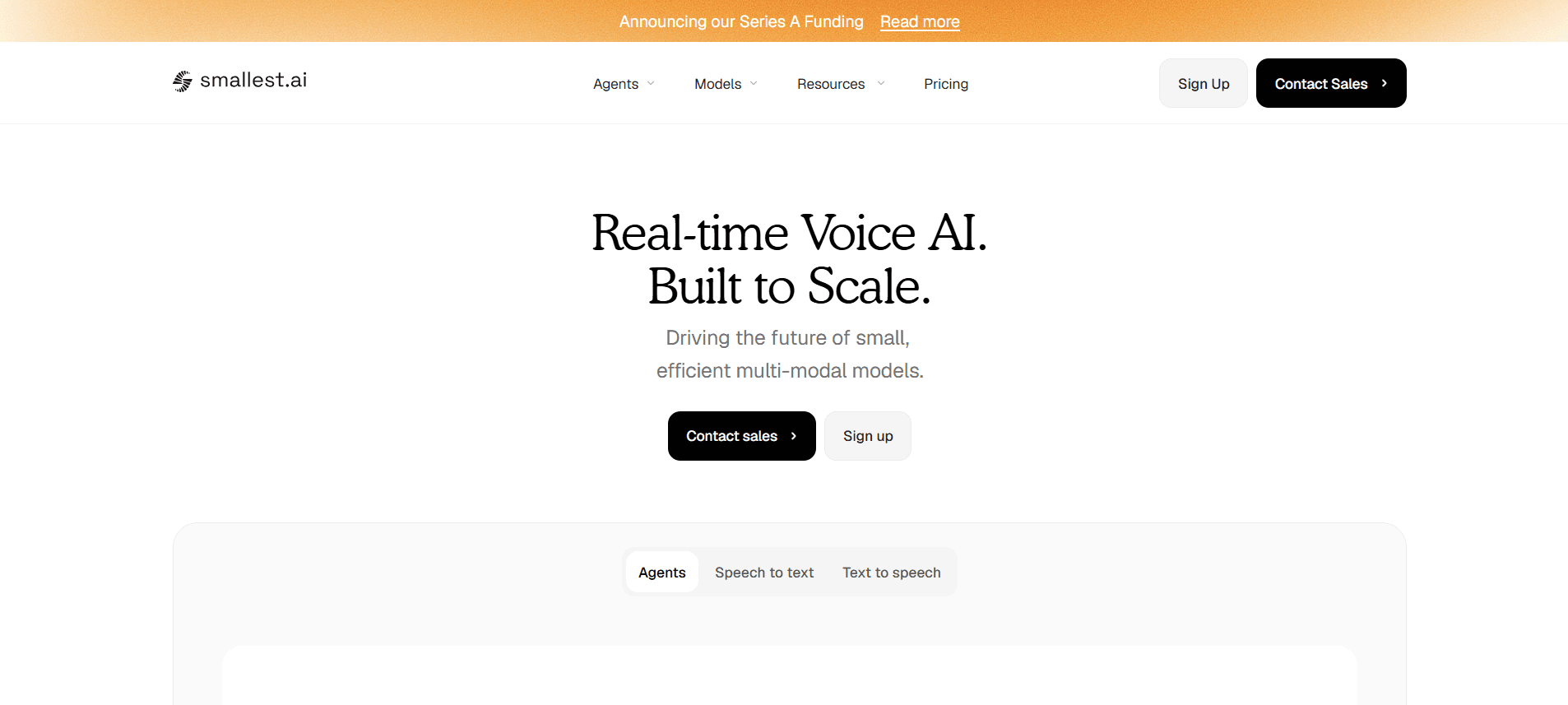
Smallest.ai is designed for real-time voice applications where responsiveness and speech quality are important considerations. The product ships as a modular stack. Lightning handles low-latency text-to-speech. Pulse provides speech-to-text capabilities for voice applications. Hydra adds speech-to-speech conversion for real-time voice transformation. Atoms sits on top as the voice and text agent layer, orchestrating autonomous inbound and outbound call workflows.
A notable aspect of the platform is its focus on low-latency voice interactions. With AI call center agents doing inbound sales or support, delays can affect conversational flow and overall user experience. Smallest.ai leans into this with the Waves API, which exposes Lightning and the surrounding speech APIs directly, so developers can wire low-latency voice into an existing telephony setup without rebuilding everything around a new SaaS shell.
Pricing is published on the Smallest.ai pricing plans page, allowing teams to evaluate costs against their expected usage and deployment requirements. This approach is typically used by teams that want direct control over the voice stack and deployment architecture. In return, you get a customizable, low-latency voice layer with a pricing structure that scales with usage.
Deepgram: The STT Specialist with Strong API Foundations
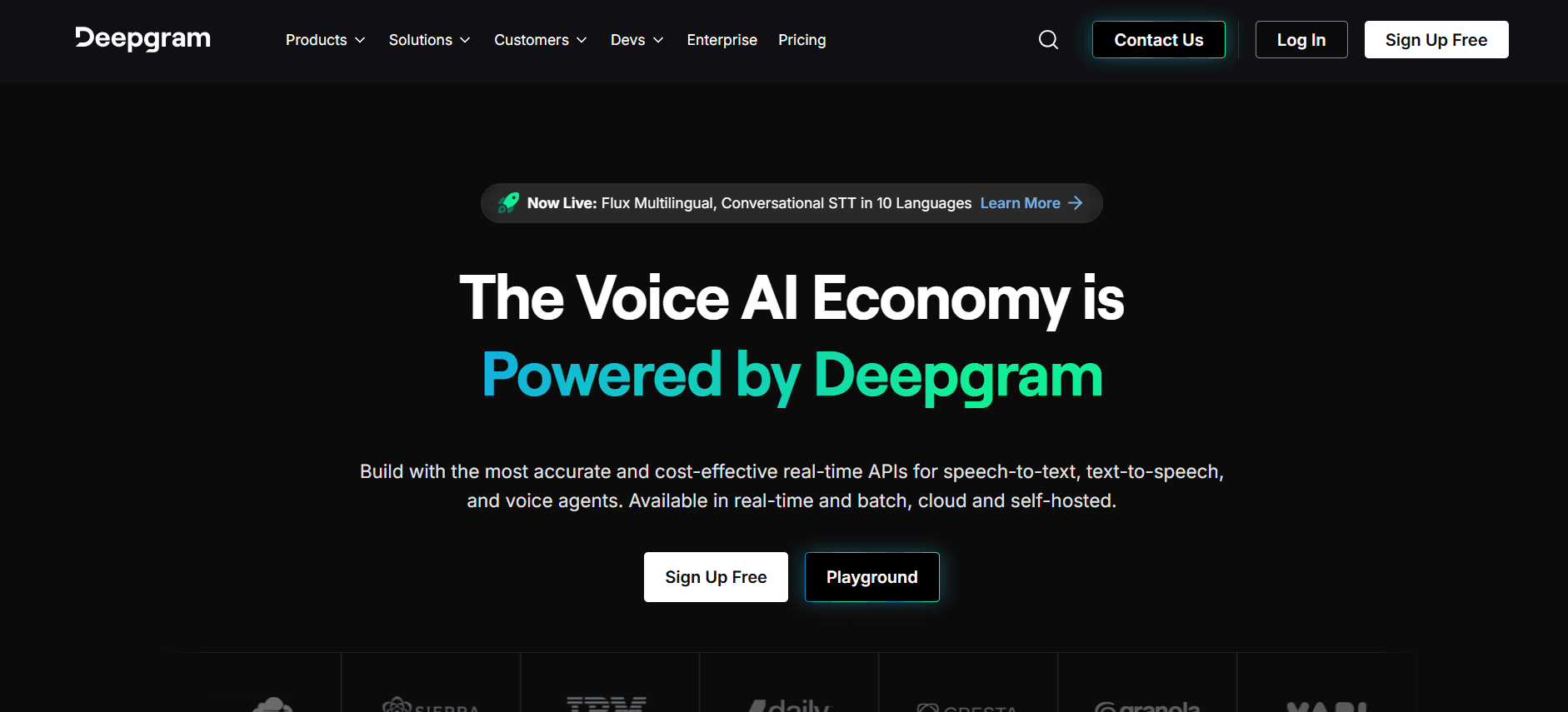
Deepgram provides speech recognition, transcription, diarization, and related speech-processing capabilities for voice applications, including Automatic Speech Recognition (ASR) for call centers.
Deepgram is primarily positioned as a speech recognition and transcription platform. Teams building broader voice AI systems typically evaluate it alongside additional components for speech synthesis, orchestration, and call automation.
AssemblyAI: Strong on Analytics, Built for Post-Call Intelligence
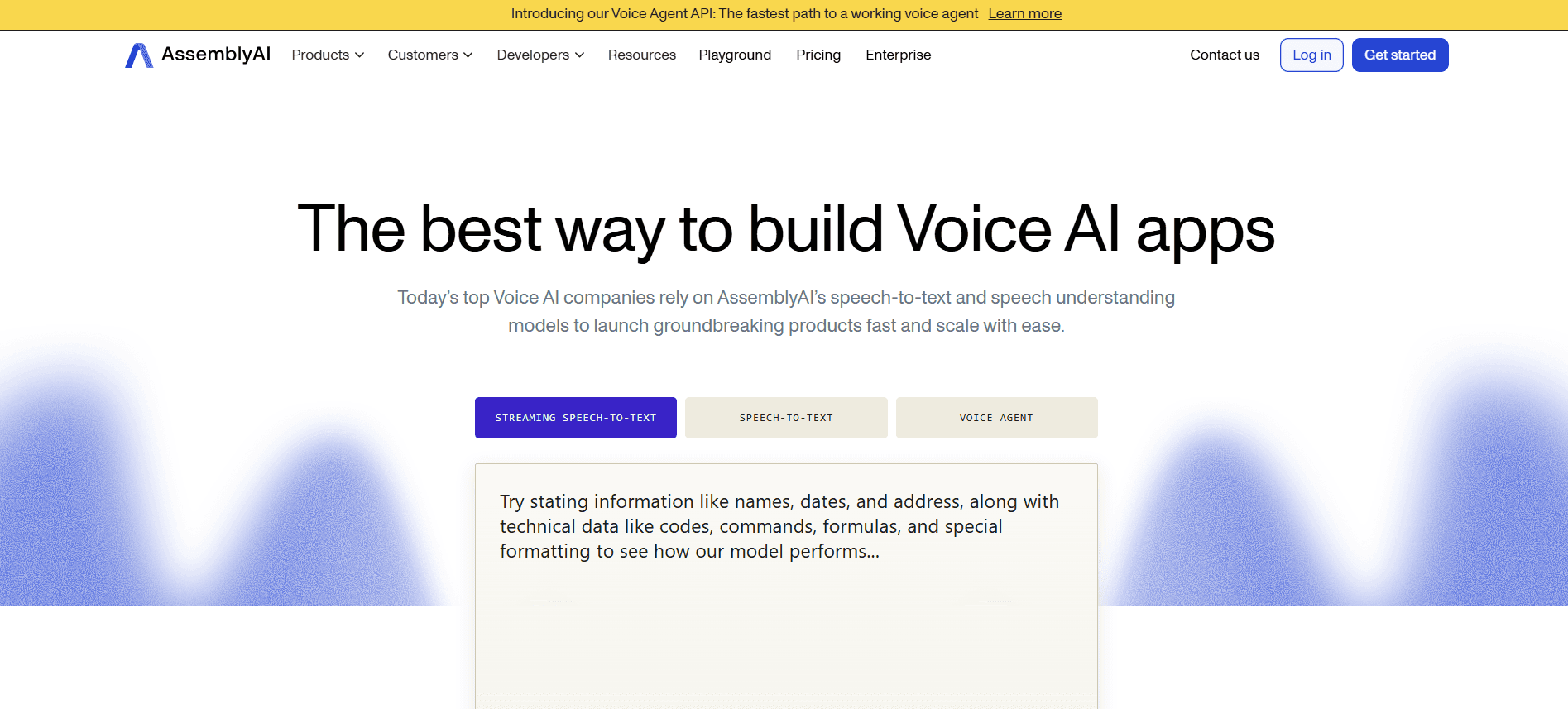
AssemblyAI provides features such as automatic summaries, topic detection, sentiment analysis, PII redaction, and long-form audio segmentation. For teams running call center QA and conversation analytics at high volume, those features can reduce manual reviews and shorten feedback loops.
AssemblyAI's primary focus is transcription, speech intelligence, and post-call analysis workflows. Teams evaluating real-time voice agents should consider how those capabilities fit alongside any additional speech synthesis, orchestration, or automation requirements.
Cartesia: Real-Time Speech Infrastructure
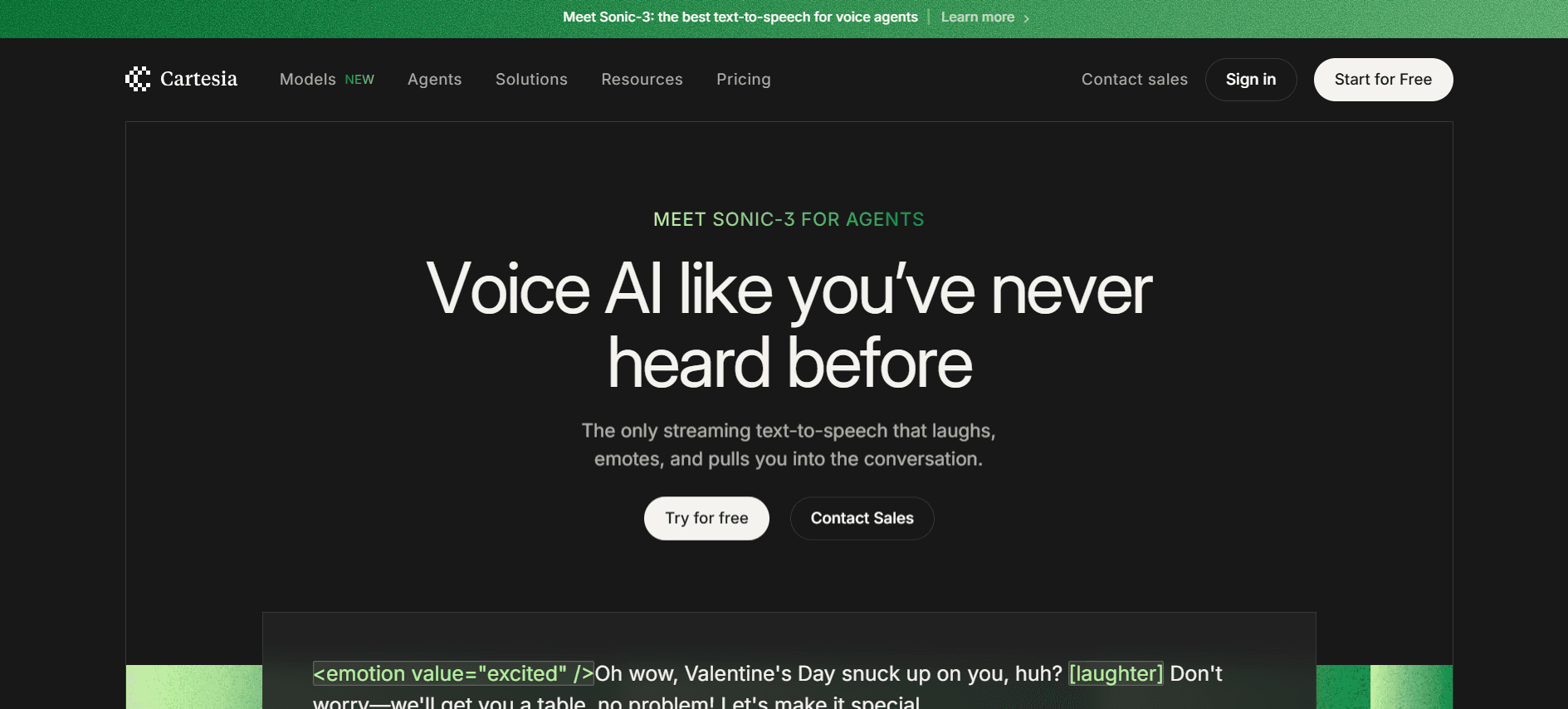
Cartesia focuses on real-time speech infrastructure. Its Sonic models are designed for speech synthesis, and the platform also includes speech-to-text and agent-related capabilities for voice applications.
Cartesia's primary focus remains real-time speech infrastructure. Teams evaluating it should consider how its speech, transcription, and agent capabilities fit alongside broader call center requirements and deployment workflows.
Other Platforms Worth Knowing
Outside the vendors covered above, there are a couple of buckets that come up in most evaluations. The big cloud providers sell contact center AI suites with deep CRM hooks and enterprise support. They are often strong on compliance, SLAs, and turnkey telephony connectivity. The tradeoffs tend to be familiar: higher per-minute costs and less room to customize the voice experience. If your procurement process requires vendor-managed infrastructure and formal support tiers, these suites belong on the list.
A separate bucket is conversational AI platforms that sit above the voice layer, handling dialogue management, intent recognition, and workflow orchestration. Paired with a fast STT/TTS stack, they can work well. For a clearer map of how the categories fit together, Contact Center AI in 2026 breaks down the platform types and the use cases each one tends to serve best.
Head-to-Head Comparison Table
Platform | Primary Focus | Speech Capabilities | Platform Scope | Common Use Cases |
|---|---|---|---|---|
Smallest.ai | Voice infrastructure and agents | STT, TTS, Speech-to-Speech | Full-stack agent platform | Call automation, voice agents |
Deepgram | Speech recognition | STT, Diarization, Analytics | Speech processing API | Transcription, speech analytics |
AssemblyAI | Speech intelligence | STT, Analytics, Summarization | Post-call processing API | Analytics, QA, compliance |
Cartesia | Real-time speech infrastructure | STT, TTS | Speech & agent APIs | Real-time voice systems |
Cloud Suite Providers | Contact center suites | STT, TTS, Analytics | Turnkey SaaS platforms | Enterprise deployments |
Which Platform Fits Your Use Case?
Different platforms solve different call center problems. Some focus on speech recognition, some on post-call intelligence, and others provide broader voice infrastructure and agent capabilities. Teams should evaluate platform scope, deployment requirements, integration complexity, and operational goals before selecting a platform.
The Problem Most Teams Actually Face
The hard part of deploying AI call center software is not finding a vendor that claims to do everything. The hard part is getting three things to line up at once: a voice layer that responds quickly enough to support natural conversational flow, STT accurate enough to avoid constant corrections, and agent logic flexible enough to match your real call flows instead of a canned script. Different platforms prioritize different parts of the voice stack, which is why platform selection often depends on the workflow being deployed.
Smallest.ai is designed around that exact constraint. The Atoms agent platform covers orchestration, while Lightning and Pulse provide speech synthesis and speech recognition for real-time voice interactions. The platform combines speech recognition, speech synthesis, and agent orchestration within a unified voice AI stack. If your goal is production-grade voice AI, starting from a stack built for low-latency conversations is an important consideration for teams moving from experimentation to production deployment. For more context on where the category is going, conversational AI platforms lays out how the pieces fit together in 2026 and where Smallest.ai sits in that picture.
Frequently asked questions
What is AI call center software, and what does it actually do?
How do I decide between a full-stack platform and a point solution (STT or TTS API)?
What latency should AI voice agents hit for call center conversations to feel natural?
Is AI call center software practical for small businesses, or only for enterprises?
How accurate is speech recognition with noisy call center audio?