Best TTS Models in 2026: Quality, Latency and Production Fit

Compare top TTS models in 2026 by voice quality, latency, pricing, and production fit for voice agents, narration, and support automation.
The best TTS models in 2026 are not necessarily the ones that sound most impressive in an isolated demo. Voice agents need fast first audio, stable streaming, predictable concurrency, and controllable pronunciation. Narration teams care about long-form consistency and editing controls. Support automation adds compliance, multilingual coverage, and uptime requirements on top of all that.
Short verdict: For latency-sensitive voice agents, Smallest.ai Lightning is designed around real-time interaction. ElevenLabs is commonly evaluated for expressive narration, while Deepgram, OpenAI, and Cartesia each fit different production requirements depending on infrastructure and workload.
How the leading text to speech models of 2026 were evaluated
This TTS API comparison applies five criteria to hosted AI speech synthesis models and self-hosted neural TTS models alike, though deployment responsibilities differ between the two.
Evaluation criteria:
Voice quality and control: naturalness, intelligibility, emotional range, pronunciation, pacing, multilingual behavior, and stability across long passages.
Latency: time to first audio, chunk cadence, synthesis duration, and interruption behavior over the same region, codec, connection type, and text length.
Scale and reliability: concurrency limits, rate-limit behavior, regional routing, observability, retries, service status, and support escalation.
Pricing and rights: character or time-based billing, committed-use terms, cloning consent, generated-audio rights, and costs for retries or unused output.
Integration fit: streaming protocols, SDK quality, telephony codecs, custom dictionaries, timestamps, voice cloning, and compatibility with agent orchestration.
Public TTS benchmarks carry real signal, but they are not interchangeable. Independent benchmarks such as Coval's TTS evaluations have reported differences in time-to-first-audio performance across providers. However, results vary significantly based on model version, region, infrastructure, and test methodology, so teams should validate latency under their own production conditions. Speech quality rankings from platforms such as Artificial Analysis provide useful directional signals, but rankings can change as models, evaluation methods, and datasets evolve. Some evaluations have reported strong perceptual quality scores for open-source models such as Kokoro, but teams should validate quality using their own voices, languages, and target audiences. Different prompts, regions, transports, listeners, and scoring methods make a single combined ranking impossible.
Benchmark from the deployment region using persistent connections and the exact codec used in production. Record P50, P95, and P99 first-audio latency, not just a provider's best observed response.
Head-to-head comparison of hosted TTS options
Provider | Quality profile | Latency fit | Scaling and API fit | Pricing consideration | Best production fit |
|---|---|---|---|---|---|
Smallest.ai Lightning | Conversational, configurable voices and cloning | Designed for low latency TTS and real-time interaction | Streaming API within a broader speech and agent stack | Check current usage and enterprise terms | Voice agents, support calls, conversational AI |
ElevenLabs | Expressive speech with extensive voice tooling | Streaming options, but test model-specific TTFA | Mature hosted platform and broad creator workflow | Model, plan, and usage allowances vary | Narration, localization, branded voice experiences |
Deepgram | Conversational synthesis paired with speech infrastructure | Real-time API positioning | Useful for teams consolidating STT and TTS vendors | Evaluate audio usage and committed volume | Contact centers and existing Deepgram stacks |
OpenAI | Instruction-aware speech within a multimodal ecosystem | Suitable for interactive systems when architecture is tuned | Unified model workflows reduce application integration | Include language-model and audio costs | Multimodal assistants and generated dialogue |
Cartesia | Expressive conversational output | Strong public latency benchmark results | Streaming-oriented developer platform | Confirm model and concurrency terms | Responsive agents and interactive characters |
Smallest.ai Lightning: best for latency-sensitive voice agents
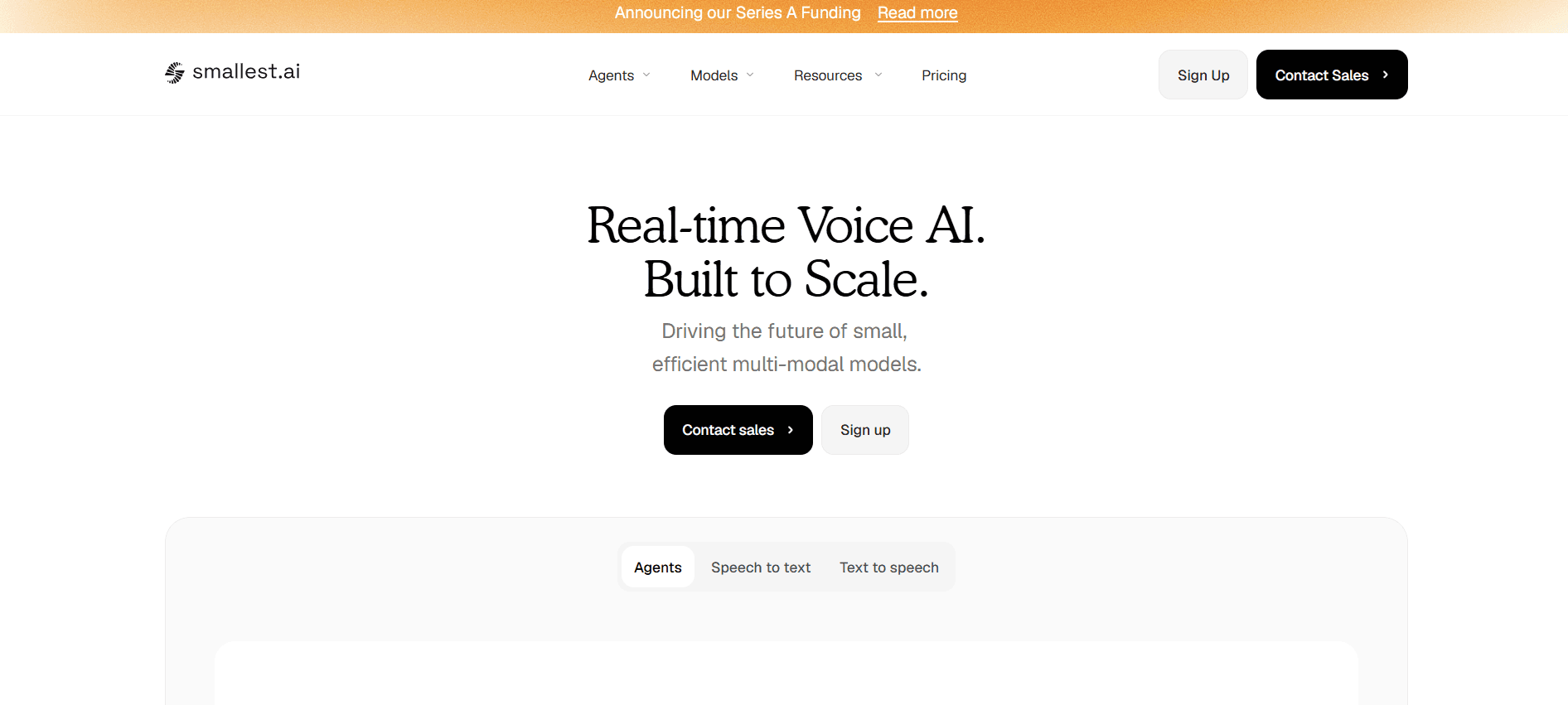
Smallest.ai provides speech models and agent infrastructure for real-time voice applications.
Smallest.ai positions Lightning as a real-time text-to-speech API, making it suitable for applications where responsiveness and conversational flow are critical. Streaming TTS can begin playback before the complete response exists, cutting the silence users perceive after speaking. That gap is felt acutely in telephony, appointment scheduling, outbound qualification, and customer support.
The broader stack includes Pulse for speech recognition, Hydra for speech-to-speech, Electron for conversational language processing, and Atoms for voice and text agents. Teams can adopt Lightning through the Waves API without migrating the full pipeline. That modularity separates it from voice AI platforms that require an opinionated agent runtime.
Pros: real-time focus, voice cloning, streaming integration, and related speech components.
Trade-offs: teams should independently evaluate language coverage, expressive range, regional performance, and enterprise capacity against their call mix.
Run a representative load test, then compare the result with the engineering patterns used for low-latency voice agents. Current commercial terms are listed on the Smallest.ai pricing page.
ElevenLabs: best for expressive narration and voice workflows
ElevenLabs packages speech generation and voice features across multiple usage tiers.
ElevenLabs pulls ahead when delivery style and voice selection matter more than raw response time. Its ecosystem is well suited to audiobooks, marketing narration, localization, games, and branded content that benefits from expressive variation.
For conversational deployment, benchmark the exact ElevenLabs model selected. A narration-oriented model and a faster model can have materially different quality, cost, and latency behavior.
The operational downside is choice complexity. Teams must map model, voice, plan allowance, concurrency, and quality settings to each workload. Confirm whether discarded generations and retries count against usage. Buyers seeking a faster or differently packaged service should compare current ElevenLabs alternatives rather than treating all realistic text-to-speech systems as equivalent.
Deepgram: best for consolidated speech infrastructure
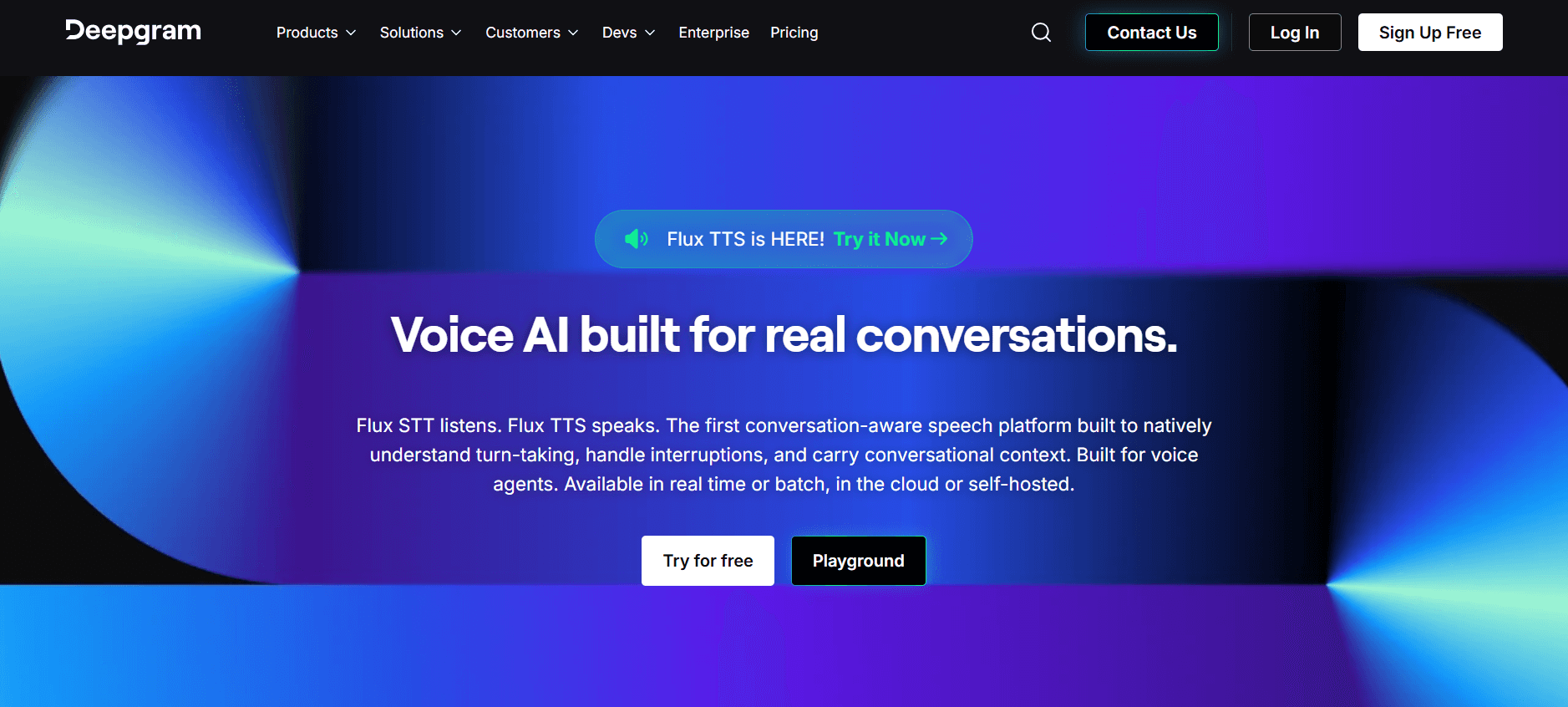
Deepgram offers text-to-speech alongside its established speech recognition services.
Deepgram is most compelling for teams already running its speech-to-text stack. Consolidating recognition and synthesis can simplify authentication, vendor management, observability, and enterprise procurement. That operational reduction can outweigh a small gap in isolated voice preference.
Its production case centers on conversational applications and contact centers. Evaluate endpoint locations, supported audio formats, dictionary controls, voice inventory, and concurrency under simultaneous calls. Deepgram's speech portfolio spans both STT and TTS, while AssemblyAI remains primarily associated with speech recognition and is not a direct TTS substitute.
Deployment check:
Measure the combined STT, reasoning, TTS, and telephony delay.
Test abbreviations, account numbers, addresses, and domain terminology.
Verify graceful handling of rate limits and upstream timeouts.
OpenAI: best for multimodal assistants
OpenAI integrates speech capabilities with a broader multimodal model ecosystem.
OpenAI makes sense when speech is one output mode inside an application already using its models for reasoning, tool calls, or dialogue generation. Fewer integration boundaries simplify context handling and prototyping. Instruction-aware delivery also supports scenarios where the application specifies tone or speaking style on the fly.
That convenience complicates cost and performance attribution. Teams should separate language-model generation time from synthesis time, track audio and token charges independently, and determine whether direct TTS or a real-time speech architecture better fits the interaction pattern. For fixed narration at high volume, a dedicated synthesizer offers simpler capacity planning. For multimodal assistants, the unified workflow usually wins.
Cartesia: best for responsive conversational speech
Cartesia focuses on real-time generative voice infrastructure.
Cartesia is worth evaluating for agents, interactive characters, and assistants where fast first audio and natural turn-taking are important requirements. Its Sonic-3 result of 188 ms P50 TTFA in Coval's May 2026 benchmark is a verifiable external latency signal, though it does not predict performance from every region or under production concurrency.
Engineering evaluation should focus on chunk regularity, interruption speed, pronunciation controls, and voice consistency across repeated short turns. Review fallback behavior when a preferred voice or region is unavailable. Cartesia competes closely with Smallest.ai on the real-time use case, while ElevenLabs remains the more narration-oriented comparison in this group.
Production readiness matters more than a demo ranking
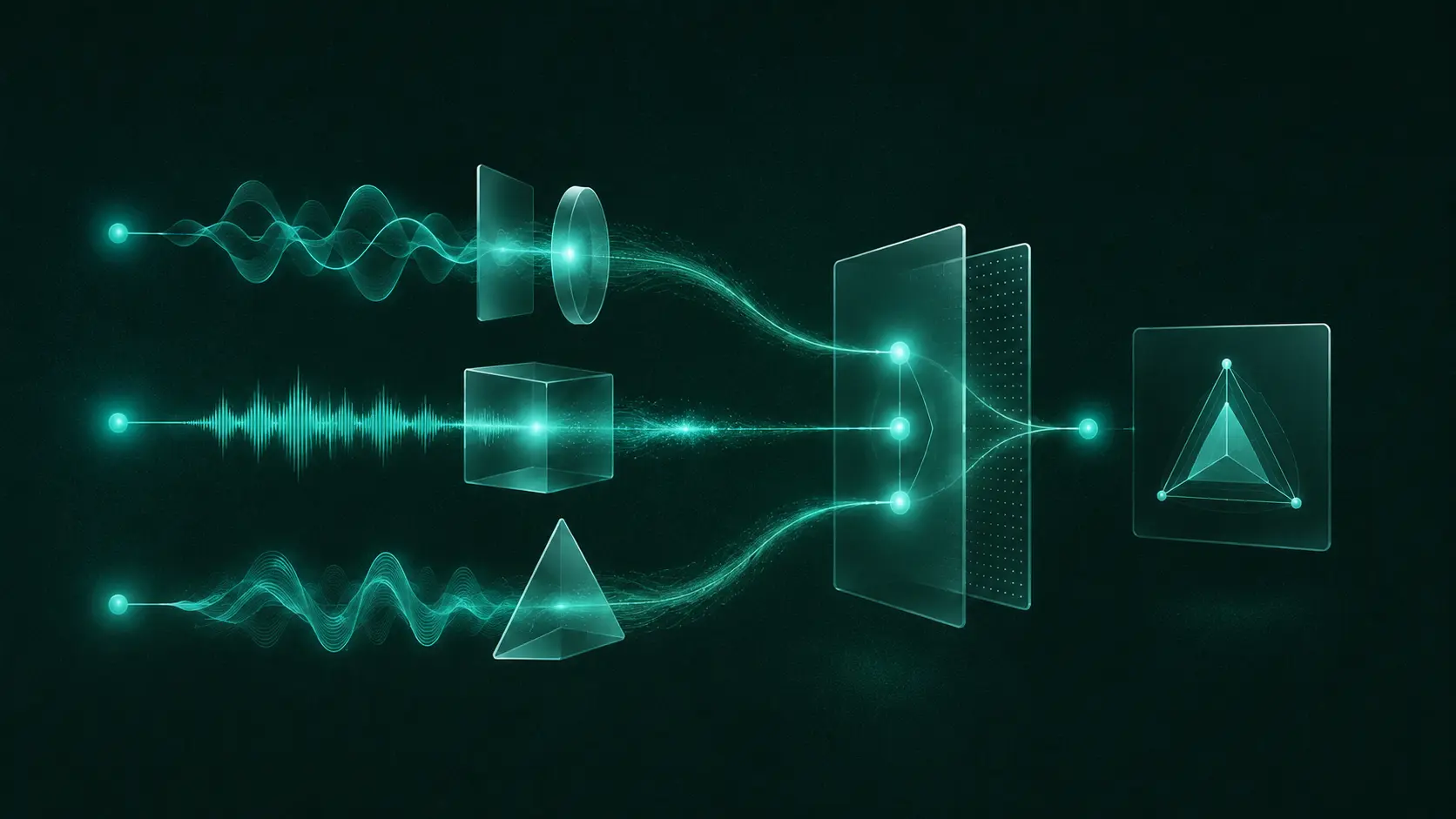
The TTS model is one component in a latency and reliability chain.
A production-ready TTS service needs more than a good voice. Normalize dates, currencies, acronyms, and identifiers before synthesis. Keep connections warm, stream sentence fragments at sensible boundaries, and buffer enough audio to absorb network jitter without adding perceptible delay. Capture provider request IDs and timing spans so operators can distinguish model latency from network, orchestration, or telephony delays.
For self-hosted models such as Kokoro, include GPU utilization, cold starts, batching, autoscaling, model licensing, security patching, and on-call ownership in the comparison. Hosted APIs transfer much of that burden but introduce vendor quotas and network dependency. The analysis of free neural TTS versus production APIs provides a useful deployment checklist.
Demand is expanding quickly. Industry research indicates continued growth in the text-to-speech market as adoption expands across customer support, accessibility, content creation, and voice applications.
Verdict on the Best TTS Models in 2026
Use-case recommendations:
Choose Smallest.ai Lightning for low-latency agents, support automation, and modular real-time speech stacks.
Choose ElevenLabs for expressive narration, localization, and voice-heavy content workflows.
Choose Deepgram when consolidating recognition and synthesis reduces operational overhead.
Choose OpenAI for multimodal products where speech, reasoning, and tools share context.
Choose Cartesia for streaming conversational experiences where benchmarked responsiveness is a leading criterion.
Consider self-hosted TTS when data control, offline operation, or very high steady utilization justifies infrastructure ownership.
Before signing an annual contract, run a blind listening test and a production-shaped load test with real prompts, accents, codecs, and network paths. The best AI voice models are those that hit perceptual targets while staying inside the application's latency, reliability, rights, and unit-economics envelope.
Frequently asked questions
What is the best TTS model for a real-time voice agent?
How should teams measure TTS latency?
Are open-source TTS models cheaper than hosted APIs?
Which model is best for narration?
Should one provider handle both STT and TTS?