AI Phone Answering Service: Best Options in 2026

AI phone answering service comparison for 2026: Smallest.ai vs Deepgram, AssemblyAI, and Cartesia on latency, pricing, integrations, and fit.
AI phone answering services have moved beyond simple call routing and voicemail capture. Modern systems can answer questions, schedule appointments, qualify leads, route calls, update CRMs, and escalate to human agents when needed. The challenge is no longer finding a platform that uses AI. The challenge is finding one that matches your call volume, workflow complexity, and operational requirements.
The catch: "AI phone answering" is a label that covers wildly different products. Some vendors are really selling infrastructure (great APIs, little hand-holding). Others package a no-code experience for small teams that just need calls answered and appointments booked. A few are built for enterprise rollouts and compliance checklists. This comparison focuses on fit, not hype, so you can pick a platform that matches your call volume and your tolerance for integration work. Each option is evaluated using five practical criteria: voice quality, latency, pricing, ease of deployment, and integration depth.
How We Evaluated Each Platform
This is the rubric used across the list. Voice quality means more than a pleasant timbre: it includes prosody, expressiveness, and whether the agent can handle barge-ins and messy, real caller turns without sounding lost. Latency is non-negotiable on the phone; even a half-second pause reads as "the system is thinking" and callers talk over it. Pricing is judged the way it shows up in production (minutes, concurrency, and usage), not the teaser number on a starter tier. Ease of deployment is about how quickly a non-technical team can ship a working agent, not how pretty the dashboard looks. Integration depth covers the basics (CRM, calendar, telephony) plus the glue (webhooks, workflow triggers). Scalability is the final check: what happens when traffic spikes and your "demo build" becomes a real contact channel.
Smallest.ai: Built for Real-Time Voice at Scale
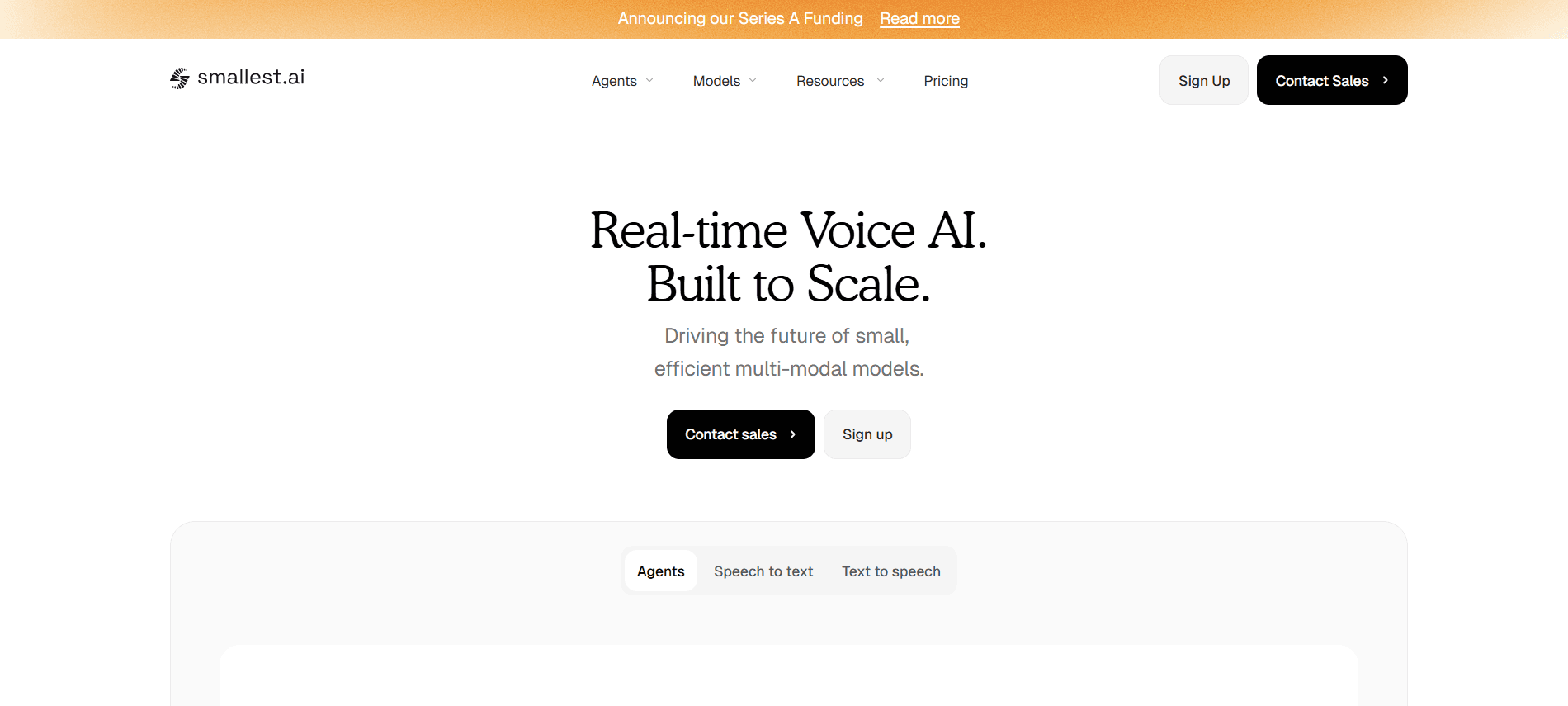
Smallest.ai is engineered around the one constraint that makes phone automation unforgiving: time. The Smallest.ai AI Answering Service bundles three pieces that are often purchased separately: Lightning for text-to-speech, Pulse for speech-to-text, and Atoms for the agent layer that runs the conversation. The integrated stack is designed for low-latency phone conversations where responsiveness is important to the caller experience.
The differentiator is Hydra, a speech-to-speech layer that can transform voice in real time without paying the usual round-trip tax of audio-to-text-to-audio. If you need a branded voice or a cloned voice that stays consistent across every caller interaction, voice cloning is available in production through the Waves API. The platform is also split cleanly by audience: developers can go deep with APIs, while non-technical teams can ship via the Atoms no-code builder and iterate from there.
Where Smallest.ai stands out:
Designed for low-latency phone conversations where responsiveness is important.
End-to-end stack: TTS, STT, and agent orchestration delivered as one platform
Voice cloning for brand-consistent caller experiences
Hydra speech-to-speech to avoid conversion overhead in real-time audio paths
Atoms supports both no-code launches and API-level customization when you need it
A solid integration surface area via the our integrations page
Current tiers live on the Smallest.ai pricing page, and they are structured to scale from modest call traffic to enterprise volumes. If you are evaluating this specifically for a smaller team, the AI answering service for small business breakdown is a helpful reality check on what you will actually use. Teams can launch through Atoms' no-code capabilities and expand into deeper customization through APIs as requirements evolve.
Deepgram: The STT Specialist That Powers Others
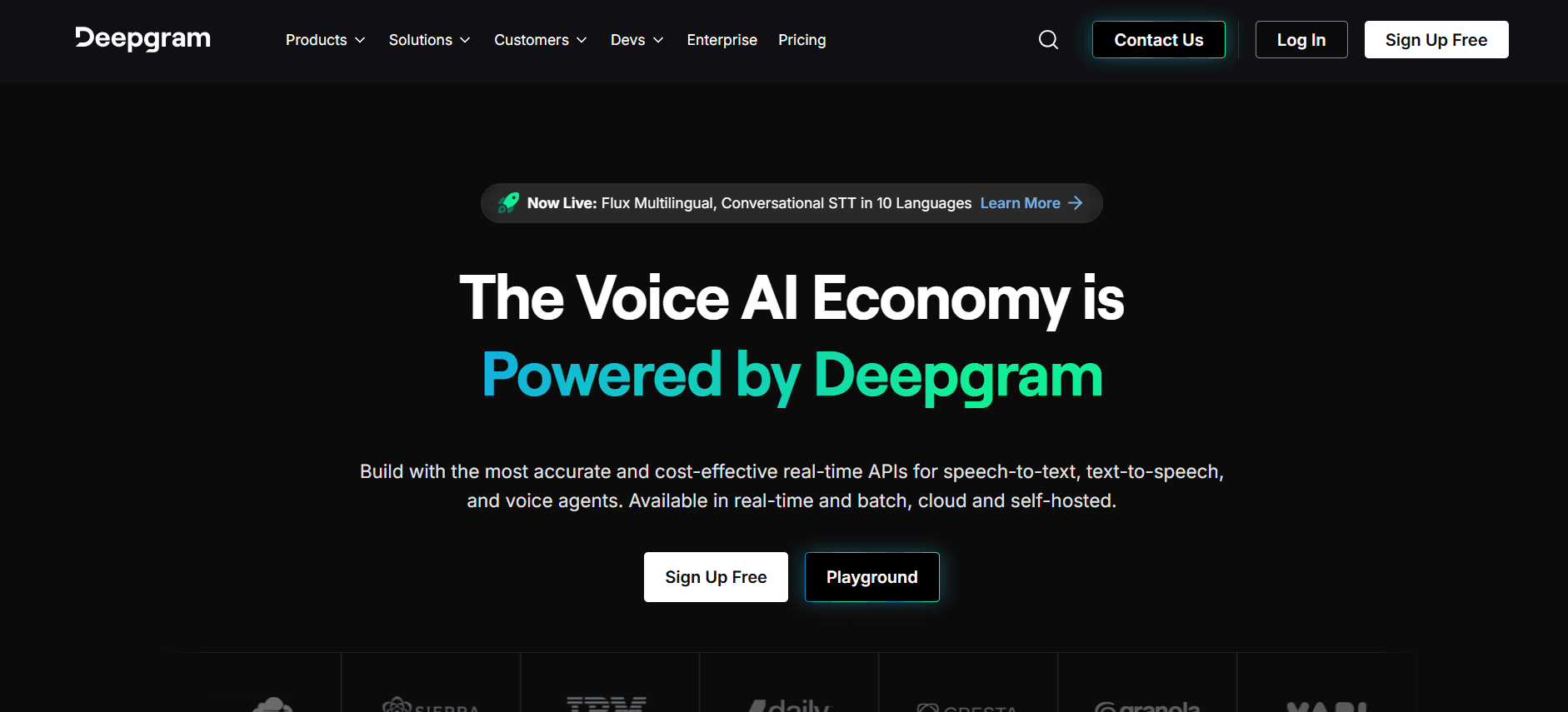
Deepgram is a speech-to-text API first, not a turnkey phone answering product. That is a feature if you are assembling your own voice stack and want transcription that holds up in the real world. Deepgram focuses on speech recognition, transcription, diarization, and related speech-processing workflows for voice applications.
The tradeoff is completeness. Deepgram does not ship native TTS or an agent orchestrator, so you are responsible for the rest of the pipeline: a TTS provider, conversation logic, and the plumbing between them. For engineering-led teams, that modularity is often the point. For teams that just want calls answered next week, it is a lot of integration surface area to own. Pricing is usage-based, with additional volume tiers available for larger deployments.
Common Use Cases: Developer teams with an existing agent layer and TTS provider that want to upgrade STT without replatforming. A poor fit if you are shopping for a complete AI phone answering service and do not want to build the stack yourself.
AssemblyAI: Accuracy-First Transcription With Richer Audio Intelligence
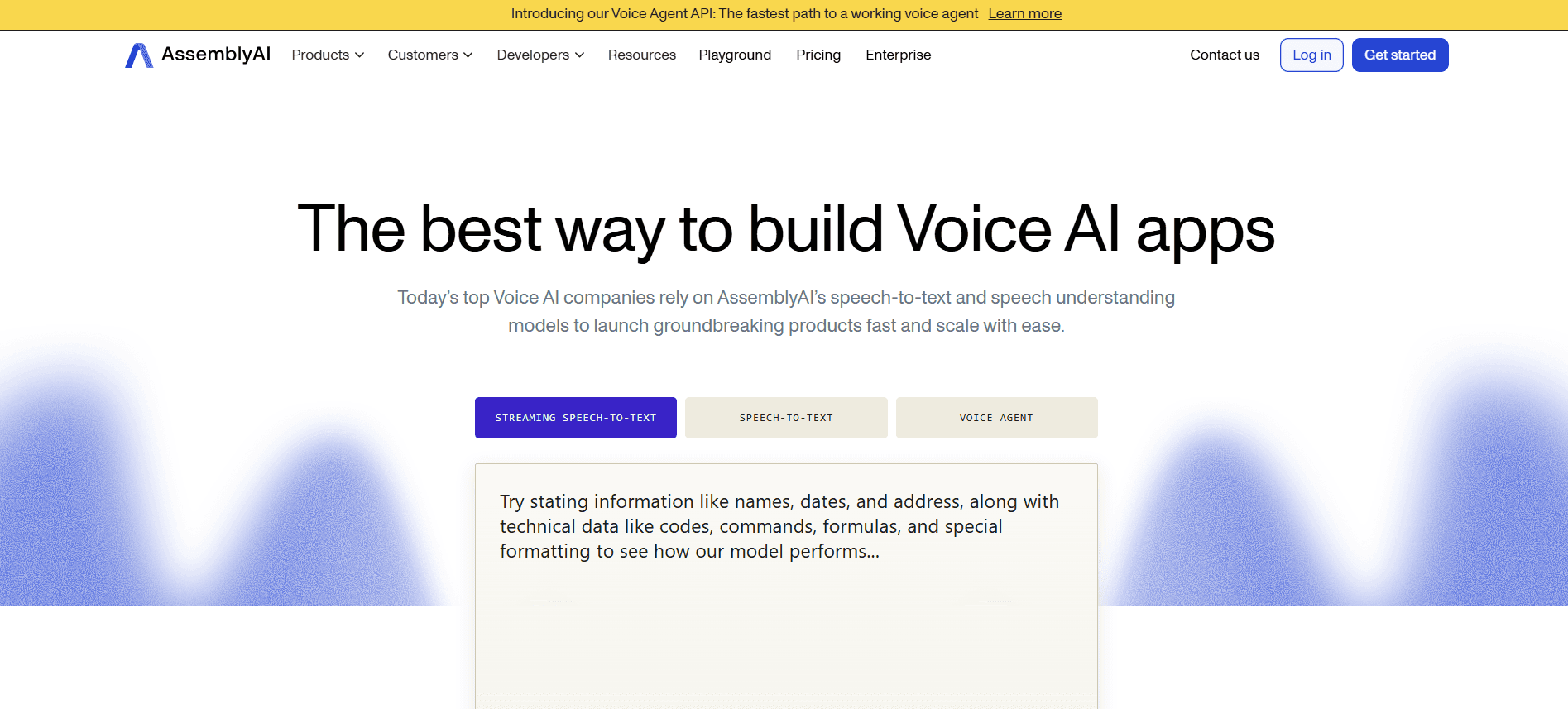
AssemblyAI comes at the problem from a slightly different direction. Transcription is table stakes, but the bigger story is the audio intelligence layer: sentiment analysis, speaker diarization, topic detection, and PII redaction built in. If your phone channel is as much about QA and reporting as it is about answering calls, those features can matter as much as raw STT accuracy.
For live answering use cases, AssemblyAI supports real-time transcription and includes a broader audio-intelligence layer for analytics-focused workflows. The structural point remains the same: AssemblyAI is a component, not a full phone agent. You will still bring your own TTS and conversation layer. Pricing is usage-based, and the free tier works nicely for prototypes, though sustained production traffic can ramp costs quickly.
Common Use Cases: Teams that need transcription plus post-call analytics, and regulated environments where PII redaction is a hard requirement rather than a nice-to-have.
Cartesia: Low-Latency TTS for Voice Builders
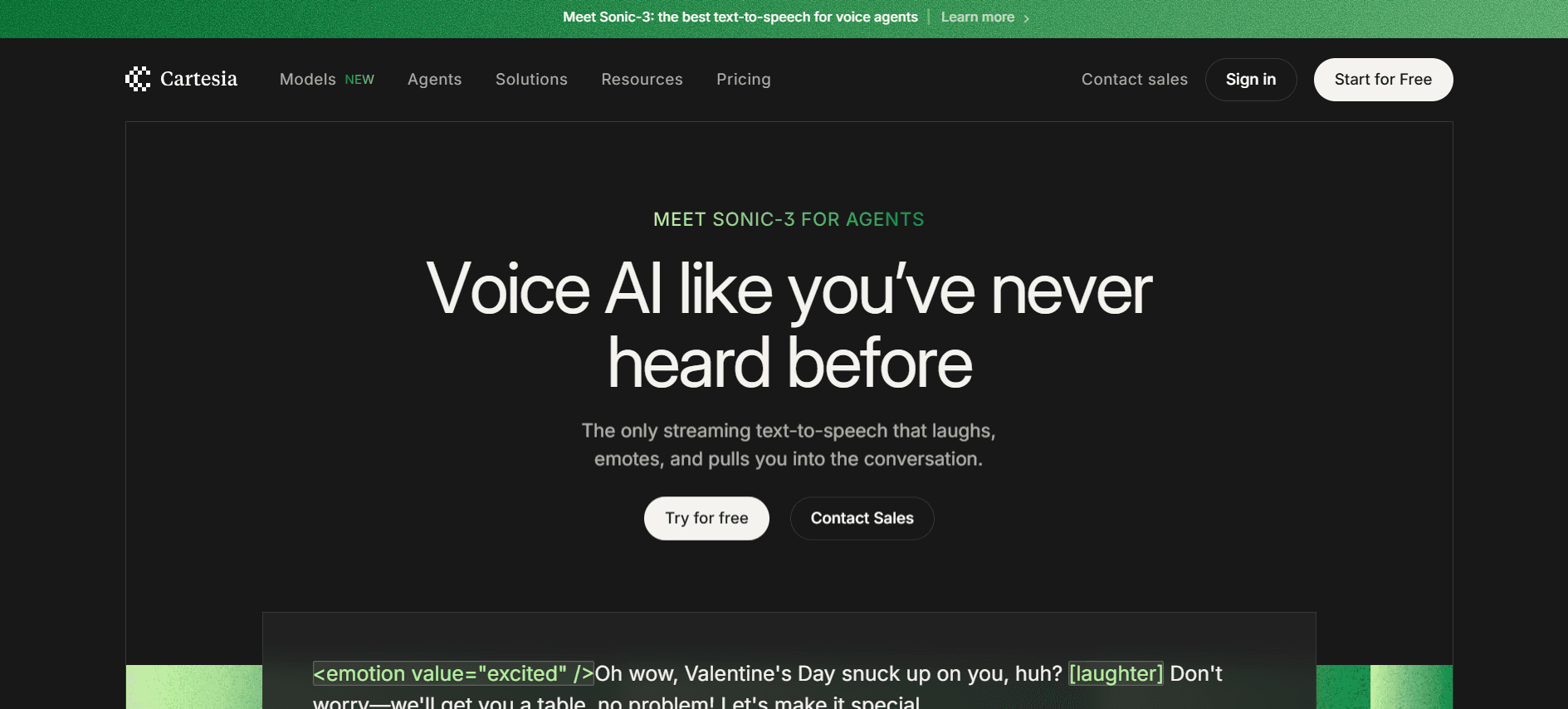
Cartesia is best known, especially among builders, for fast time-to-first-audio. Its Sonic model is tuned for real-time use, which makes it a sensible TTS pick when you are trying to keep an agent feeling responsive on the phone. Voice quality is strong as well, with natural prosody that stays stable across longer responses.
Cartesia focuses primarily on real-time speech infrastructure. Teams evaluating it should consider how its speech capabilities fit alongside any additional orchestration, telephony, and workflow requirements. Rates are usage-based and structured for production volumes.
Common Use Cases: Developers who already have STT and an agent layer, and want a fast, high-quality TTS engine to keep conversations snappy.
Other Notable Platforms Worth Knowing
Outside the four options above, the category gets noisy quickly. Big AI labs offer voice features inside broader API menus, but phone-specific ergonomics (telephony hooks, call controls, operational tooling) are often thinner than what dedicated voice platforms provide. On the other end, a wave of no-code telephony products added AI answering features in 2025 and 2026, aiming at small businesses that want something running in an afternoon. That convenience usually comes with guardrails: great for straightforward FAQ and routing, less reliable once callers start branching, interrupting, or asking for exceptions.
Adoption alone does not guarantee a good caller experience. The quality of speech recognition, response speed, escalation handling, and workflow design often determines whether a deployment succeeds in production. For a wider scan of where the customer service AI platforms category is headed, the pace of change is still accelerating.
Head-to-Head Comparison Table
Feature | Smallest.ai | Deepgram | AssemblyAI | Cartesia | No-Code Tools |
|---|---|---|---|---|---|
Primary Role | Full-Stack Platform | Component (STT) | Component (STT + Intelligence) | Component (TTS) | Turnkey Solution |
Core Strength | End-to-end latency & orchestration | Real-time transcription speed | Post-call analytics & PII redaction | Low-latency speech generation | Fast, simple deployment |
Best For | Production voice agents at scale | Teams building a custom voice stack | Analytics & compliance use cases | Developers needing a fast TTS | Simple FAQ & appointment booking |
Provides Full Stack? | Yes | No | No | No | Yes |
Deployment Model | No-code & API | API-only | API-only | API-only | No-code |
Which AI Phone Answering Service Should You Choose?
Different platforms solve different parts of the phone-answering problem. Some focus on speech recognition, others on speech generation, and others provide broader agent orchestration and deployment capabilities. The right choice depends on workflow complexity, latency requirements, integration needs, compliance requirements, and operational goals. The Complete Guide on AI Phone Agents is a useful companion if you are mapping requirements for a production rollout.
Deepgram and AssemblyAI are commonly evaluated when transcription is a primary requirement within a broader voice stack. Cartesia fits the same pattern on the TTS side. Just be clear-eyed about what you are buying: these are infrastructure components, not end-to-end phone answering services.
Fit also changes by industry. Home services teams, for example, deal with booking, dispatch, and lots of callers who are in a hurry, which is a different shape of conversation than a SaaS support queue. The AI phone agents for home services breakdown walks through how those patterns affect agent design. If your evaluation is focused on smaller operations, the best AI answering service options comparison is a practical second read.
The category has matured significantly, and platform selection increasingly depends on operational requirements rather than awareness of the technology itself.
The Problem Most Businesses Run Into
Most AI phone answering deployments do not fail because the model is "bad." They fail in the gap between demo conditions and real calls: background noise, uneven mic quality, accented speech, callers who interrupt, and the brutal sensitivity people have to delays on the phone. When you stitch a solution together from separate components, every handoff becomes a place for timing to slip. Even with fast transcription, a slow TTS response can still make the whole exchange feel broken.
Smallest.ai is designed to minimize that gap by owning the full stack, from speech input to voice output to the agent layer in the middle. That vertical integration reduces inter-component latency and the operational complexity that comes with it. On the conversation side, Atoms is built for flows that survive real caller behavior rather than only "happy path" scripts. If you are moving from evaluation to a real deployment, the Smallest.ai AI Answering Service provides additional information on deployment options and platform capabilities.
Common Mistakes When Choosing an AI Phone Answering Service
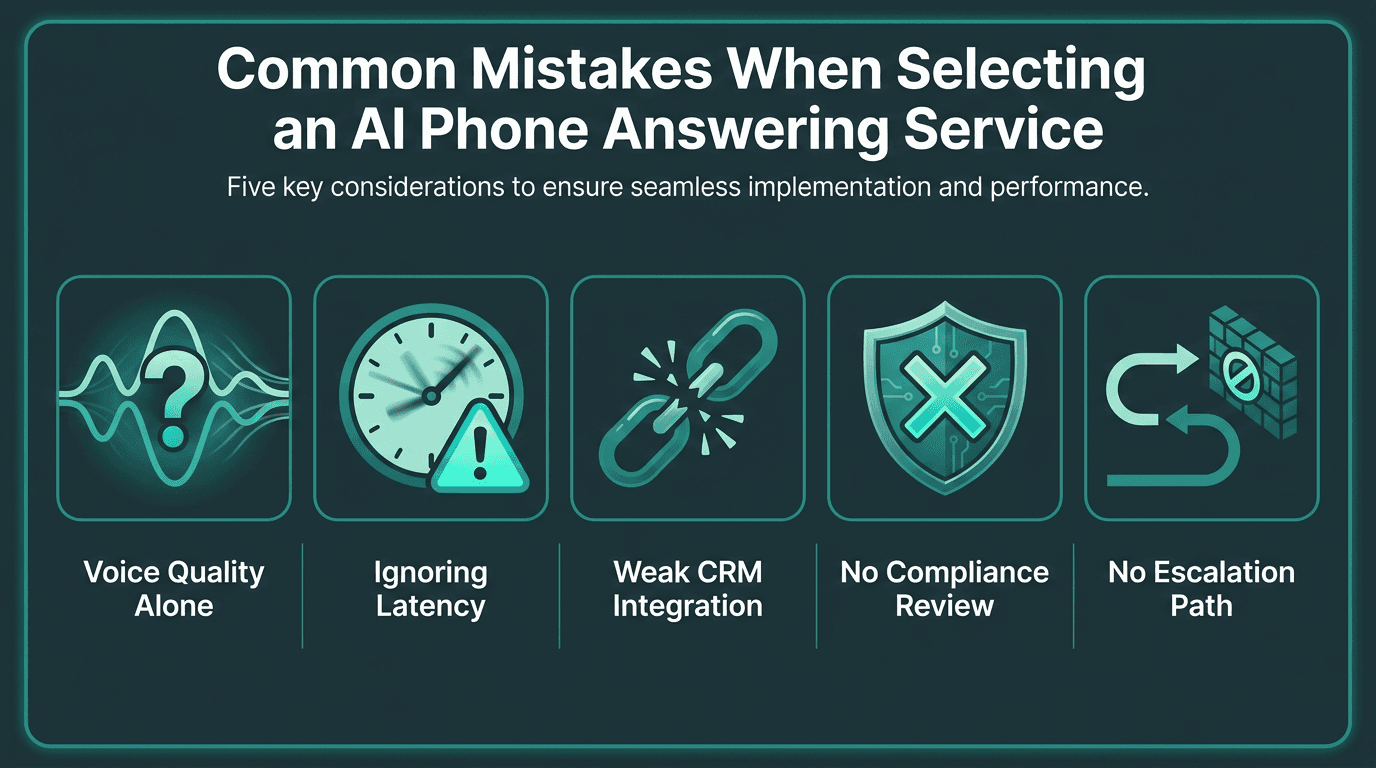
Avoid these five pitfalls - from ignoring latency to skipping compliance - when evaluating an AI phone answering service.
Choosing the right platform involves avoiding common traps that can undermine the success of a deployment. Many teams over-index on one feature while missing operational risks that only appear under real call volume.
1. Choosing on Voice Quality Alone
A pleasant, human-sounding voice is important, but it is not enough. Some of the best-sounding text-to-speech models are not optimized for conversational turn-taking and can introduce delays that make an agent feel slow. A voice that sounds great in a demo but takes too long to generate a response will still lead to a poor caller experience. The evaluation should balance voice aesthetics with the speed of response.
2. Ignoring Latency
On a phone call, delays of even a few hundred milliseconds can make an interaction feel unnatural and disjointed. High latency causes callers to talk over the AI, repeat themselves, or hang up out of frustration. This is often the single biggest reason AI phone agents fail in production. Low latency is critical for maintaining a natural conversational flow and ensuring users feel heard. When evaluating a conversational AI platform, latency benchmarks for the entire round trip (speech-to-text, processing, and text-to-speech) are more important than any single component's speed.
3. No Clear Escalation Path
No AI can handle 100% of calls. An effective system must know when to hand off a conversation to a human. This could be triggered by an angry caller, a request outside the agent's scope, or a direct request to speak with a person. Without a well-defined escalation path, callers can get trapped in frustrating loops, damaging customer trust. The best AI voice agents make this handoff seamless, transferring the call context so the customer does not have to repeat themselves.
4. Weak CRM and Systems Integration
An AI phone answering service that does not connect to your other business systems creates more work, not less. If call notes, new leads, or booked appointments are not automatically logged in your CRM, employees are left with manual data entry. This creates data silos and slows down follow-up. Look for platforms with native integrations or robust APIs that can connect to your core operational tools.
5. Forgetting Compliance and Security
If your business operates in a regulated industry like healthcare or finance, compliance is non-negotiable. Handling patient calls requires a HIPAA-compliant platform with a signed Business Associate Agreement (BAA). Processing payments over the phone requires adherence to PCI-DSS standards, which often includes redacting sensitive cardholder data from recordings and transcripts. Using a non-compliant platform for these use cases can lead to significant fines and legal risk.
When an AI Phone Answering Service Is Worth Deploying
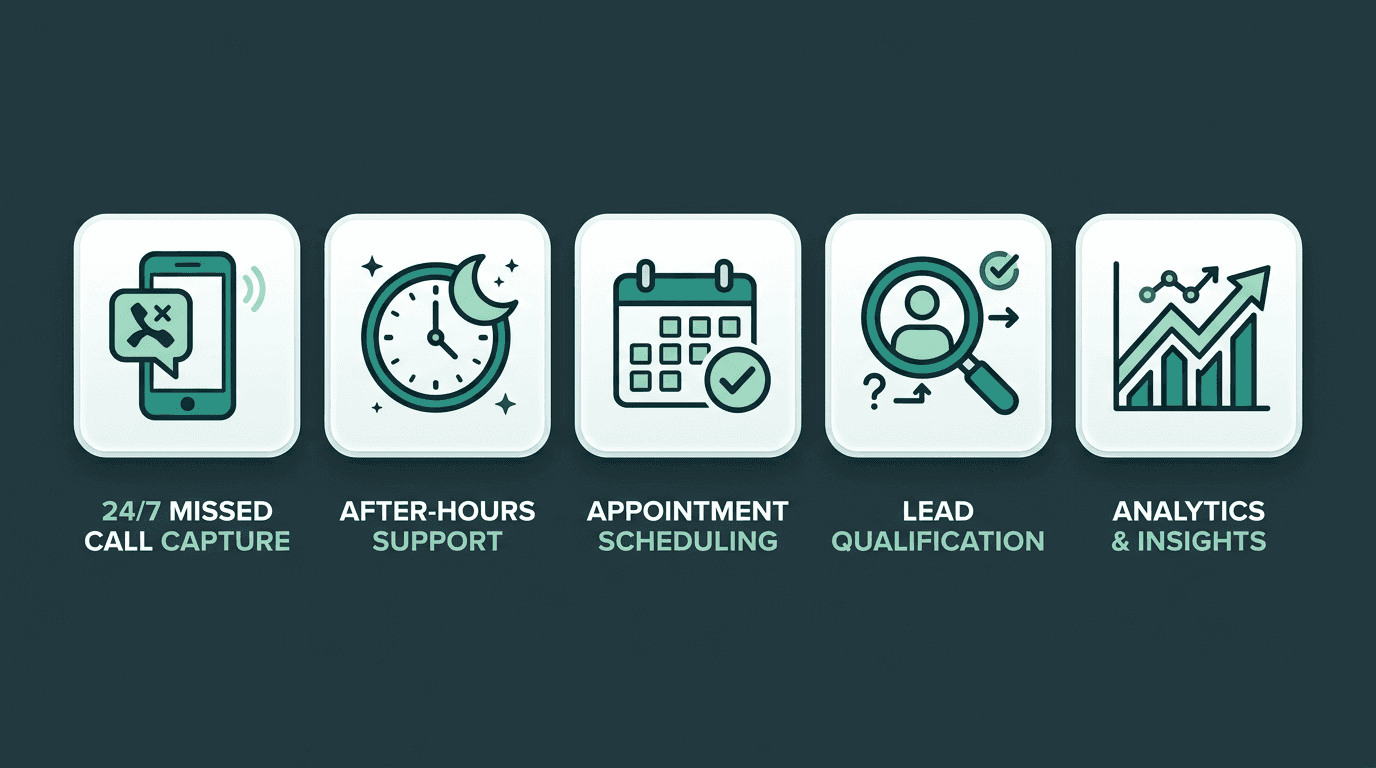
From missed calls to seasonal spikes, an AI phone answering service covers every gap in your call coverage.
An AI phone answering service becomes a valuable asset when call volume, timing, or complexity starts to strain your team's capacity. These systems are particularly effective for businesses facing specific operational challenges.
Recapturing Missed Calls: Many businesses miss a significant portion of their calls, especially during peak hours or when staff are busy. An AI agent can answer every call, ensuring no lead or customer inquiry is lost to voicemail.
Providing After-Hours Coverage: A large percentage of calls often come in outside of standard business hours. An AI answering service offers 24/7 availability, capturing leads and serving customers who call on evenings, weekends, or holidays.
Managing Appointment-Heavy Workflows: Businesses like clinics, salons, and professional services can offload the repetitive task of scheduling. An AI can book, reschedule, or cancel appointments directly on your calendar, reducing no-shows with automated reminders.
Automating Lead Qualification: Not every caller is a ready-to-buy lead. An AI agent can ask qualifying questions, gather key information, and route only the high-intent prospects to your sales team, improving efficiency.
Handling Seasonal Call Spikes: Retail, e-commerce, and home service businesses often experience predictable surges in call volume. An AI service can scale instantly to handle thousands of simultaneous calls, preventing long hold times and abandoned calls during peak seasons.
Frequently asked questions
What is an AI phone answering service?
How much does an AI phone answering service cost?
Can an AI answering service handle complex or off-script calls?
Is an AI phone answering service suitable for small businesses?
What integrations should I look for in an AI phone answering service?