
Texta.ai
AI Voice Automation for Modern Workflows
Speech-to-Text (STT)
Texta.ai

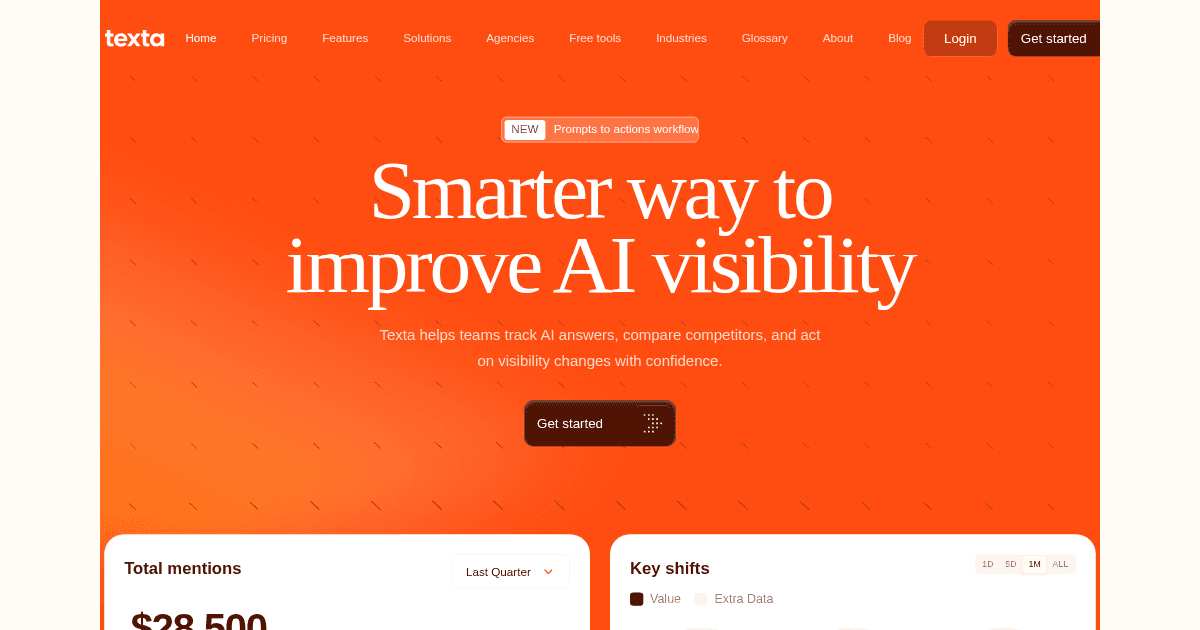
Texta.ai is a Voice AI platform designed for developers and enterprises seeking to automate voice-driven workflows using advanced speech-to-text (STT), large language models (LLMs), and text-to-speech (TTS) technologies. The platform enables seamless integration of conversational AI into applications, supporting use cases from customer support to virtual assistants. With robust API access and support for leading LLMs, Texta.ai empowers technical teams to build scalable, production-grade voice solutions.
Texta.ai is ideal for businesses and developers who require reliable, low-latency voice automation with flexible integration options. Its core technical value proposition lies in its modular pipeline—converting speech to text, processing with LLMs, and generating natural-sounding speech responses—making it a powerful tool for building next-generation voice applications.
Quick facts
Tool Name
Texta.ai
Website
texta.ai
Category
Speech-to-Text (STT)
Primary Use Case
Voice automation for customer support, virtual assistants, and workflow automation.
API Availablity
Comprehensive API access for STT, LLM, and TTS modules.
Typical Users
Developers, enterprise IT teams, SaaS product managers, and AI researchers.
What
Texta.ai
Does
Texta.ai operates a modular pipeline where user speech is transcribed via advanced STT, processed by a choice of LLMs for contextual understanding and response generation, and then synthesized back to speech using high-fidelity TTS. This architecture enables real-time, natural voice interactions across a variety of applications.
Developers typically build:
- Voice-enabled customer support bots
- Automated phone agents
- Conversational IVR systems
- Voice-driven workflow automation
- Multilingual virtual assistants
- Real-time meeting transcription and summarization
Key Features
Low-Latency Voice Processing
Optimized STT and TTS modules ensure sub-second response times for real-time conversational experiences.
Multi-LLM Support
Integrate with leading LLMs such as OpenAI GPT, Anthropic Claude, and more for flexible, context-aware responses.
Telephony & SIP Integration
Seamlessly connect to telephony systems and SIP endpoints for automated call handling and IVR.
Customizable Voice Profiles
Deploy branded, natural-sounding voices with support for multiple languages and accents.
Secure, Scalable APIs
Enterprise-grade API endpoints with robust authentication, rate limiting, and monitoring for production use.
Common Use Cases
Healthcare Intake Automation
Automate patient intake and triage with conversational voice bots integrated into telehealth systems.
Financial Services IVR
Streamline customer authentication and support with intelligent, voice-driven IVR flows.
Retail Voice Assistants
Enable hands-free product search and order tracking via in-store or mobile voice assistants.
Customizable Voice Profiles
Automate driver check-ins and delivery updates through real-time voice interactions.
HR Interview Scheduling
Coordinate candidate interviews and answer FAQs using conversational voice bots.
HR Interview Scheduling
Coordinate candidate interviews and answer FAQs using conversational voice bots.
Alternatives
Smallest AI
Visit
AGI agents under 10B parameters for ultra-fast, accurate speech and text conversations.
Scale to billions of enterprise interactions with minimal latency
Frequently Asked Questions
What LLMs does Texta.ai support?
Texta.ai supports integration with major LLMs including OpenAI GPT and Anthropic Claude, allowing developers to choose the best model for their use case.
How is latency managed for real-time applications?
Texta.ai is engineered for low-latency processing, with optimized STT and TTS modules delivering sub-second response times for seamless voice interactions.
Is there API access for all modules?
Yes, Texta.ai provides comprehensive API endpoints for STT, LLM, and TTS, enabling full programmatic control and integration into custom workflows.
Can Texta.ai integrate with telephony systems?
Texta.ai offers built-in support for telephony and SIP integration, making it easy to deploy voice AI in call centers and automated phone systems.
