Best AI Cold Calling Tools in 2026: What Works and What Doesn’t

Does AI cold calling actually work? Compare the best tools in 2026, including Smallest.ai, ElevenLabs, Deepgram, OpenAI, and Cartesia, with pricing.
AI cold calling covers a wider spectrum than most people realize. At one end, fully automated voice bots handle initial prospect outreach without a human anywhere in the loop. At the other, AI supports sales reps by scoring leads, drafting scripts, and surfacing coaching cues mid-call. Getting clear on what AI cold calling is before picking a tool is the difference between a smart investment and an expensive rebuild six months later.
The case for change is straightforward: traditional cold call conversion rates are consistently low across industry research. This comparison covers the leading AI cold calling platforms available in 2026, evaluates whether the technology delivers in practice, and helps you match the right tool to your actual use case.
Does AI Cold Calling Actually Work?
The honest answer: it depends entirely on what you expect it to do. AI in outbound sales performs best when it absorbs manual tasks like scheduling and lead scoring, freeing human reps to focus on relationship-building and closing. The distinction worth drawing is between fully automated voice agents that handle top-of-funnel qualification without a human in the loop, and AI-assist tools that support reps during live calls. Neither replaces a skilled closer.
Where AI consistently outperforms manual processes is volume and consistency. A voice agent runs around the clock, never has an off day, and applies identical qualification logic to every call. For teams weighing the pros and cons of AI cold calling, the pattern is clear: AI owns top-of-funnel outreach and data capture; humans remain essential for nuanced negotiation and trust-building. The tools below reflect that reality.
How We Evaluated Each Tool
Each platform was scored across six criteria.
Voice Quality covers naturalness, expressiveness, and whether the voice holds up in a real conversation rather than a demo. Latency measures response time from input to spoken output, which is critical for any conversational AI caller. Pricing Model examines cost structure, free tiers, and how costs scale with usage. Integration Depth looks at CRM connectors, webhook support, and API flexibility. Scalability assesses whether the platform handles high call volumes without degradation. Customization covers voice cloning, persona building, and script adaptability.
Smallest.ai: Driving the future of small, efficient multi-modal models
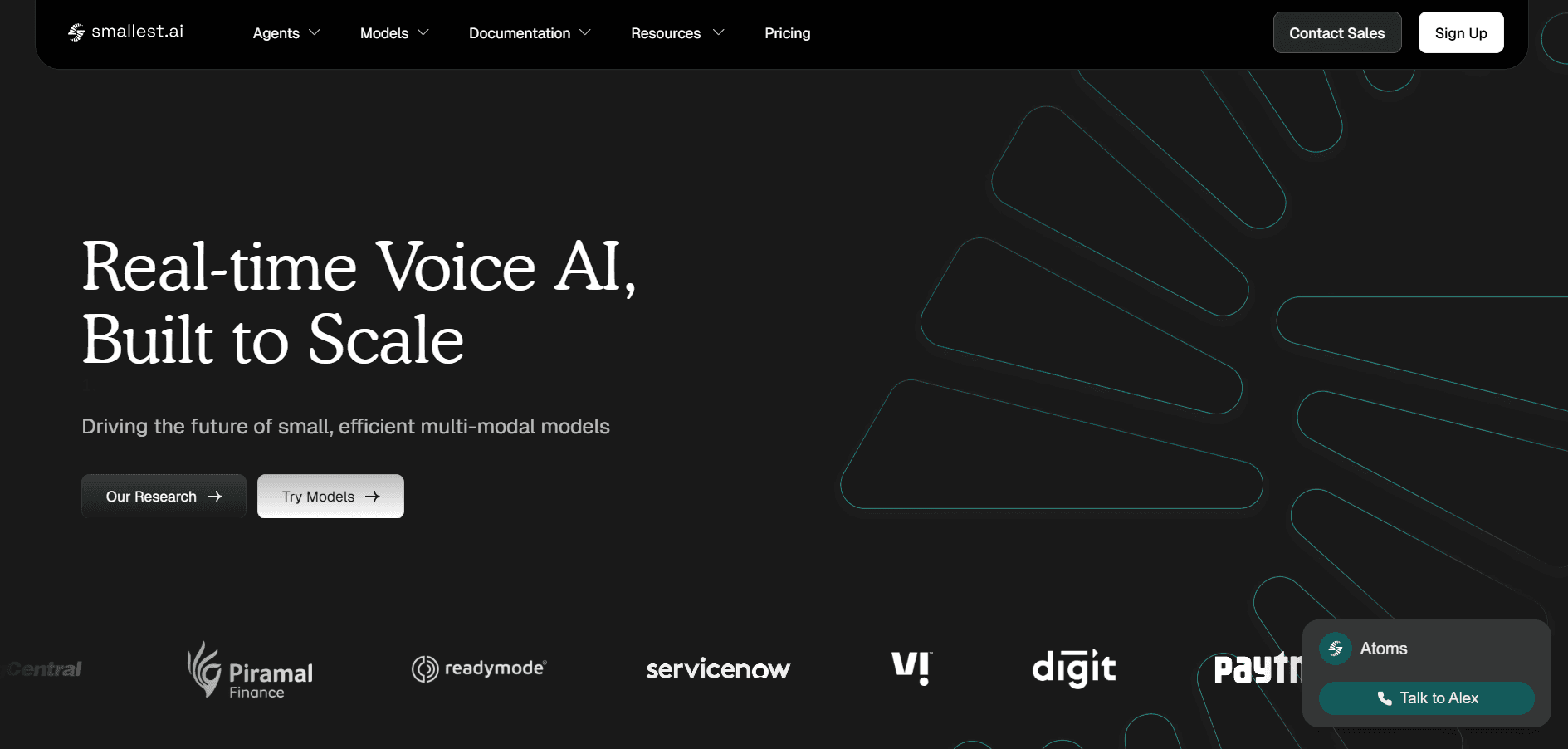
Smallest.ai is purpose-built for real-time voice applications, which makes it a natural fit for cold calling deployments where latency kills conversions. The Atoms product manages the full call lifecycle: answering, qualifying, and routing leads. Underneath Atoms sits Lightning (text-to-speech) and Pulse (speech-to-text), both optimized for sub-second response times. The Electron conversational small language model handles the reasoning layer, keeping the entire stack tight and fast.
The combination of voice quality and speed is what separates Smallest.ai in a cold calling context. Lightning produces natural-sounding speech without the robotic cadence that causes prospects to hang up in the first ten seconds. The voice cloning capability lets you build a branded caller persona that sounds consistent across thousands of calls, which matters if you're exploring making cold calling more personal with AI. The API gives developers direct access to Lightning and related speech services for custom integrations.
Pricing is usage-based through the Waves API, with a free tier available for development and testing. Production deployments scale with call volume, which suits early-stage teams and high-volume outbound operations equally well. If you want to see how Smallest.ai stacks up against a specific competitor before committing, the ElevenLabs vs. Smallest.ai breakdown covers voice quality, latency, and pricing in detail.
ElevenLabs: Premium Voice Quality, Higher Price Point
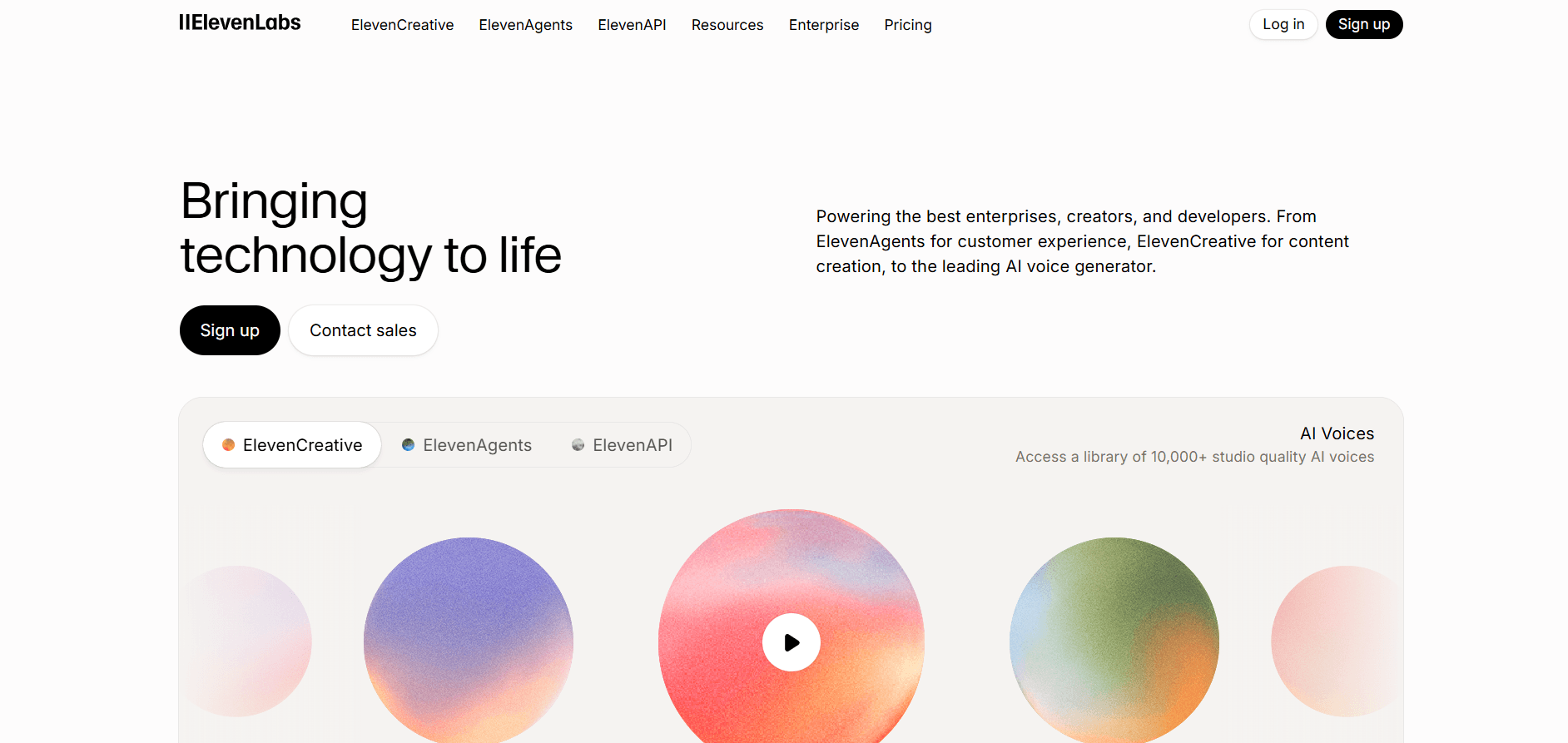
ElevenLabs produces some of the most expressive synthetic voices available, and that quality is genuinely noticeable in cold calling scenarios where a natural-sounding voice increases the chance a prospect stays on the line. The platform offers voice cloning, multilingual support, and an API that integrates with telephony stacks. Pricing starts at $6/month for the Starter tier, scaling to $11/month (First month 50% off for Creator), $99/month (Scale), and $299/month (Business), with enterprise pricing above that. Low-latency TTS - the feature most relevant to cold calling - is only available from the Business tier upward.
The limitation for high-volume cold calling is cost at scale and latency profile. ElevenLabs has added a conversational AI layer, but its architecture is optimised for expressive, high-quality audio rather than the sub-300ms response times that production outbound calling requires. Teams running thousands of calls daily will find the cost structure accumulates quickly.
Deepgram: STT-First, Strong for Real-Time Transcription
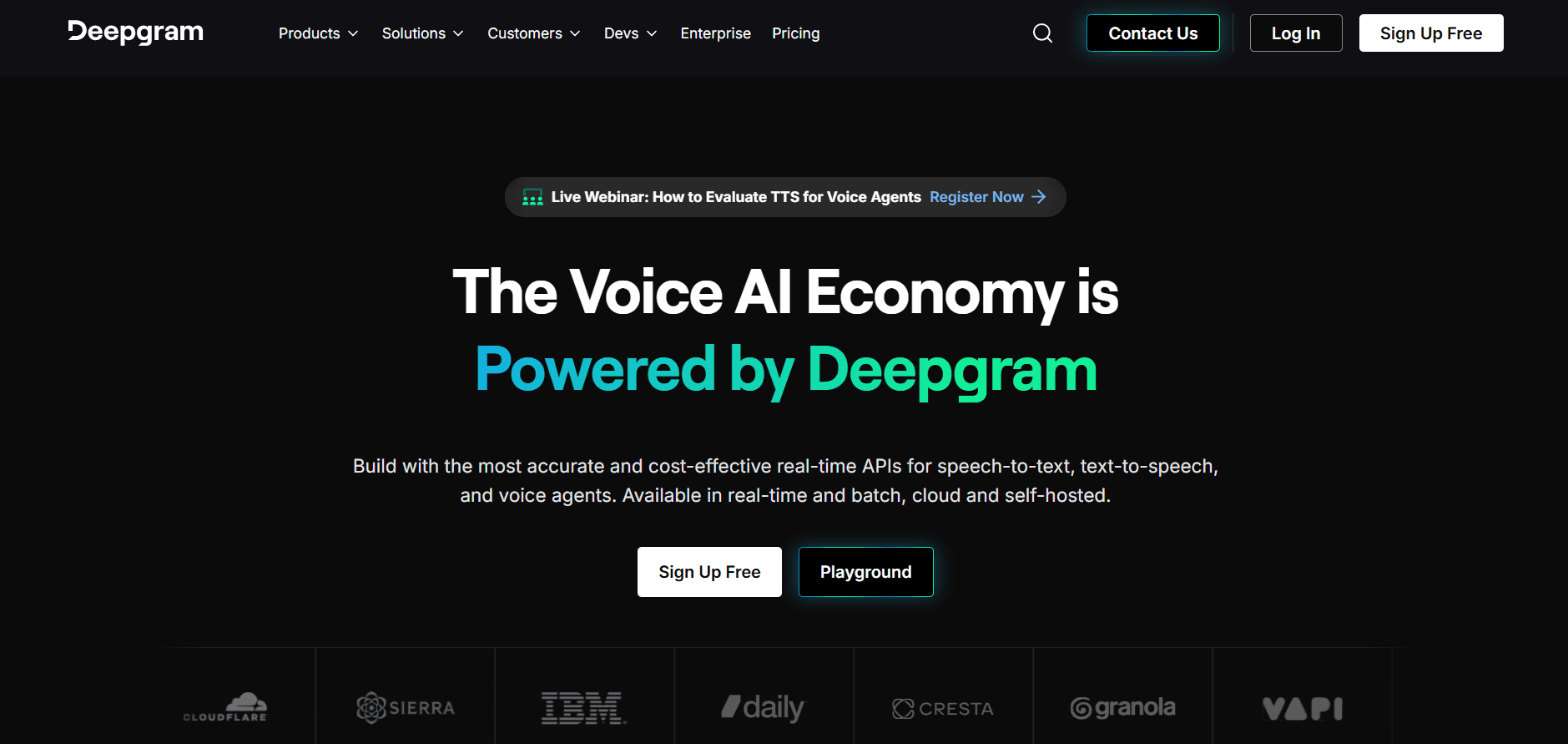
Deepgram's latest ASR model delivers low word error rates even in noisy call center environments, and the Deepgram conversational AI solution is designed specifically for voice agent deployments. Its primary strength is transcription. It also offers a TTS component alongside its core transcription offering, though NLU, routing orchestration, and agent logic all require additional components.
Pricing is pay-as-you-go with per-minute rates published on the Deepgram website. If your primary concern is accurately capturing what prospects say during calls, Deepgram is a serious option. For teams evaluating the full voice agent stack, the choosing your 2026 voice agent stack comparison covers how Deepgram fits alongside other components.
OpenAI: Flexible but Not Purpose-Built for Calling
OpenAI's speech-to-speech API enables low-latency speech-to-speech interactions using its underlying language model, handling both language model reasoning and voice output through a single endpoint. That simplified architecture has made it popular with developers building voice agents from scratch. Pricing is published on the OpenAI website; audio input and output are billed separately by token usage..
OpenAI is a general-purpose AI platform, not a cold calling tool. You get strong language understanding and reasonable voice quality, but there's no built-in telephony integration, no lead scoring, no CRM connectors, and no call analytics. Teams that go this route typically spend considerable engineering time building surrounding infrastructure. For a detailed look at how the components fit together, designing voice assistants walks through the STT, LLM, and TTS architecture decisions that matter most.
Cartesia: TTS and STT APIs for Developer-First Teams
Cartesia's TTS API targets sub-100ms time-to-first-audio, which matters in cold calling applications where response lag creates awkward silences that kill momentum. Cartesia covers voice input (STT) and output (TTS) well. What it does not provide is NLU, routing orchestration, or agent logic. Teams using its APIs still need to source those components independently. Pricing is usage-based with a free tier; paid plans start at $4/month billed annually, with higher tiers available for greater volume.
Head-to-Head: AI Cold Calling Tools Compared
Tool | What It Is | Handles Full Calling Pipeline? | Latency Profile | Pricing Structure |
|---|---|---|---|---|
Smallest.ai | Full-stack voice agent platform | Yes - STT, NLU, TTS, agent logic in one platform | Sub-100ms TTS, real-time STT | Usage-based, free dev tier |
ElevenLabs | Voice generation and agent platform | Partially - conversational AI layer available but optimised for quality over real-time calling latency | Low TTS latency | Subscription tiers plus usage |
Deepgram | STT and TTS API | No - voice I/O only, no NLU or agent logic | Very fast STT, low TTS | Per-minute streaming |
OpenAI | Modular AI APIs | No - requires custom assembly of all layers | Low latency (speech-to-speech) | Per-minute audio |
Cartesia | TTS and STT APIs | No - voice I/O only, no NLU or agent logic | Sub-100ms TTS, fast STT | Usage-based |
Which Tool Is Right for Your Use Case?
If you want a complete AI cold calling platform without assembling a stack from scratch, Smallest.ai is the most direct path. Atoms handles agent logic, Lightning handles voice output, and Pulse handles transcription, all within a single ecosystem optimized for real-time calling. For teams building a complete AI agent for sales calls, this integrated approach can cut weeks off the build time.
Teams that need only a transcription layer, a TTS component, or a speech-to-speech API for a fully custom build will find point solutions available in the market. But those teams are assembling infrastructure, not deploying a product. For most sales teams that need to go from architecture decision to production calls without a dedicated voice AI engineering function, Smallest.ai's Atoms is the more direct path. For a broader view of the transcription landscape, best speech-to-text APIs for voice agents in 2026 covers STT options in more depth.
The Verdict
AI cold calling works when the tool matches the task. Fully automated voice agents are proven for top-of-funnel qualification, appointment setting, and lead routing at scale. AI-assist tools improve rep performance on live calls through real-time coaching and data capture. The gap between these two modes is where most buying mistakes happen: teams purchase a TTS component expecting a complete calling solution, or they invest in an enterprise platform when a modular API would serve them better.
For most teams evaluating AI cold calling in 2026, the practical starting point is a platform that handles the full stack without a custom build. Smallest.ai's Atoms platform combines Lightning's natural-sounding TTS, Pulse's accurate STT, and Electron's conversational reasoning into a single deployable solution. You get the speed required for real conversations, the voice quality that keeps prospects on the line, and the infrastructure to scale from pilot to production without rebuilding from scratch.
Frequently asked questions
Does AI cold calling actually improve conversion rates?
What is the difference between an AI cold calling bot and an AI-assisted calling tool?
Is AI cold calling legal?
How do I choose between building a custom AI calling stack and using a ready-made platform?
What voice quality should I expect from an AI cold calling agent?