ASA in Call Center: Effective Improvements WFM Teams Trust in 2026

Learn what ASA in call center means, how it’s calculated, and practical ways WFM and operations teams can improve answer speed and reduce daily wait times.
Most callers reach out because they need clarity or support right away, not after listening to hold music and repeating their issue multiple times. When wait times begin creeping up, and customer frustration becomes more visible, supervisors, WFM teams, and operations leads often search for ASA in call center benchmarks to understand how far wait performance has drifted from what customers expect. And because ASA is averaged across every answered call, even a 10–15 second increase can translate into hours of added collective wait time across a single day, especially for centers handling high volumes.
This is usually the moment leaders want to know whether the issue is staffing, routing, volume spikes, or simply a sign that the current workflow is unable to support peak conditions, and that’s exactly why they look up ASA in call center guidance.
In this guide, we break down what ASA means, how it’s calculated, why it matters, proven ways to improve it, and how Smallest.ai helps reduce wait times in real operational environments.
Key Takeaways
ASA Measurement Rule: ASA measures seconds waited in queue after IVR until an agent accepts; includes ringback post-routing, excludes abandoned calls.
Calculation Precision: Compute ASA as total wait seconds ÷ answered calls per interval, using synchronized ACD timestamps and consistent rounding.
Interval Monitoring Value: Measure ASA at 15-to-30-minute intervals to detect intraday spikes and guide micro-staffing or routing actions.
Operational Levers Matter: Targeted levers, staffing, routing, occupancy, callbacks, ACW reduction, produce measurable ASA improvements when applied at the interval level.
Smallest.ai (Atoms) Impact: Atoms handles routine calls, captures intent before escalation, and scales during peaks, reducing queue depth and measured ASA on human queues.
What is an Average Speed of Answer (ASA)?
ASA in call center operations refers to the precise measurement of how long callers wait in the queue after leaving the IVR and before an agent accepts the call. It applies only to answered calls and is one of the most monitored metrics in interval-level performance dashboards.
Many teams also track this figure alongside average speed of answer trends to validate whether real-time staffing conditions match expected service targets.
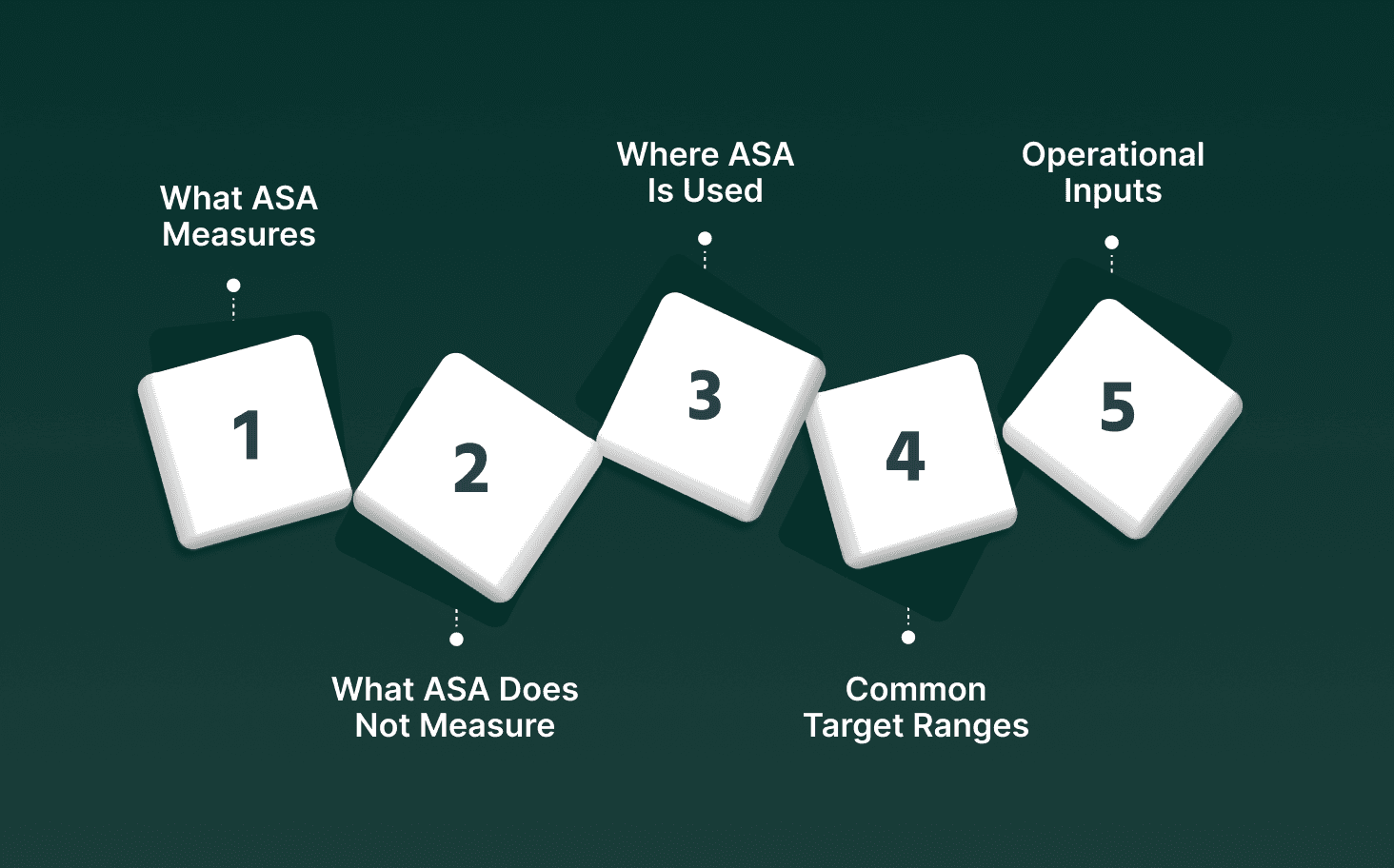
What ASA Measures: The average number of seconds callers remain in the queue until the call is delivered to and accepted by an agent. It includes the short ring period once the system routes the call to an available agent.
What ASA Does Not Measure: It does not include IVR navigation, abandoned calls, post-answer hold time, agent talk time, wrap-up time, or any pre-queue routing segments.
Where ASA Is Used: Supervisor dashboards, service-level tracking, intraday staffing checks, forecast adherence reviews, and historical reporting that validates whether call flow patterns match planned intervals.
Common Target Ranges: Many contact centers set operational ASA targets near the 20–30 second range, while high-sensitivity sectors may define stricter internal thresholds. These are internal guidelines, not industry standards.
Operational Inputs That Influence ASA: Queue depth changes, staffing against forecast, agent occupancy spikes, routing rules, skill availability, and sudden increases in inbound traffic.
ASA gives teams a precise view of queue wait performance and helps determine whether staffing and routing conditions support the service outcomes expected for each interval.
Explore how real-time AI agents can transform your call experience with our Complete Guide on AI Phone Agents for 2025.
How To Calculate the Average Speed of Answer
The standard method for calculating ASA in call center reporting is to measure wait time only for calls that entered the queue and were answered by an agent. This produces a precise wait-time metric used in interval dashboards and forecasting accuracy checks.
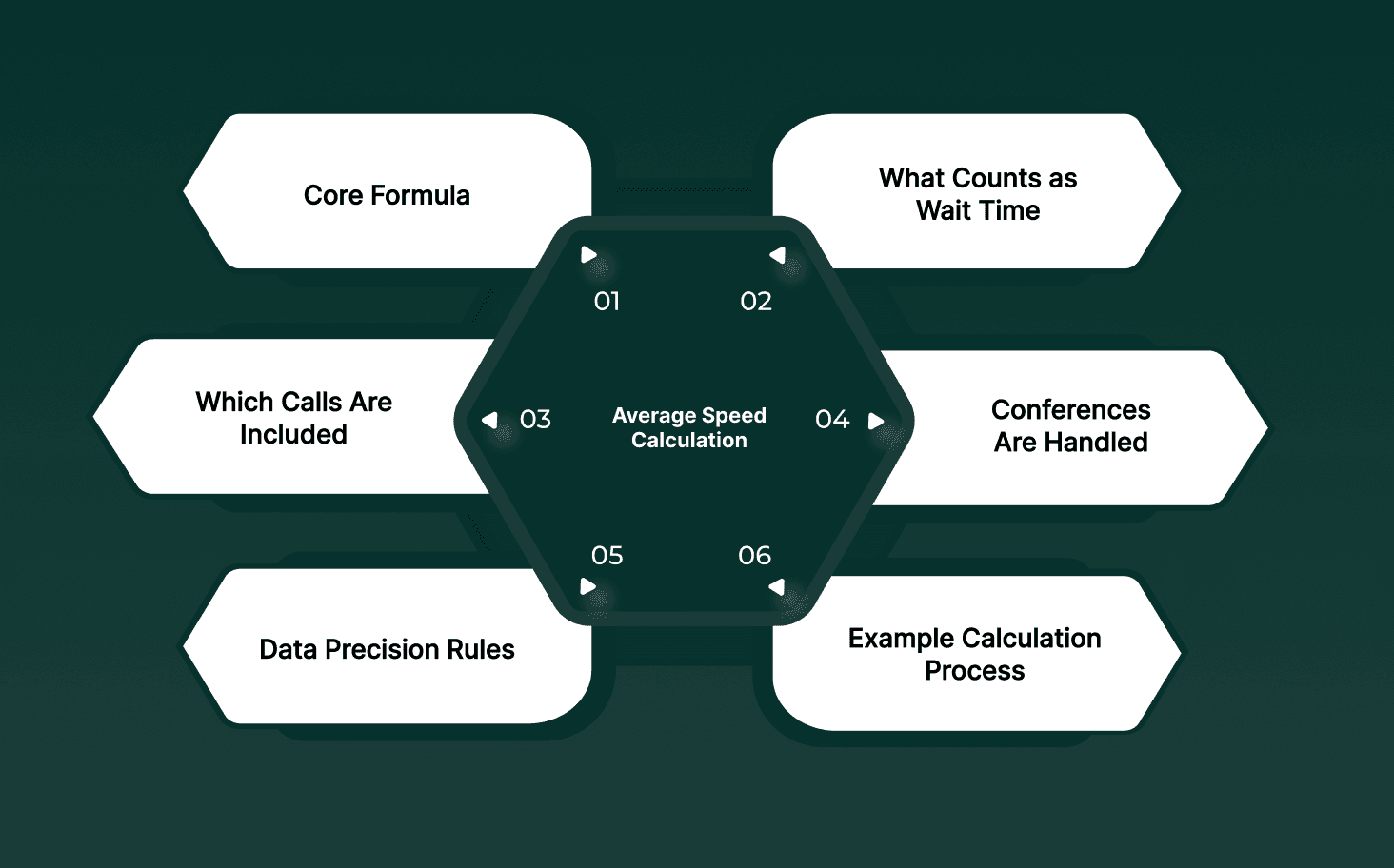
Core Formula: Total Wait Time for Answered Calls ÷ Number of Answered Calls = ASA. Example: 1,200 seconds of wait time ÷ 80 answered calls = 15 seconds.
What Counts as Wait Time: Wait time begins the moment a call enters the queue and stops the instant an agent accepts it. Routing ringback is included. IVR navigation, talk time, wrap-up, and post-answer hold are excluded.
Which Calls Are Included: Only answered calls within the reporting window contribute to the call center ASA. Abandoned calls, timeouts, and callbacks are excluded unless calculating specialized variants.
How Transfers and Conferences Are Handled: For internal transfers, ASA uses the timestamp of the first agent who answered. Transfers do not reset the wait timer. Conference calls reference the initial answer timestamp as well.
Interval and Data Precision Rules: ASA should be calculated per interval (15–30 minutes) to track intraday shifts. Use ACD timestamps with consistent rounding (whole seconds or one decimal) for comparable results.
Example Calculation Process: Export answered calls for a specific interval, sum all wait durations, count answered calls, divide the totals, and verify timestamp alignment across systems.
Accurate ASA calculation depends on strict inclusion rules, consistent timestamps, and interval-level reporting that reflects real queue behavior.
See how Smallest.ai’s real-time voice agents reduce queue load, capture intent instantly, and keep ASA stable even during peak traffic.
6 Ways To Improve Your Call Center’s ASA
Improving ASA requires operational changes that reduce queue depth, shorten routing time, and increase the percentage of calls answered within target intervals. The strategies below focus on measurable, real-world interventions used across enterprise contact centers.
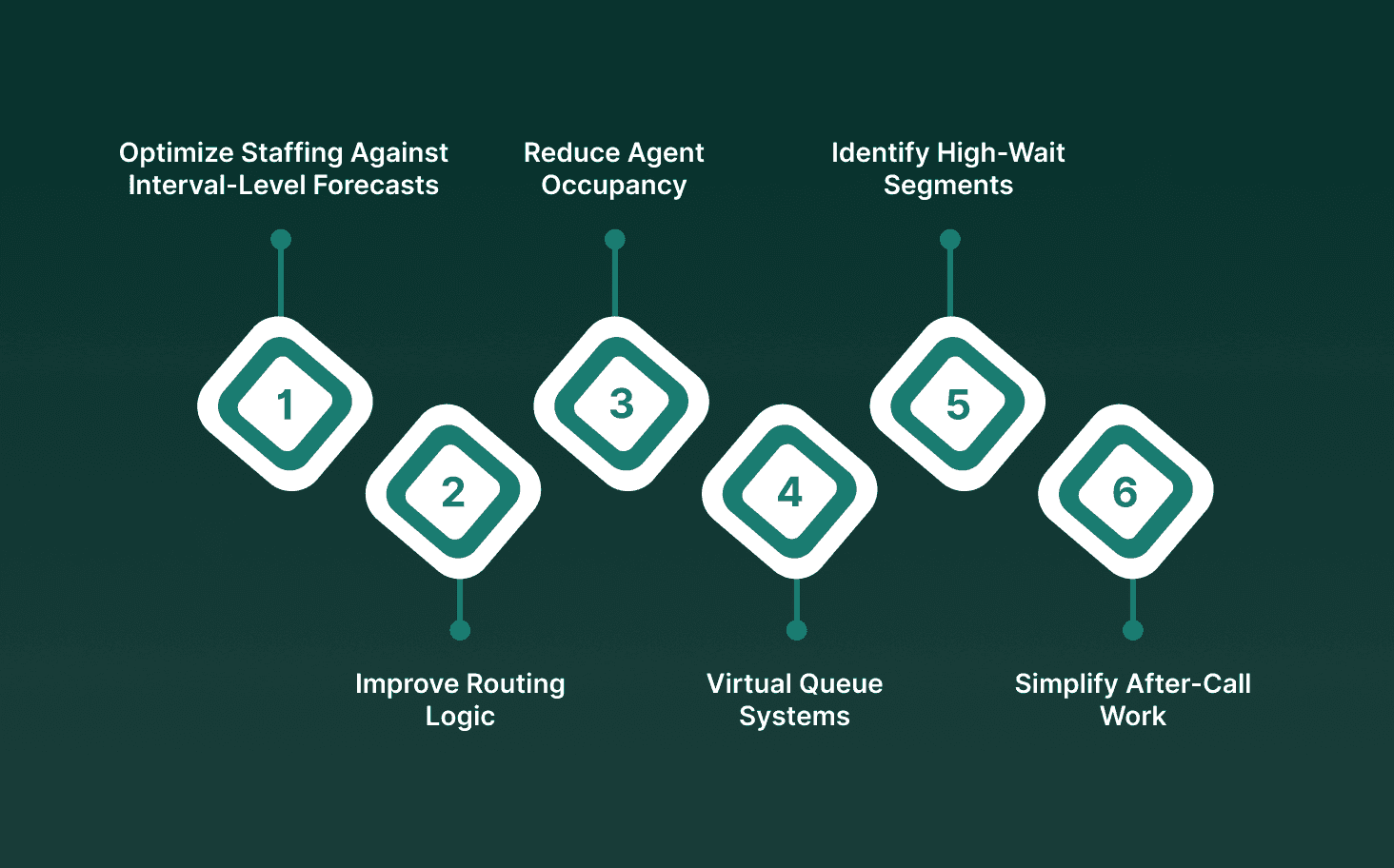
1. Optimize Staffing Against Interval-Level Forecasts
ASA rises when scheduled staffing does not match the volume curve. Corrections must be made at the 15–30 minute interval level, not at the daily average.
Benefits
Reduced Intraday Variance: Aligns agent supply with forecasted call arrival patterns, preventing queue spikes during high-volume intervals.
Lower Wait-Time Volatility: Prevents sudden ASA surges caused by understaffing in short windows.
More Accurate Service-Level Delivery: Guarantees staffing levels maintain expected SL thresholds without overreliance on overtime or idle buffers.
Example: A center forecasts 400 calls between 10:00 and 11:00 but schedules staff for a 350-call capacity. ASA jumps from 22 seconds to 75 seconds during that interval, despite meeting the daily staffing target. Adjusting staffing for that specific interval restores ASA to the target range.
2. Improve Routing Logic and Skill Assignment
Routing inefficiencies add unnecessary seconds before a call reaches a qualified agent. Optimizing assignment rules shortens time-to-accept and stabilizes ASA.
Benefits
Shorter Distribution Time: Minimizes the number of agents a call is presented to before acceptance.
Higher First-Agent Acceptance: Proper skill mapping reduces routing loops where calls bounce between queues.
Better Utilization of Specialized Skills: Guarantees agents with rare skills are reserved for matching calls, reducing queue congestion for high-priority segments.
Example: A misconfigured routing rule sends Spanish-language callers to the general queue first, creating a 60-second delay before rerouting to bilingual agents. Updating the skill match reduces ASA for this segment by 52 seconds.
3. Reduce Agent Occupancy Through Task Rebalancing
High occupancy (≥85–90%) slows answer times because agents have no buffer between calls. Load balancing and auxiliary task adjustments create available capacity.
Benefits
Faster Call Pickup: Frees agents from back-to-back calls, improving readiness for new queue arrivals.
Stabilized Performance in Peak Hours: Prevents queue buildup when call inflow exceeds agent availability.
Controlled Burnout Risk: Keeps occupancy levels in operationally sustainable ranges, preserving consistent answer speed.
Example: Agents operating at 92% occupancy during peak hours accept calls 8–12 seconds slower due to fatigue and lack of readiness. Shifting 10% of back-office tasks to off-peak hours lowers occupancy to 82% and cuts ASA by 18%.
4. Deploy Callback and Virtual Queue Systems
Callback mechanisms reduce perceived wait time and flatten queue load by spreading volume into lower-traffic intervals.
Benefits
Lower Real-Time Queue Load: Reduces concurrent inbound volume by shifting part of the call load into callback slots.
Improved Experience for High-Wait Windows: Customers avoid long waits during peak surges.
More Predictable ASA During Spikes: Virtual queuing prevents ASA from escalating during sudden volume bursts.
Example: During Monday spikes, ASA regularly rises above 90 seconds. Allowing callback for queues exceeding a 45-second threshold cuts the live queue by 30%, reducing ASA to 28–32 seconds even under high volume.
5. Identify High-Wait Segments Using Real-Time Dashboards
Supervisors must use intraday management tools to isolate intervals where ASA deviates from the threshold, allowing quick corrections.
Benefits
Immediate Detection of Routing or Staffing Issues: Real-time dashboards highlight spikes within minutes.
Targeted Adjustments: Enables micro-actions such as skill reallocation, break rescheduling, or agent pull-ins from overflow queues.
Higher Forecast Adherence: Helps distinguish between forecast error and real-time operational bottlenecks.
Example: Supervisors notice a sudden increase in ASA from 24 seconds to 58 seconds in the 14:00 interval. Real-time data shows three agents stuck in extended ACW. Reassigning them to “Ready” stabilizes ASA within 10 minutes.
6. Simplify After-Call Work (ACW) and Wrap Times
Lengthy ACW reduces the number of agents available for new calls and increases queue depth. Operational adjustments reduce wrap duration without affecting documentation accuracy.
Benefits
Improved Agent Availability: Shorter ACW increases the number of agents ready for the next inbound call.
Reduced Queue Backlog: Faster ACW completion helps stabilize ASA during high-volume periods.
Higher Consistency Across Agent Groups: Standardized templates or tooling prevent long-tailed wrap times.
Example: Agents averaging 55 seconds of ACW reduce availability enough to increase ASA by 12 seconds across the afternoon peak. Introducing a structured disposition template drops ACW to 30 seconds and improves ASA by 20%.
Reducing ACW expands agent availability and lowers queue buildup, directly improving ASA outcomes.
Explore the platforms shaping the future of voice automation in our Top AI Platforms for Phone Calling in 2025.
Why ASA Matters in Call Centers
ASA in call center operations reflects how quickly callers reach a live agent after entering the queue. It influences service delivery, customer experience, operational stability, and compliance for workflows where a timely response is required. Leaders monitor ASA at the interval level because even small shifts in wait time signal emerging issues in staffing, routing, or traffic patterns.
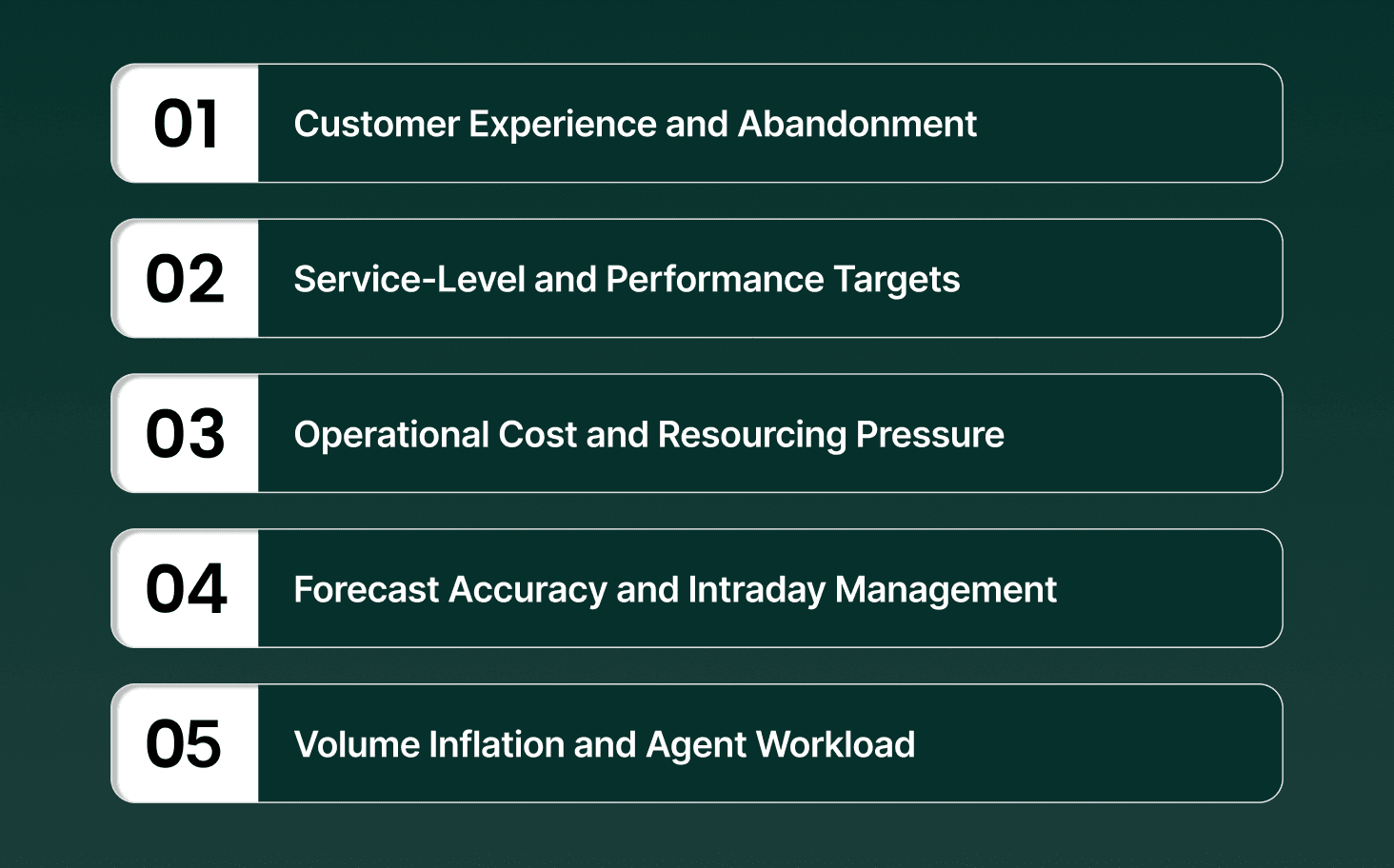
Customer Experience and Abandonment: Longer ASA increases caller frustration and abandonment likelihood. While the impact varies by call type, sustained waits consistently lower perceived service quality.
Service-Level and Performance Targets: High ASA makes it harder to meet interval SLAs such as 80/20. ASA is not used in the SLA formula, but it strongly influences whether intervals hit expected answer-time targets.
Operational Cost and Resourcing Pressure: Rising ASA often signals staffing or routing gaps that require overtime, skill reallocation, or overflow routing, all of which increase cost per contact and reduce efficiency.
Forecast Accuracy and Intraday Management: Deviations between forecasted and actual ASA reveal mismatches in volume prediction, staffing distribution, or shrinkage. These insights guide interval-level adjustments and improve upcoming forecasts.
Volume Inflation and Agent Workload: High ASA increases redials and repeat contacts, adding pressure across queues. It also correlates with higher agent occupancy, which drives fatigue and uneven workload distribution.
ASA matters because it directly influences customer experience, interval-level SLA performance, operational cost, and the day-to-day stability of contact center workflows. Monitoring ASA allows teams to identify pressure points early and correct the operational drivers that lead to extended queue times.
How Smallest.ai Helps Reduce ASA in Real Time
Smallest.ai improves ASA in call center environments by using Atoms, its real-time AI agent platform, to handle routine voice interactions instantly and reduce the number of calls entering human queues. For escalations, Atoms delivers cleaner, faster handoffs that shorten distribution time and raise first-agent acceptance.
Key Features
Real-Time Conversational AI: Atoms answers routine inbound calls immediately, removing them from the human queue. These resolved calls do not contribute to ASA, lowering overall wait times.
Accurate Intent Capture for Escalations: Caller intent, account details, and context are gathered upfront. Human agents receive a complete payload, reducing routing delays and talk-start friction.
Multilingual, Language-Aware Routing: Built-in language detection guarantees callers reach the correct workflow without bouncing between queues, preventing avoidable wait-time inflation.
Dynamic Load Absorption During Spikes: Atoms scales horizontally to handle sudden volume surges, preventing queue depth from rising during high-traffic intervals.
Integration With Contact Center Systems: ACD, CRM, ticketing, and WFM integrations support accurate routing decisions and provide supervisors with visibility into AI-handled versus agent-handled interactions.
Real-Time Analytics for Operations Teams: Telemetry on volume, intent mix, and escalation patterns helps leaders adjust staffing or routing mid-interval to stabilize ASA.
Compliance-Ready Data Handling: Supports secure PII handling, consent workflows, and controlled data transfer, essential for regulated call types tied to response expectations.
24/7 Availability: Continuous coverage reduces off-hour queue buildup and keeps ASA stable when human staffing is thin.
By resolving routine demand, improving escalation quality, and absorbing peak traffic, Atoms lowers queue depth and routing delays, the primary operational drivers behind rising ASA.
Conclusion
Improving ASA in call center operations is rarely solved by a single adjustment. It comes from understanding how daily patterns, caller intent, and system behavior interact, and from having tools that respond to those shifts in real time. When teams can see where delays form and redirect volume before queues build, they gain control over ASA in call center performance in a way that keeps both customers and agents supported throughout the day.
Smallest.ai gives operations teams control by absorbing routine calls, capturing intent before escalation, and keeping queues stable even when volume moves unpredictably. If you want to see how real-time AI agents can strengthen your call experience and reduce wait times, explore what Smallest.ai can do for your voice operations today. Start a demo with smallest.ai!
Frequently asked questions
Does ASA in the call center reporting include calls that are transferred between agents?
How does agent occupancy influence the average speed of answer?
Is the ASA contact center's performance affected by inaccurate skill assignment?
Can virtual queuing change what is reported in the average speed to answer?
What is ASA in BPO environments with blended work types?