Best Bland AI Alternatives for Voice Agents in 2026

Exploring the best Bland AI alternatives in 2026. Compare Smallest.ai, ElevenLabs, Deepgram, AssemblyAI, and Cartesia on pricing, features, and use cases.
Bland AI alternatives are getting serious attention in 2026, and the market numbers explain why. The global voice AI agents market is projected to reach $47.5 billion by 2034, up from $2.4 billion in 2024, a 34.8% CAGR that reflects accelerating enterprise demand. Bland AI earned its early reputation in outbound calling automation, but specific friction points surface as teams scale: pricing that climbs unpredictably at volume, limited flexibility for non-English use cases, and an architecture that rewards staying inside its opinionated call-flow model.
If you are evaluating alternatives, you are probably somewhere between 'the pricing stops working at our call volume' and 'we need something that fits our existing stack.' What follows is an honest look at five platforms worth serious consideration, including where each one wins and where it does not. For a direct head-to-head, the Smallest.ai vs. Bland AI comparison is a useful companion read.
Quick Comparison: Bland AI Alternatives at a Glance
Platform | Architecture | Primary Use Case | Vendor Lock-in |
|---|---|---|---|
Smallest.ai | Native STT/TTS/LLM + agent layer | Full-stack voice agents at scale | Low |
ElevenLabs | Voice synthesis and cloning platform | High-fidelity voice output workflows | Medium |
Deepgram | Developer STT and voice agent APIs | High-volume transcription at scale | Medium |
AssemblyAI | Compliance-focused STT pipeline | Regulated industry voice pipelines | Low-Medium |
Cartesia | Low-latency TTS API | Real-time conversational agents | Medium |
Smallest.ai: The Full-Stack Alternative Built for Production Scale
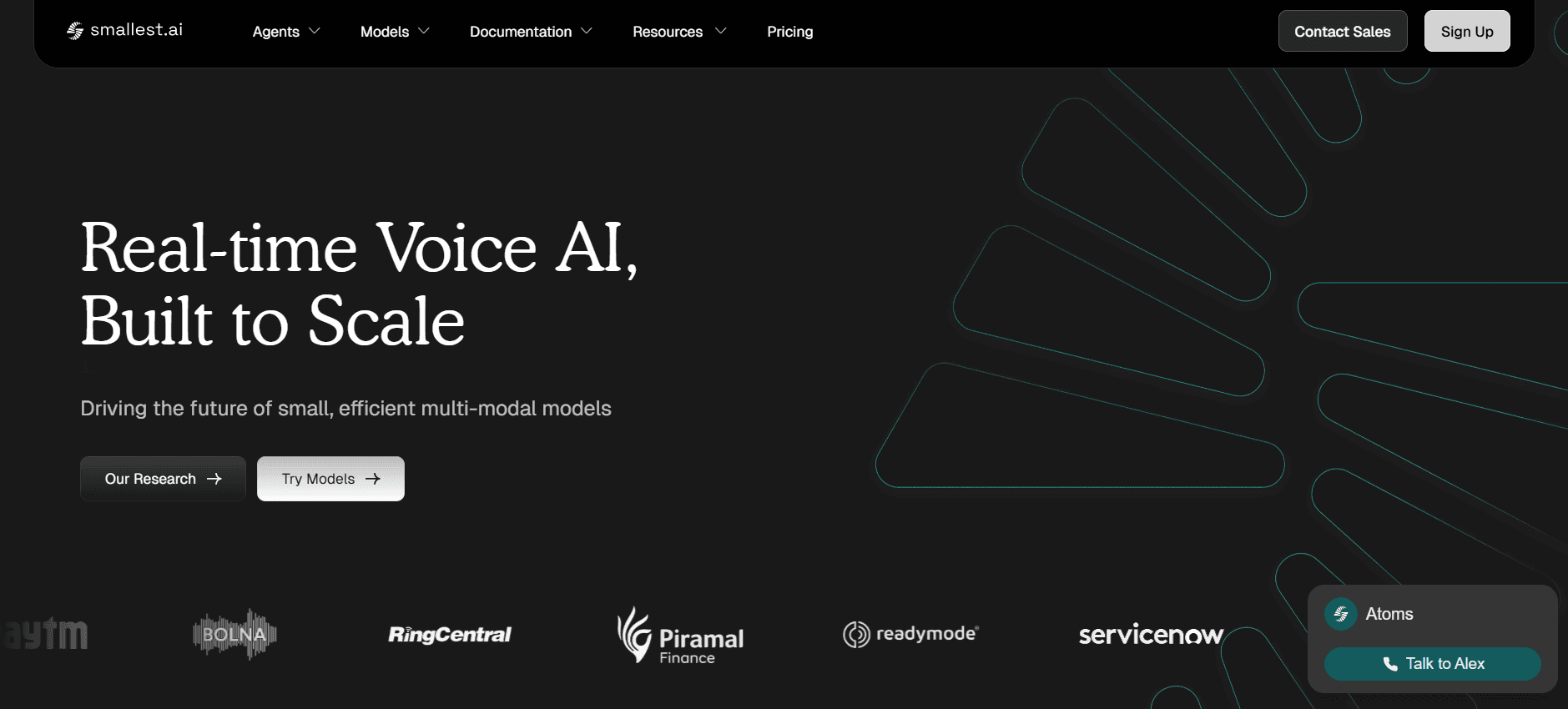
Most alternatives in this space solve one piece of the voice agent puzzle. Smallest.ai owns the entire stack: Pulse for speech-to-text, Lightning for text-to-speech, Electron as a conversational small language model tuned for voice, and Atoms as the agent and workflow orchestration layer. That vertical integration is the core argument here, because it eliminates the latency tax that accumulates when you stitch together separate STT, LLM, and TTS vendors from different providers.
Where Bland AI is built around outbound phone call automation with a relatively fixed workflow model, Smallest.ai's voice agents are composable. You can deploy a full inbound/outbound agent through Atoms, or call individual APIs (Waves API for developers) if you only need TTS or STT inside an existing pipeline. The usage-based pricing is transparent, which matters when projecting costs across tens of thousands of minutes per month. Current rates are on the Smallest.ai pricing page.
The honest limitation: the ecosystem is newer than some competitors, so third-party integrations and community documentation are still maturing. Teams that need a large pre-built integration library on day one may face more custom work upfront. That said, for teams prioritizing latency, cost predictability, and a single vendor relationship across the full voice stack, it is the most coherent option on this list. Book a demo to see the agent platform in action.
ElevenLabs
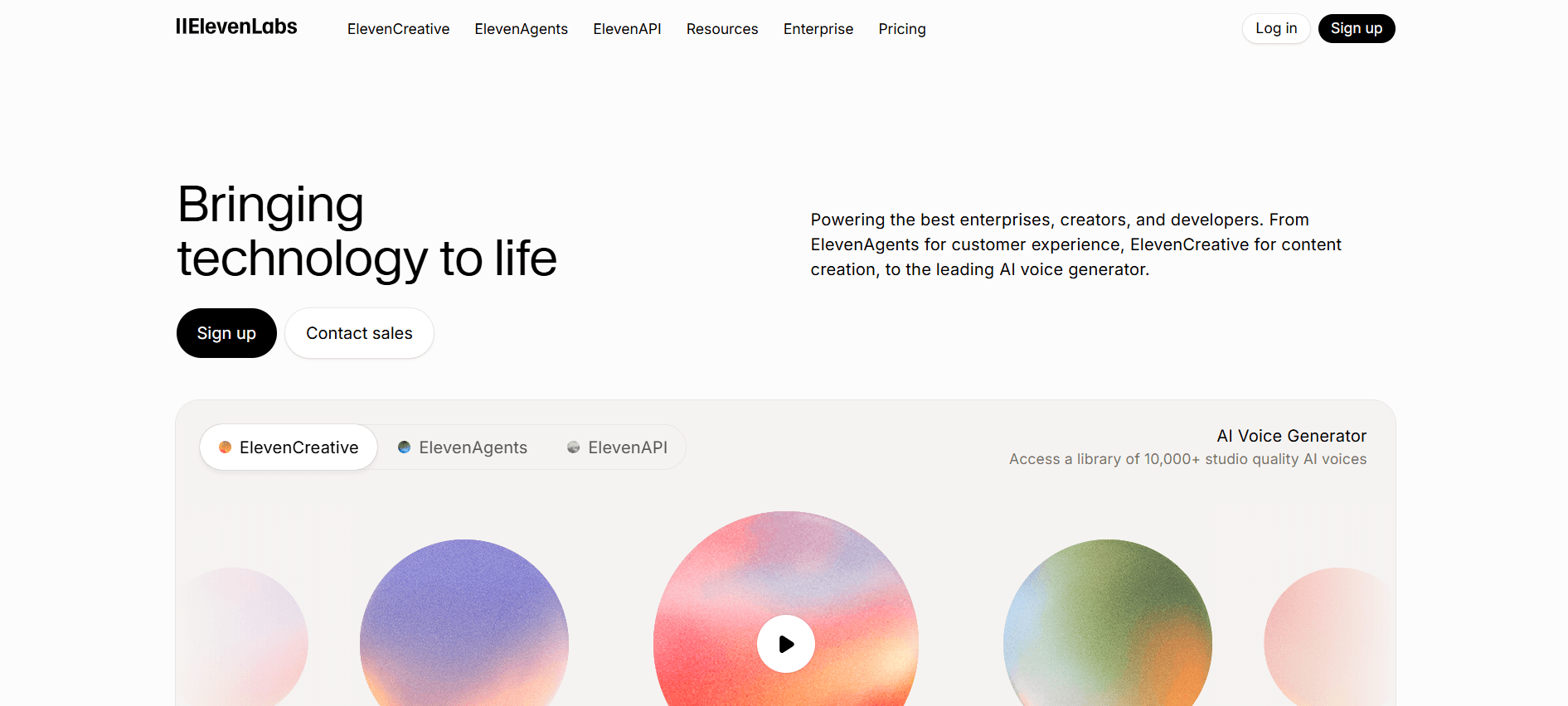
ElevenLabs sits in a genuinely different category than Bland AI: it is fundamentally a voice synthesis and cloning platform that has added a conversational AI layer, not a phone automation tool that bolted on voice. That distinction matters before you commit to an evaluation.
The voice quality is strong for expressive, human-sounding output. For use cases where voice naturalness is central, it performs well. Credit-based pricing starts at a free tier, with Starter at $6/month and Creator at $22/month, based on ElevenLabs’ current published pricing, scaling up through Business tiers. Full details are published on their site.
Where it falls short as a Bland AI replacement: ElevenLabs is not a complete phone agent platform. You are buying a TTS and voice cloning layer, but telephony, STT, and LLM orchestration still need to come from elsewhere. For high-volume outbound calling at $0.09/minute economics, this is not a direct swap. It suits use cases where voice quality is the primary requirement, not just the interface.
Deepgram
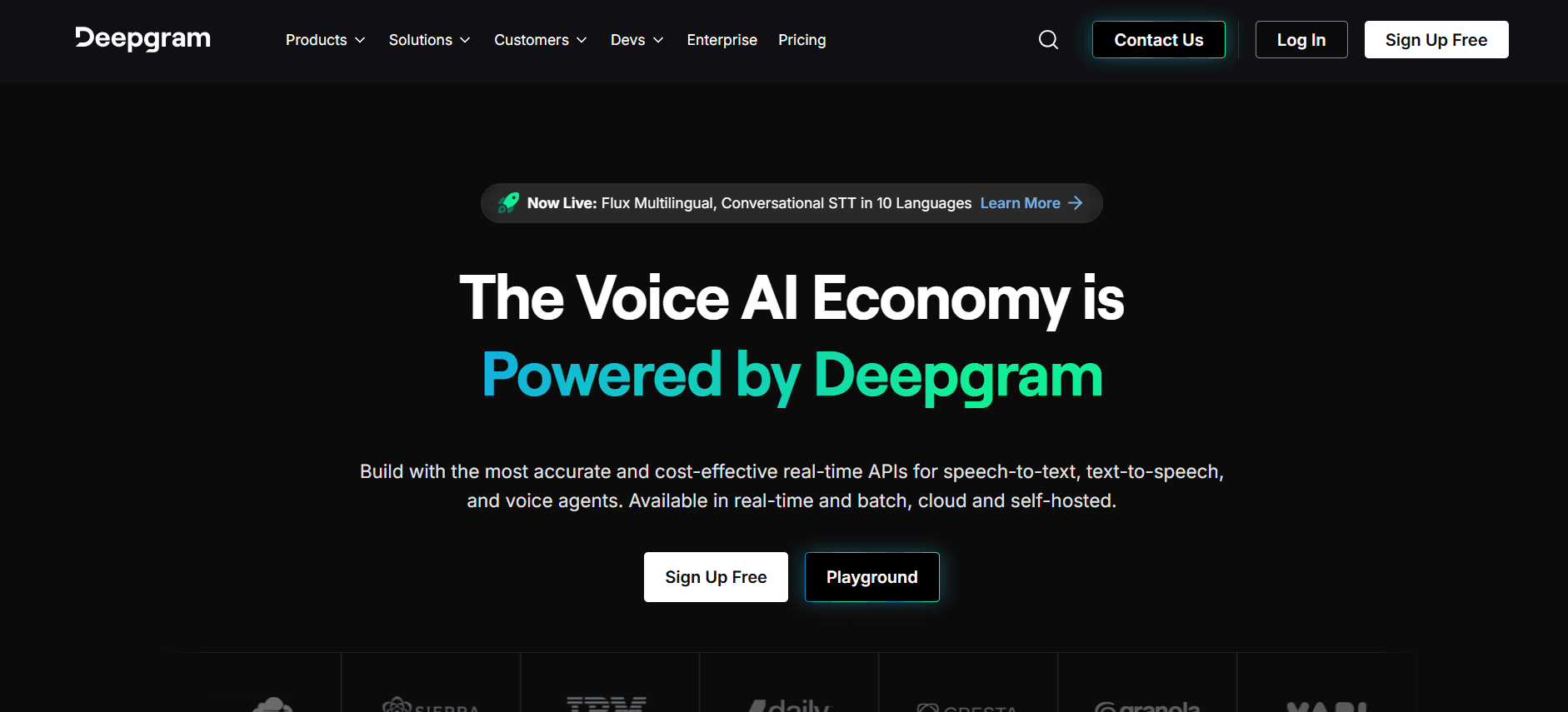
Deepgram's pitch is straightforward: if your primary bottleneck is accurate, fast, affordable transcription at scale, their Nova-3 ASR model is a capable option for transcription at scale. The voice agent API runs a flat predictable rate that scales cleanly for contact center deployments. Current rates are published on their site.
Where Deepgram genuinely outperforms Bland AI comes down to a few specific strengths. Multilingual STT accuracy across multiple languages makes it viable for global deployments where Bland AI's English-first model starts to strain. The developer-first API design, with extensive documentation and SDKs, means shorter ramp time for engineering teams. Streaming transcription holds up well on noisy call audio, and flat hourly pricing is simply easier to model at enterprise scale than per-minute rates.
The gap: Deepgram is not a complete agent platform. You get a capable STT and a voice agent API layer, but building a full outbound calling workflow requires more integration work than Bland AI's more opinionated product.
AssemblyAI
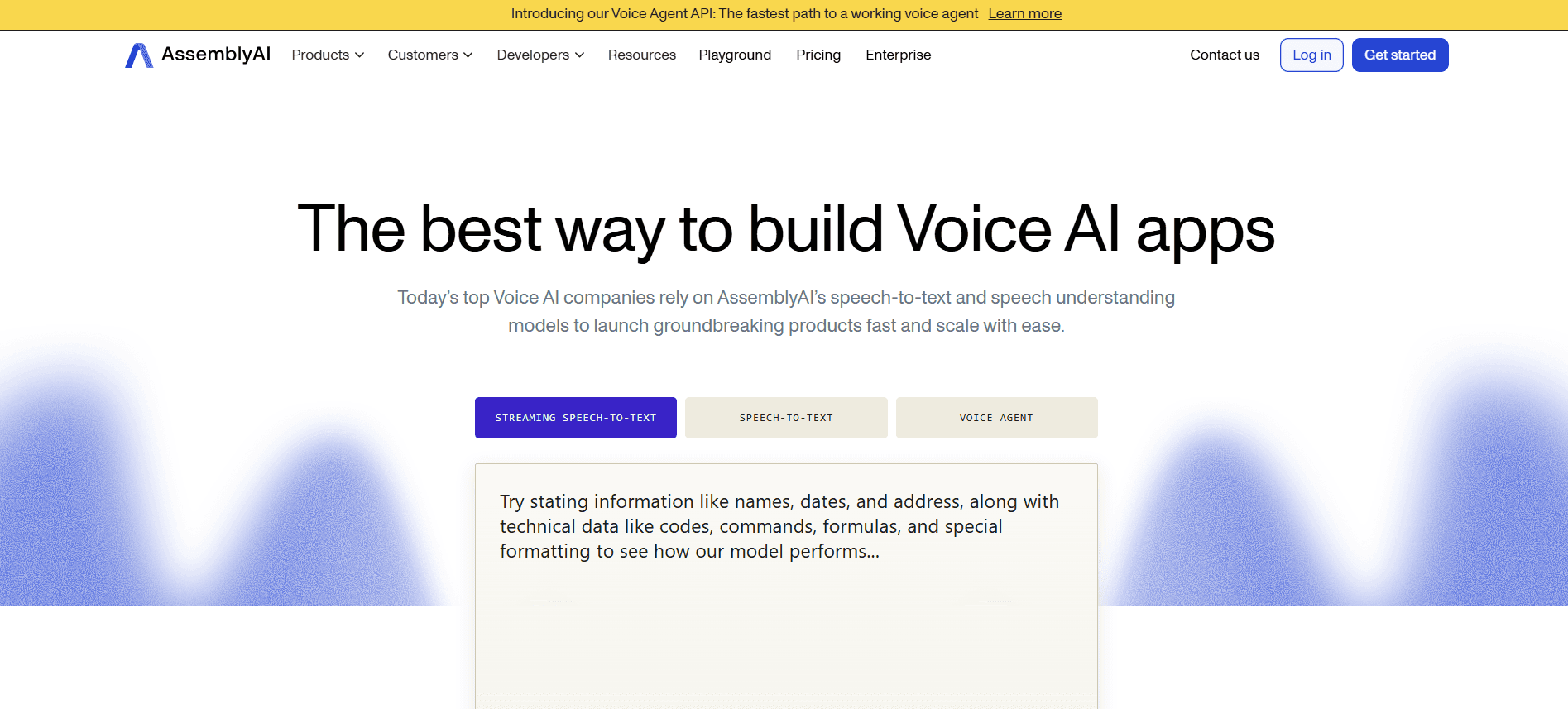
AssemblyAI occupies a specific niche that Bland AI does not fully address: voice agent infrastructure for regulated industries. Healthcare, financial services, and legal teams frequently need speaker identification, session resumption after dropped calls, and SOC 2 compliant data handling baked into the pipeline from the start, not retrofitted after the fact.
Their Voice Agent API pricing is usage-based and published on their site. Speaker diarization, automatic PII redaction, and session resumption without losing conversation context are all included. For a healthcare provider running patient intake calls or a financial services firm handling compliance-recorded interactions, those are not optional features.
AssemblyAI's strength sits in the STT and compliance layer, not in end-to-end agent orchestration or voice synthesis quality. If your use case centers on accurate, compliant transcription feeding into an existing workflow, it can serve that workflow effectively. If you need a complete outbound calling platform with voice generation included, more integration work is ahead. For teams evaluating the best speech-to-text APIs for a compliance-heavy stack, it may be worth evaluating for that specific requirement.
Cartesia
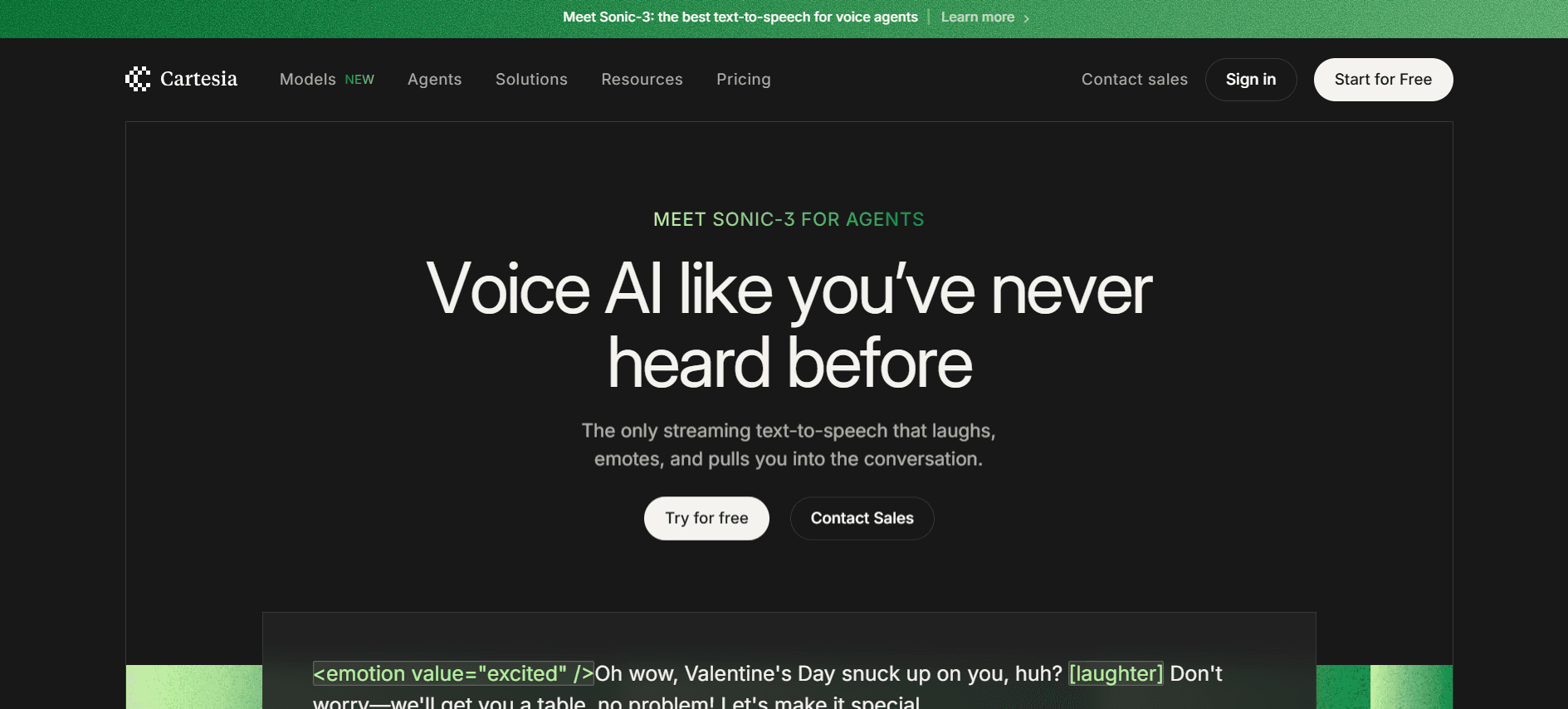
Cartesia built the Sonic model around one specific constraint: real-time conversational agents cannot absorb the 300-500ms first-byte latency that many TTS systems produce. Sonic targets sub-100ms time-to-first-audio, which meaningfully reduces the awkward pause that makes AI phone agents feel robotic. If that pause is your primary user complaint, Cartesia is worth evaluating.
Pricing follows a usage-based model with a free tier for development, then Pro and Scale plans based on character volume. The Cartesia pricing breakdown covers what each tier includes. Like Deepgram and AssemblyAI, Cartesia is a specialist tool. You are buying low-latency TTS output, not a full outbound call management system, and it pairs well with a separate STT and orchestration layer.
One practical note worth flagging: Cartesia's voice library is more limited in variety and voice cloning is more limited. If your use case requires a large catalog of distinct voices or highly expressive emotional range, a dedicated voice synthesis platform is a stronger fit than a low-latency specialist. If you need the fastest possible response time for a single-voice or small-voice-set agent, Cartesia is the specialist choice.
How to Choose: Matching the Platform to Your Actual Use Case
Customer experience teams are clearly increasing AI investment, with Nextiva reporting that 81% of businesses plan to invest in AI technologies for customer experience in 2025 and beyond. Getting it wrong typically means a rebuild inside 12 months.
The clearest signal comes down to what your stack actually needs. If you need a complete, integrated voice agent system with predictable economics and minimal vendor stitching, Smallest.ai's voice agents are the most coherent choice. If your primary requirement is voice synthesis quality for content or media workflows, a dedicated voice cloning platform may fit that narrow need - but it will not replace a full agent stack. If transcription accuracy or compliance features are the bottleneck, specialist STT APIs exist for those layers, though they require additional orchestration and telephony work on top. If TTS latency is your specific constraint, low-latency synthesis tools can address that in isolation. For teams that have outgrown Bland AI's opinionated model, the Top Bland AI Alternatives overview adds useful context on how the category has evolved.
Verdict
The most coherent alternative to Bland AI for production-grade voice agents is Smallest.ai. Among the platforms compared here, Smallest.ai is the clearest full-stack option - STT, TTS, language model, and agent orchestration - under a single, transparent pricing model without requiring you to stitch together separate vendors for each layer.
Other platforms in this comparison address specific parts of the stack well: voice synthesis quality, transcription accuracy, compliance pipelines, or low-latency TTS. Each solves one version of the problem. The teams most likely to rebuild in 12 months are the ones who assembled five specialists and underestimated the integration overhead. If your version of the problem is 'we need one stack that handles everything from STT to agent orchestration,' Smallest.ai's Atoms platform - built on Lightning TTS, Pulse STT, and the Electron conversational model - is the most direct answer. Book a demo to run a live evaluation against your actual use case.
Frequently asked questions
What are the main reasons teams look for Bland AI alternatives?
Does Smallest.ai work as a complete replacement for Bland AI?
Which voice agent platform is best for regulated industries like healthcare or finance?
How does pricing compare across these Bland AI alternatives?
What should I prioritize when evaluating voice agent platforms in 2026?