
Writesonic
AI-powered content creation for developers
Text-to-Speech (TTS)
Writesonic

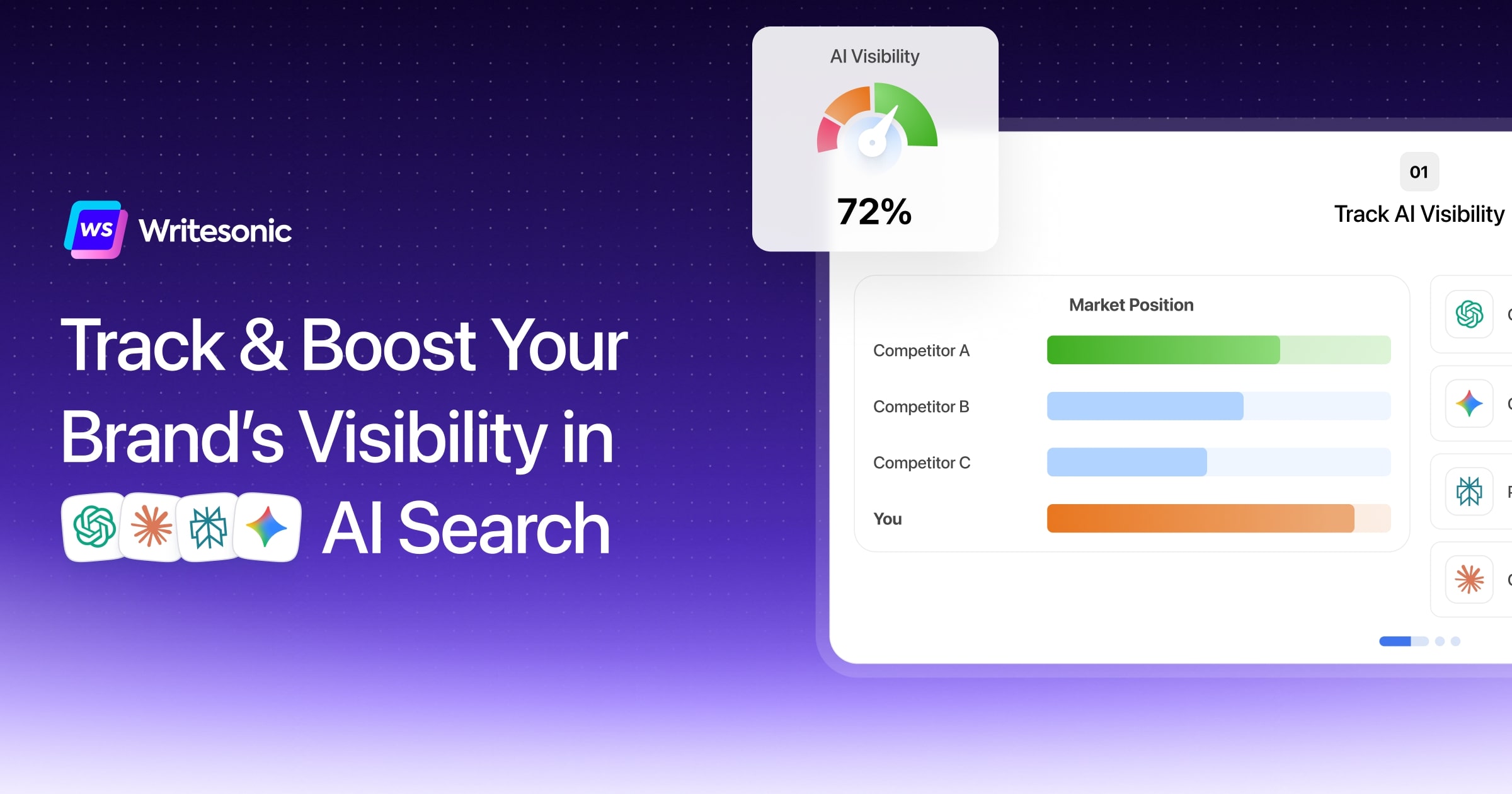
Writesonic is an advanced AI-powered content generation platform designed for developers, businesses, and content teams seeking to automate and scale their content workflows. Leveraging state-of-the-art large language models (LLMs), Writesonic enables users to generate high-quality text, conversational AI, and voice-based applications with minimal effort. Its robust API and developer-friendly tools make it a top choice for integrating AI-driven content into web, mobile, and voice applications.
The platform is ideal for developers building conversational AI, voice assistants, chatbots, and automated content pipelines. Writesonic’s core technical value proposition lies in its seamless integration with leading LLMs, low-latency API endpoints, and flexible customization options, making it suitable for a wide range of use cases from telephony to customer support and marketing automation.
Quick facts
Tool Name
Writesonic
Website
writesonic.com
Category
Text-to-Speech (TTS)
Primary Use Case
Automated content generation and conversational AI for web, mobile, and voice applications.
API Availablity
Comprehensive REST API available for integration.
Typical Users
Developers, product teams, content managers, marketing agencies, enterprises.
What
Writesonic
Does
Writesonic operates by connecting input sources (such as speech-to-text or text prompts) to advanced LLMs for content generation, then optionally outputs via text-to-speech or other delivery channels. This STT -> LLM -> TTS pipeline enables rapid development of conversational and voice AI applications.
Developers typically build:
- Conversational chatbots for customer support
- Voice assistants for telephony and smart devices
- Automated content creation tools
- Multilingual translation and localization bots
- Marketing copy and ad generation engines
- Knowledge base and FAQ automation systems
Key Features
Multi-LLM Support
Integrate with leading large language models, including OpenAI GPT-4 and Claude, for flexible and powerful content generation.
Low-Latency API
Delivers rapid response times for real-time conversational and voice AI applications, ensuring seamless user experiences.
Customizable Workflows
Developers can tailor prompts, outputs, and integration logic to fit specific business needs and application requirements.
Voice AI Integration
Supports speech-to-text and text-to-speech pipelines, enabling the creation of voice-enabled applications and assistants.
Scalable Content Automation
Automate large-scale content generation and management with robust API endpoints and workflow tools.
Common Use Cases
Customer Support Automation
Deploy conversational AI chatbots to handle customer inquiries and support tickets efficiently.
Telephony Voice Assistants
Integrate voice AI into telephony systems for automated call handling and interactive voice response (IVR).
Healthcare Intake Automation
Streamline patient intake and triage with conversational bots that collect and process information securely.
Voice AI Integration
Automatically generate SEO-optimized product descriptions for online stores at scale.
Multilingual Translation Bots
Build bots that translate and localize content across multiple languages for global reach.
Multilingual Translation Bots
Build bots that translate and localize content across multiple languages for global reach.
Alternatives
Smallest AI
Visit
AGI agents under 10B parameters for ultra-fast, accurate speech and text conversations.
Scale to billions of enterprise interactions with minimal latency
Frequently Asked Questions
What LLMs does Writesonic support?
Writesonic supports integration with leading LLMs such as OpenAI GPT-4 and Anthropic Claude, allowing developers to choose the best model for their use case.
Is there an API for developers?
Yes, Writesonic offers a comprehensive REST API that enables developers to integrate AI-powered content generation into their applications and workflows.
How does Writesonic handle latency for real-time applications?
Writesonic is optimized for low-latency responses, making it suitable for real-time conversational and voice AI applications where speed is critical.
Can Writesonic be used for voice AI and telephony?
Yes, Writesonic supports speech-to-text and text-to-speech pipelines, enabling developers to build voice-enabled applications and integrate with telephony systems.
