Gen AI in Banking: High-Value Use Cases Backed by Real Banks

See how gen AI in banking strengthens service, credit, fraud, and compliance workflows, backed by real bank examples and guidance for safe enterprise adoption.

Sudarshan Kamath
Updated on
January 19, 2026 at 6:14 AM
Customer asks, “Can you check why this charge is still pending?”
“One moment,” the agent replies, scanning old call notes, listening to a recording, rewriting a product line, and waiting for approval before giving an answer.
Moments like this slow every service line. They show why gen AI in banking is gaining attention from teams managing long calls, strict phrasing, and constant context switching. Voice-heavy work creates pressure across support, credit, fraud, and compliance, where even small delays affect call flow and customer trust.
Banks now rely on voice AI, conversational AI, voice agents, and voice cloning to quickly process call context, deliver accurate phrasing, and reduce manual work per interaction. The global generative AI in banking market reached USD 3.85 billion in 2024 and is projected to reach USD 46.5 billion by 2033 at a CAGR of 32.7%.
In this guide, we cover high-value use cases backed by real banks and where these systems deliver clear impact.
Key Takeaways
Banks Accelerate Gen AI Adoption: Institutions move gen AI into production because workloads depend on long voice inputs, multilingual calls, and case-level reasoning that older systems cannot support.
Voice-Driven Workflows Show Strong Gains: Voice agents and conversational AI improve phrasing accuracy, call triage, multilingual handling, and regulated scripts across service, credit, fraud, and collections.
Real Banks Report Documented Impact: OCBC cut writing and review time significantly, NAB recorded over $420M in productivity gains tied to AI investments, and Mastercard improved compromised-card detection speed.
Controlled Rollouts Strengthen Safety: Banks begin with controlled-language tasks, restricted data zones, and workflows that allow outputs to be verified against source audio or documents.
Guardrails Improve Reliability In Regulated Workflows: Hallucination controls, liveness checks, fallback models, lineage logs, and separated voice pipelines support safe deployment across banking teams.
Why Gen AI Is Gaining Ground in Banking?

Banks adopt gen AI in banking because voice-heavy, multilingual, and document-rich workloads exceed the limits of older ML systems. These models interpret long speech segments, track phrasing variation, and handle case-level reasoning with control. As a result, leaders across the generative AI in the banking and finance industry are moving pilots into production.
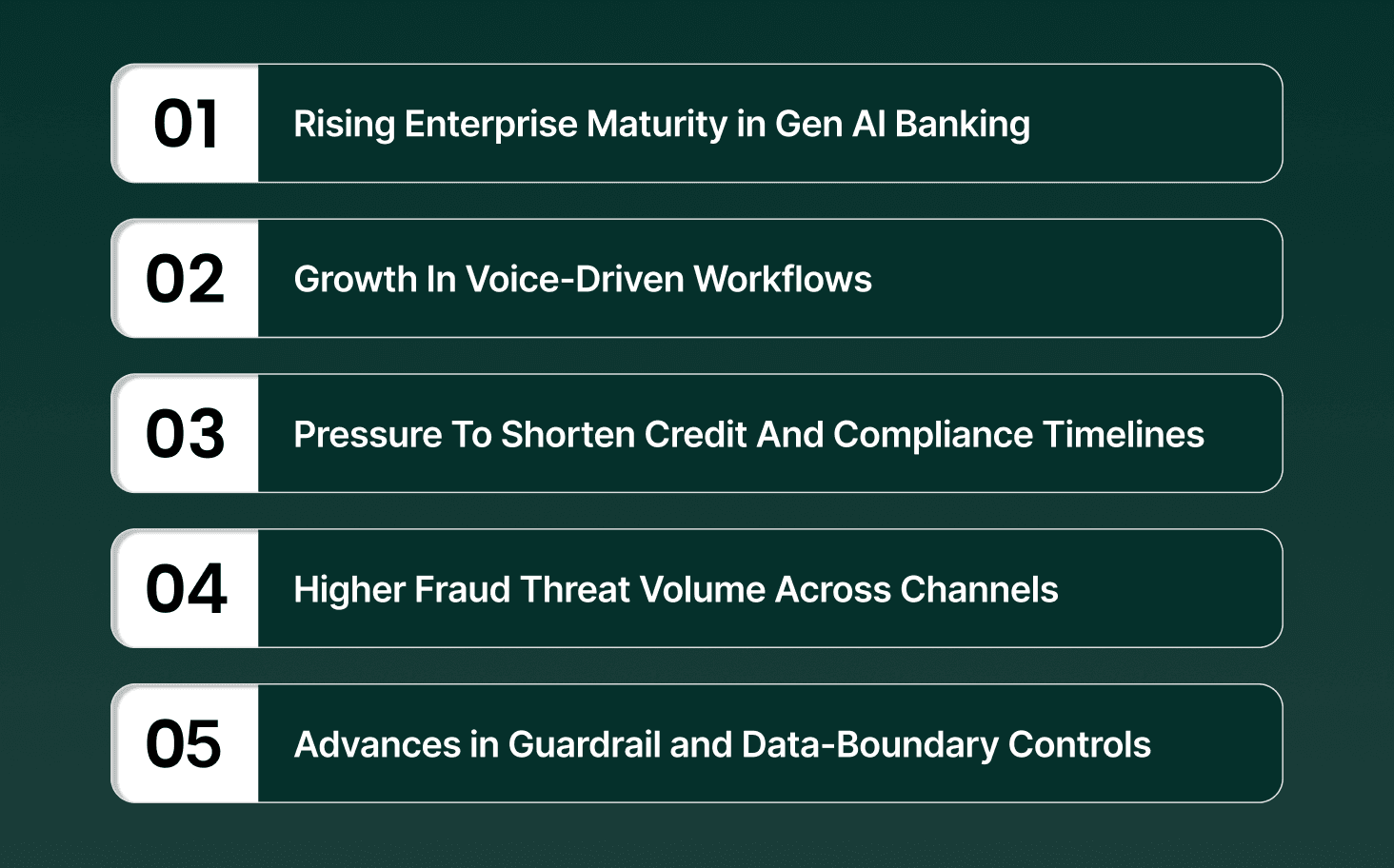
Rising Enterprise Maturity in Gen AI Banking: According to the 2025 EY‑Parthenon survey, 77 % of banks have launched or soft-launched Gen AI applications (versus 61 % in 2023).
Growth In Voice-Driven Workflows: Gen AI for banking supports frontline teams managing heavier call traffic, multilingual customers, and disclosure-heavy conversations that require precise audio and text handling.
Pressure To Shorten Credit And Compliance Timelines: Credit teams now process larger document sets and call logs for risk checks. Gen AI reads, compares, and summarizes these inputs far faster than earlier rule-based tools.
Higher Fraud Threat Volume Across Channels: Banks report an uptick in voice phishing, synthetic ID attempts, and cross-channel fraud alerts. Gen AI assists by analyzing call intent shifts and narrative inconsistencies.
Advances in Guardrail and Data-Boundary Controls: Enterprise frameworks now allow controlled prompts, audit trails, restricted data zones, and reviewer checkpoints, making Gen AI and banking workflows safer to scale.
If your focus is on raising call clarity, shortening response cycles, and improving customer satisfaction, see How AI Enhances Customer Experience in Banking.
Top Use Cases of Gen AI in Banking

Banks apply gen AI in banking where language volume, verification steps, and call-driven decisions create measurable strain. The strongest measurable gains appear in operations with long hold times, heavy documentation, and tight regulatory scripts, areas where voice AI and conversational AI improve precision and reduce workload.
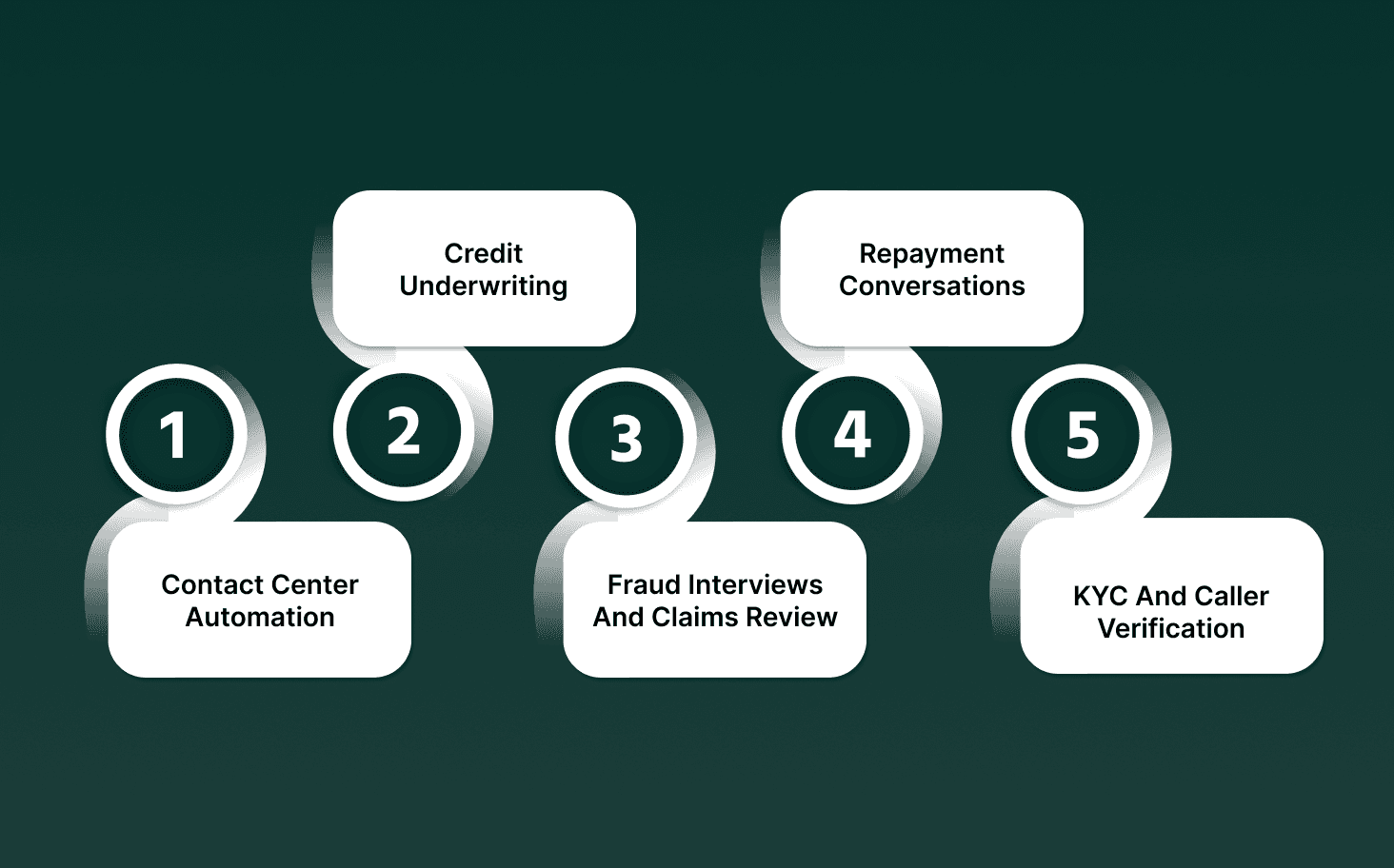
1. Customer Support And Contact Center Automation
Contact center teams handle high caller volume, varied phrasing, and constant policy checks across products. Gen AI voice agents help these teams manage long conversations with consistent accuracy across languages and product lines, especially when callers shift intent or request clarity on regulated terms.
Real-Time Call Triage: Voice agents identify caller intent within the opening moments of a conversation and route requests with reliable precision.
Policy-Aligned Response Delivery: Agents use approved phrasing for cards, accounts, and loan products, reducing supervisor review cycles.
High-Fidelity Transcription For QA: Voice AI converts full calls into structured text, tagging missed lines, tonal changes, and product clauses that need supervisor review.
2. Credit Underwriting And Application Intake
Credit teams handle large volumes of income proofs, supporting documents, call notes, and applicant clarifications. These materials arrive in mixed formats and often require several passes before an underwriter can determine consistency and risk. Gen AI in banking supports this work by processing long text and voice inputs in a single flow, giving teams clarity without slowing their review cycle.
Document Cross-Checking: Models compare income records, transactional data, and call transcripts to spot inconsistencies that may affect credit assessment.
Borrower Intent Identification: Conversational AI extracts explanations shared during calls, capturing factors tied to income stability, repayment timing, or recent financial changes.
Evidence-Linked Summaries: Outputs present key points with references to the original files or call segments, helping underwriters focus on signals that influence final decisions.
3. Fraud Interviews And Claims Review
Fraud teams work through long interviews, caller explanations, and transaction histories that rarely follow a clear pattern. Claims often involve unclear timelines, shifting narratives, or voice traits that differ from earlier interactions. Gen AI in banking supports these teams by reviewing audio with precision and comparing caller statements against verified records in real time.
Voice-Based Irregularity Detection: Audio is assessed for timing gaps, pitch deviations, and traits inconsistent with the caller’s prior interactions.
Narrative Consistency Checks: Statements from recorded calls are compared with account records, prior inquiries, and documented events to spot contradictions.
Cross-Channel Evidence Synthesis: Voice recordings, correspondence, and case notes are combined into one file so investigators can review all information without switching systems.
4. Debt Collection And Repayment Conversations
Collections teams work with large outbound volumes, varied caller behavior, and strict phrasing requirements for each repayment option. Calls often involve partial payments, disputed amounts, or unclear timelines that require accurate reference to earlier interactions. Gen AI voice agents and voice cloning support these conversations by keeping information consistent across every contact.
On-Call Repayment Scheduling: Voice agents confirm dates, amounts, and follow-up expectations during the same call so borrowers receive clear next steps.
Retention of Prior Commitments: Models reference earlier agreements, missed attempts, or partial payments with accuracy, even when cases involve multiple prior conversations.
Regional Language Support: Voice cloning, like in smallest.ai, offers speech patterns that match the borrower’s preferred language or accent, improving clarity during sensitive repayment discussions.
5. KYC And Caller Verification
KYC teams work through identity checks that depend on precise phrasing, clear audio, and consistent data points across multiple records. Verification calls often involve customers who provide information in varied orders, shift between languages, or refer to earlier interactions that must be validated. Gen AI in banking supports these workflows by analyzing voice inputs in real time and comparing them with stored records.
Step-Level Caller Verification: Voice agents guide callers through required questions in the correct order, preventing skipped prompts or incomplete identity checks.
Cross-Record Matching: Spoken details are compared with existing KYC files, prior updates, and recent service notes to confirm consistency before progressing.
Controlled Escalation Paths: Irregular voice traits, unclear responses, or mismatched information route the call to a human reviewer, while routine checks move forward without delay.
For teams aiming to manage regulated calls with natural voices, precise phrasing, and full-stack voice control, Smallest.ai offers a proven platform. Book a demo.
Real-World Examples of Gen AI in the Banking Sector

Banks that have adopted gen AI in banking report measurable gains in areas tied to document load, call volume, fraud pressure, or internal knowledge access. The following examples show how leading institutions addressed specific operational challenges and the impact achieved using generative AI in banking and finance industry workflows.
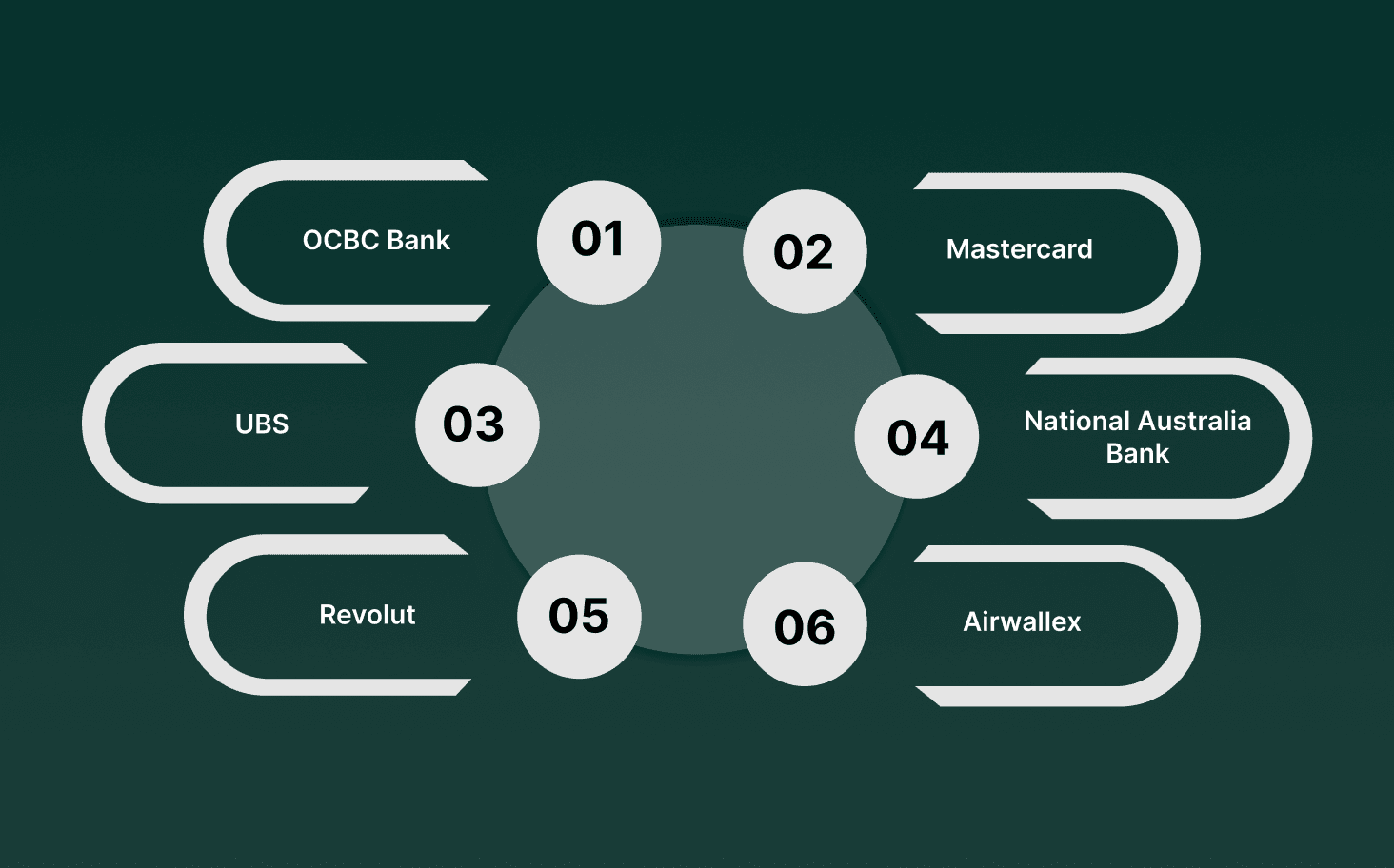
OCBC Bank: Teams spent long hours reviewing documents and drafting internal notes. OCBC GPT now handles summarization and research, cutting task time by roughly half and supporting millions of automated decisions daily.
Mastercard: Fraud patterns were growing more complex and harder to detect with static rules. A generative model flags high-risk transactions faster and improves detection accuracy for compromised cards.
UBS: Research updates required extensive production cycles. AI-generated analyst avatars now deliver video briefings at scale, expanding output to thousands of updates per year.
National Australia Bank (NAB): Operational functions were under pressure to improve productivity across departments. NAB reported more than $420 million in productivity gains tied to AI, including shorter processing cycles in service and back-office work.
Revolut: Customers faced rising social-engineering scams from fraudulent callers. A gen-AI scam-intervention system identifies suspicious behavior and interrupts risky payment flows.
Airwallex: KYC teams spent significant time checking documents and applicant explanations. A KYC Copilot reviews identity records, compares details, and prepares summaries, reducing manual workload and highlighting cases needing human review.
For teams strengthening fraud reviews with voice analysis and intent scoring, a deeper look at emerging methods is available in AI Fraud Detection Techniques in 2025.
How Banks Can Start With Gen AI Safely and Confidently

Banks moving into gen AI in banking often face uncertainty around data controls, voice workloads, and model oversight. A safe starting point focuses on limited language tasks with clear boundaries, then expands into higher-risk workflows once guardrails and reviewer loops are stable.
This mirrors how leading teams in the generative AI in banking and finance industry build confidence without exposing customer data or core systems to unnecessary risk.
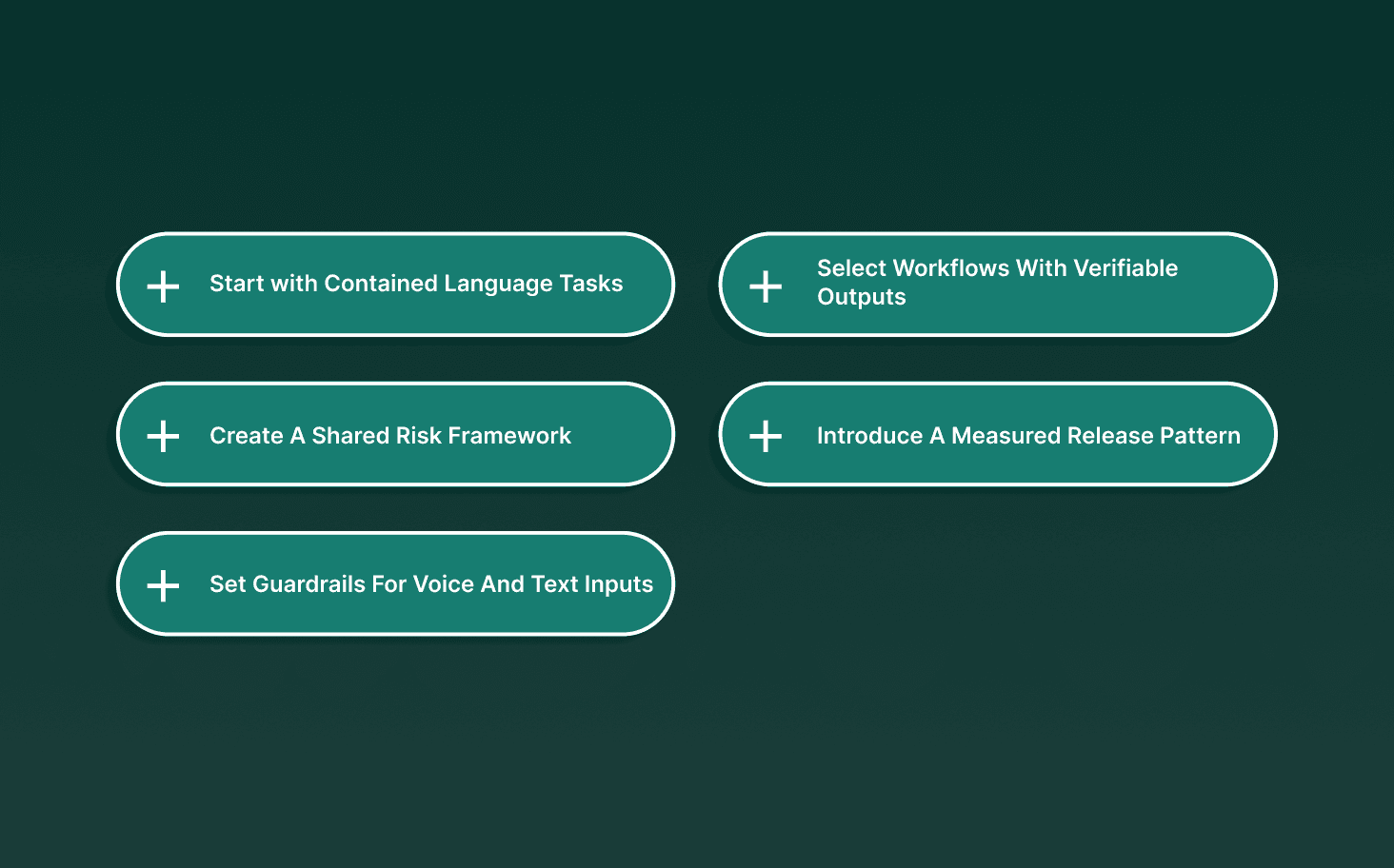
Start with Contained Language Tasks: Begin with summarizing calls, reviewing documents, or generating case notes inside a controlled data pool.
Create A Shared Risk Framework: Risk, compliance, fraud, and model teams define redlines for prompts, data movement, retention, and reviewer roles.
Set Guardrails For Voice And Text Inputs: Voice recordings and transcripts move through defined zones with access logs and clear separation between audio, transcription, and prompts.
Select Workflows With Verifiable Outputs: Choose tasks where reviewers can compare model responses with source material before expanding to frontline use.
Introduce A Measured Release Pattern: Progress from internal pilots to supervised deployments while tracking drift, phrasing shifts, and escalation patterns.
Once teams map out a safe entry path, the natural question becomes what makes these models different from the systems they’ve used before.
What Sets Gen AI Apart From Traditional AI in Banking
Banks evaluating gen AI in banking often ask how it differs from earlier models; the distinction becomes clear when comparing how each system handles voice inputs, long conversations, and case-level reasoning across real workflows.
Area | Gen AI in Banking | Traditional AI in Banking |
Input Types | Works with long transcripts, voice logs, emails, call recordings, and multi-turn dialog. | Relies on structured fields, short text, and predefined variables. |
Response Behavior | Generates context-aware outputs that reflect phrasing, tone shifts, and intent changes. | Matches inputs to fixed rules or static templates. |
Adaptation Patterns | Adjusts to new fraud narratives, customer phrasing, and query styles without full retraining. | Requires manual rule updates and periodic model rebuilds. |
Team Model Needed | Requires cross-functional squads with domain experts, risk, cloud, and data engineering. | Often handled by model developers and operations teams only. |
Scenario Expansion | Can create synthetic examples for fraud, credit stress tests, and rare-event training. | Limited to historical datasets and manual feature design. |
These differences set the foundation, but real progress depends on how well banks handle the operational risks that come with these models.
Challenges Banks Must Address When Using Gen AI
Banks working with gen AI in banking face risks that originate from model behavior, voice-data pipelines, and regulatory scrutiny. These issues cannot be solved with generic governance checklists; they require controls tied to credit review, fraud operations, collections, onboarding, and regulatory calls inside the generative AI in the banking and finance industry.
Controlling Hallucination In Credit, Fraud, And Disputes: Models reference only verified documents, call snippets, or filings. Reviewers validate that every output maps back to approved evidence.
Preventing PII Spillage Across Voice Pipelines: Voice logs and transcripts remain inside tiered access zones with tokenization before model use. Audio, transcription, and prompts stay separated.
Achieving Explainability For Audit And Regulatory Reviews: Teams rely on prompt provenance and input-output lineage so auditors can see what the model processed and how reviewers confirmed outcomes.
Reducing Concentration Risk In Model Supply Chains: Critical workflows run with fallback models and local inference options to avoid dependence on a single provider.
Blocking Adversarial And Deep-Fake Threats In Voice Channels: Voice-pattern scoring, liveness checks, and timing analysis detect manipulated or synthetic audio during calls.
For teams adapting to new fraud patterns across voice and digital channels, a deeper breakdown of emerging methods is covered in How AI Transforms Fraud Detection in Banking.
How Smallest.ai Strengthens Banking Teams with Gen AI
Banks adopting gen AI in banking require voice systems that respond in real time, process long audio inputs, and support regulated workflows without latency gaps. Smallest.ai meets this need with low-latency voice models, financial-grade controls, and agent platforms built for high-volume contact center tasks across the generative AI in banking and finance industry.
Real-Time Voice Agents For Regulated Calls: Agents manage live conversations, follow required phrasing, confirm account details, and guide verification steps with steady intent handling.
Lightning TTS and SLM Models For Banking Dialogs: Lightning models generate natural speech within milliseconds, while Electron SLMs process long queries, tone shifts, and product-specific phrasing across credit, service, and collections.
Instant Transcription With Call-Level Insights: The platform converts voice to text in real time and tags risk signals, service issues, and repayment context across full call flows.
High-Volume Telephony and Workflow Completion: Voice agents complete tasks such as repayment reminders, account updates, and scheduling with accuracy that lowers human fallbacks during peak loads.
Secure, Multilingual, Full-Stack Deployment: Teams get TTS, ASR, agent logic, analytics, and telephony in one system, supported by 16 languages and on-prem or private-cloud setups meeting SOC 2 Type II, HIPAA, PCI, and ISO standards.
A growing number of banking teams now rely on Smallest.ai to handle complex voice workloads with the speed, clarity, and control their operations demand.
Final Thoughts!
Banks moving deeper into gen AI in banking now look for systems that handle real conversations, long audio inputs, and policy-driven language without slowing teams down. The shift is no longer driven by curiosity; it reflects operational pressure across credit, fraud, service, and compliance lines. As these workloads grow more complex, institutions see that gen AI in banking delivers its strongest results when voice-heavy tasks require clarity, speed, and consistent phrasing.
This is where Smallest.ai fits naturally. Banking teams use its voice AI to interpret caller intent in real time, conversational AI to manage complex service flows, voice agents to support regulated conversations, and voice cloning to reach callers across regions with clarity. The platform gives banks the control, accuracy, and low-latency performance needed for production-grade voice operations.
If your team is exploring these capabilities, book a demo.
FAQs About Gen AI in Banking
1. How does gen AI in banking handle long voice interactions without losing context?
Models track caller details, product references, and prior responses across the full conversation. This helps teams maintain accuracy during service, collections, or verification calls.
2. Can gen AI banking systems work safely with sensitive customer audio?
Yes. Banks use controlled data zones, access logs, and restricted prompts so voice inputs stay within approved storage and review paths. This structure supports the regulated use of voice-driven workflows.
3. What makes generative AI in banking and finance industry tasks different from older NLP tools?
Older tools relied on short text or fixed patterns. Gen AI for banking processes full calls, long documents, and multi-step queries without losing important details.
4. How do banks measure quality when deploying gen AI for banking voice agents?
Teams track latency, phrasing accuracy, intent recognition patterns, and the percentage of calls resolved without manual correction.
5. Where does generative AI for the banking industry work best in early pilots?
Banks often begin with areas where reviewers can compare outputs with source audio or documents, such as call summaries, identity checks, dispute clarifications, or credit-related conversations.
Customer asks, “Can you check why this charge is still pending?”
“One moment,” the agent replies, scanning old call notes, listening to a recording, rewriting a product line, and waiting for approval before giving an answer.
Moments like this slow every service line. They show why gen AI in banking is gaining attention from teams managing long calls, strict phrasing, and constant context switching. Voice-heavy work creates pressure across support, credit, fraud, and compliance, where even small delays affect call flow and customer trust.
Banks now rely on voice AI, conversational AI, voice agents, and voice cloning to quickly process call context, deliver accurate phrasing, and reduce manual work per interaction. The global generative AI in banking market reached USD 3.85 billion in 2024 and is projected to reach USD 46.5 billion by 2033 at a CAGR of 32.7%.
In this guide, we cover high-value use cases backed by real banks and where these systems deliver clear impact.
Key Takeaways
Banks Accelerate Gen AI Adoption: Institutions move gen AI into production because workloads depend on long voice inputs, multilingual calls, and case-level reasoning that older systems cannot support.
Voice-Driven Workflows Show Strong Gains: Voice agents and conversational AI improve phrasing accuracy, call triage, multilingual handling, and regulated scripts across service, credit, fraud, and collections.
Real Banks Report Documented Impact: OCBC cut writing and review time significantly, NAB recorded over $420M in productivity gains tied to AI investments, and Mastercard improved compromised-card detection speed.
Controlled Rollouts Strengthen Safety: Banks begin with controlled-language tasks, restricted data zones, and workflows that allow outputs to be verified against source audio or documents.
Guardrails Improve Reliability In Regulated Workflows: Hallucination controls, liveness checks, fallback models, lineage logs, and separated voice pipelines support safe deployment across banking teams.
Why Gen AI Is Gaining Ground in Banking?

Banks adopt gen AI in banking because voice-heavy, multilingual, and document-rich workloads exceed the limits of older ML systems. These models interpret long speech segments, track phrasing variation, and handle case-level reasoning with control. As a result, leaders across the generative AI in the banking and finance industry are moving pilots into production.
Rising Enterprise Maturity in Gen AI Banking: According to the 2025 EY‑Parthenon survey, 77 % of banks have launched or soft-launched Gen AI applications (versus 61 % in 2023).
Growth In Voice-Driven Workflows: Gen AI for banking supports frontline teams managing heavier call traffic, multilingual customers, and disclosure-heavy conversations that require precise audio and text handling.
Pressure To Shorten Credit And Compliance Timelines: Credit teams now process larger document sets and call logs for risk checks. Gen AI reads, compares, and summarizes these inputs far faster than earlier rule-based tools.
Higher Fraud Threat Volume Across Channels: Banks report an uptick in voice phishing, synthetic ID attempts, and cross-channel fraud alerts. Gen AI assists by analyzing call intent shifts and narrative inconsistencies.
Advances in Guardrail and Data-Boundary Controls: Enterprise frameworks now allow controlled prompts, audit trails, restricted data zones, and reviewer checkpoints, making Gen AI and banking workflows safer to scale.
If your focus is on raising call clarity, shortening response cycles, and improving customer satisfaction, see How AI Enhances Customer Experience in Banking.
Top Use Cases of Gen AI in Banking

Banks apply gen AI in banking where language volume, verification steps, and call-driven decisions create measurable strain. The strongest measurable gains appear in operations with long hold times, heavy documentation, and tight regulatory scripts, areas where voice AI and conversational AI improve precision and reduce workload.
1. Customer Support And Contact Center Automation
Contact center teams handle high caller volume, varied phrasing, and constant policy checks across products. Gen AI voice agents help these teams manage long conversations with consistent accuracy across languages and product lines, especially when callers shift intent or request clarity on regulated terms.
Real-Time Call Triage: Voice agents identify caller intent within the opening moments of a conversation and route requests with reliable precision.
Policy-Aligned Response Delivery: Agents use approved phrasing for cards, accounts, and loan products, reducing supervisor review cycles.
High-Fidelity Transcription For QA: Voice AI converts full calls into structured text, tagging missed lines, tonal changes, and product clauses that need supervisor review.
2. Credit Underwriting And Application Intake
Credit teams handle large volumes of income proofs, supporting documents, call notes, and applicant clarifications. These materials arrive in mixed formats and often require several passes before an underwriter can determine consistency and risk. Gen AI in banking supports this work by processing long text and voice inputs in a single flow, giving teams clarity without slowing their review cycle.
Document Cross-Checking: Models compare income records, transactional data, and call transcripts to spot inconsistencies that may affect credit assessment.
Borrower Intent Identification: Conversational AI extracts explanations shared during calls, capturing factors tied to income stability, repayment timing, or recent financial changes.
Evidence-Linked Summaries: Outputs present key points with references to the original files or call segments, helping underwriters focus on signals that influence final decisions.
3. Fraud Interviews And Claims Review
Fraud teams work through long interviews, caller explanations, and transaction histories that rarely follow a clear pattern. Claims often involve unclear timelines, shifting narratives, or voice traits that differ from earlier interactions. Gen AI in banking supports these teams by reviewing audio with precision and comparing caller statements against verified records in real time.
Voice-Based Irregularity Detection: Audio is assessed for timing gaps, pitch deviations, and traits inconsistent with the caller’s prior interactions.
Narrative Consistency Checks: Statements from recorded calls are compared with account records, prior inquiries, and documented events to spot contradictions.
Cross-Channel Evidence Synthesis: Voice recordings, correspondence, and case notes are combined into one file so investigators can review all information without switching systems.
4. Debt Collection And Repayment Conversations
Collections teams work with large outbound volumes, varied caller behavior, and strict phrasing requirements for each repayment option. Calls often involve partial payments, disputed amounts, or unclear timelines that require accurate reference to earlier interactions. Gen AI voice agents and voice cloning support these conversations by keeping information consistent across every contact.
On-Call Repayment Scheduling: Voice agents confirm dates, amounts, and follow-up expectations during the same call so borrowers receive clear next steps.
Retention of Prior Commitments: Models reference earlier agreements, missed attempts, or partial payments with accuracy, even when cases involve multiple prior conversations.
Regional Language Support: Voice cloning, like in smallest.ai, offers speech patterns that match the borrower’s preferred language or accent, improving clarity during sensitive repayment discussions.
5. KYC And Caller Verification
KYC teams work through identity checks that depend on precise phrasing, clear audio, and consistent data points across multiple records. Verification calls often involve customers who provide information in varied orders, shift between languages, or refer to earlier interactions that must be validated. Gen AI in banking supports these workflows by analyzing voice inputs in real time and comparing them with stored records.
Step-Level Caller Verification: Voice agents guide callers through required questions in the correct order, preventing skipped prompts or incomplete identity checks.
Cross-Record Matching: Spoken details are compared with existing KYC files, prior updates, and recent service notes to confirm consistency before progressing.
Controlled Escalation Paths: Irregular voice traits, unclear responses, or mismatched information route the call to a human reviewer, while routine checks move forward without delay.
For teams aiming to manage regulated calls with natural voices, precise phrasing, and full-stack voice control, Smallest.ai offers a proven platform. Book a demo.
Real-World Examples of Gen AI in the Banking Sector

Banks that have adopted gen AI in banking report measurable gains in areas tied to document load, call volume, fraud pressure, or internal knowledge access. The following examples show how leading institutions addressed specific operational challenges and the impact achieved using generative AI in banking and finance industry workflows.
OCBC Bank: Teams spent long hours reviewing documents and drafting internal notes. OCBC GPT now handles summarization and research, cutting task time by roughly half and supporting millions of automated decisions daily.
Mastercard: Fraud patterns were growing more complex and harder to detect with static rules. A generative model flags high-risk transactions faster and improves detection accuracy for compromised cards.
UBS: Research updates required extensive production cycles. AI-generated analyst avatars now deliver video briefings at scale, expanding output to thousands of updates per year.
National Australia Bank (NAB): Operational functions were under pressure to improve productivity across departments. NAB reported more than $420 million in productivity gains tied to AI, including shorter processing cycles in service and back-office work.
Revolut: Customers faced rising social-engineering scams from fraudulent callers. A gen-AI scam-intervention system identifies suspicious behavior and interrupts risky payment flows.
Airwallex: KYC teams spent significant time checking documents and applicant explanations. A KYC Copilot reviews identity records, compares details, and prepares summaries, reducing manual workload and highlighting cases needing human review.
For teams strengthening fraud reviews with voice analysis and intent scoring, a deeper look at emerging methods is available in AI Fraud Detection Techniques in 2025.
How Banks Can Start With Gen AI Safely and Confidently

Banks moving into gen AI in banking often face uncertainty around data controls, voice workloads, and model oversight. A safe starting point focuses on limited language tasks with clear boundaries, then expands into higher-risk workflows once guardrails and reviewer loops are stable.
This mirrors how leading teams in the generative AI in banking and finance industry build confidence without exposing customer data or core systems to unnecessary risk.
Start with Contained Language Tasks: Begin with summarizing calls, reviewing documents, or generating case notes inside a controlled data pool.
Create A Shared Risk Framework: Risk, compliance, fraud, and model teams define redlines for prompts, data movement, retention, and reviewer roles.
Set Guardrails For Voice And Text Inputs: Voice recordings and transcripts move through defined zones with access logs and clear separation between audio, transcription, and prompts.
Select Workflows With Verifiable Outputs: Choose tasks where reviewers can compare model responses with source material before expanding to frontline use.
Introduce A Measured Release Pattern: Progress from internal pilots to supervised deployments while tracking drift, phrasing shifts, and escalation patterns.
Once teams map out a safe entry path, the natural question becomes what makes these models different from the systems they’ve used before.
What Sets Gen AI Apart From Traditional AI in Banking
Banks evaluating gen AI in banking often ask how it differs from earlier models; the distinction becomes clear when comparing how each system handles voice inputs, long conversations, and case-level reasoning across real workflows.
Area | Gen AI in Banking | Traditional AI in Banking |
Input Types | Works with long transcripts, voice logs, emails, call recordings, and multi-turn dialog. | Relies on structured fields, short text, and predefined variables. |
Response Behavior | Generates context-aware outputs that reflect phrasing, tone shifts, and intent changes. | Matches inputs to fixed rules or static templates. |
Adaptation Patterns | Adjusts to new fraud narratives, customer phrasing, and query styles without full retraining. | Requires manual rule updates and periodic model rebuilds. |
Team Model Needed | Requires cross-functional squads with domain experts, risk, cloud, and data engineering. | Often handled by model developers and operations teams only. |
Scenario Expansion | Can create synthetic examples for fraud, credit stress tests, and rare-event training. | Limited to historical datasets and manual feature design. |
These differences set the foundation, but real progress depends on how well banks handle the operational risks that come with these models.
Challenges Banks Must Address When Using Gen AI
Banks working with gen AI in banking face risks that originate from model behavior, voice-data pipelines, and regulatory scrutiny. These issues cannot be solved with generic governance checklists; they require controls tied to credit review, fraud operations, collections, onboarding, and regulatory calls inside the generative AI in the banking and finance industry.
Controlling Hallucination In Credit, Fraud, And Disputes: Models reference only verified documents, call snippets, or filings. Reviewers validate that every output maps back to approved evidence.
Preventing PII Spillage Across Voice Pipelines: Voice logs and transcripts remain inside tiered access zones with tokenization before model use. Audio, transcription, and prompts stay separated.
Achieving Explainability For Audit And Regulatory Reviews: Teams rely on prompt provenance and input-output lineage so auditors can see what the model processed and how reviewers confirmed outcomes.
Reducing Concentration Risk In Model Supply Chains: Critical workflows run with fallback models and local inference options to avoid dependence on a single provider.
Blocking Adversarial And Deep-Fake Threats In Voice Channels: Voice-pattern scoring, liveness checks, and timing analysis detect manipulated or synthetic audio during calls.
For teams adapting to new fraud patterns across voice and digital channels, a deeper breakdown of emerging methods is covered in How AI Transforms Fraud Detection in Banking.
How Smallest.ai Strengthens Banking Teams with Gen AI
Banks adopting gen AI in banking require voice systems that respond in real time, process long audio inputs, and support regulated workflows without latency gaps. Smallest.ai meets this need with low-latency voice models, financial-grade controls, and agent platforms built for high-volume contact center tasks across the generative AI in banking and finance industry.
Real-Time Voice Agents For Regulated Calls: Agents manage live conversations, follow required phrasing, confirm account details, and guide verification steps with steady intent handling.
Lightning TTS and SLM Models For Banking Dialogs: Lightning models generate natural speech within milliseconds, while Electron SLMs process long queries, tone shifts, and product-specific phrasing across credit, service, and collections.
Instant Transcription With Call-Level Insights: The platform converts voice to text in real time and tags risk signals, service issues, and repayment context across full call flows.
High-Volume Telephony and Workflow Completion: Voice agents complete tasks such as repayment reminders, account updates, and scheduling with accuracy that lowers human fallbacks during peak loads.
Secure, Multilingual, Full-Stack Deployment: Teams get TTS, ASR, agent logic, analytics, and telephony in one system, supported by 16 languages and on-prem or private-cloud setups meeting SOC 2 Type II, HIPAA, PCI, and ISO standards.
A growing number of banking teams now rely on Smallest.ai to handle complex voice workloads with the speed, clarity, and control their operations demand.
Final Thoughts!
Banks moving deeper into gen AI in banking now look for systems that handle real conversations, long audio inputs, and policy-driven language without slowing teams down. The shift is no longer driven by curiosity; it reflects operational pressure across credit, fraud, service, and compliance lines. As these workloads grow more complex, institutions see that gen AI in banking delivers its strongest results when voice-heavy tasks require clarity, speed, and consistent phrasing.
This is where Smallest.ai fits naturally. Banking teams use its voice AI to interpret caller intent in real time, conversational AI to manage complex service flows, voice agents to support regulated conversations, and voice cloning to reach callers across regions with clarity. The platform gives banks the control, accuracy, and low-latency performance needed for production-grade voice operations.
If your team is exploring these capabilities, book a demo.
FAQs About Gen AI in Banking
1. How does gen AI in banking handle long voice interactions without losing context?
Models track caller details, product references, and prior responses across the full conversation. This helps teams maintain accuracy during service, collections, or verification calls.
2. Can gen AI banking systems work safely with sensitive customer audio?
Yes. Banks use controlled data zones, access logs, and restricted prompts so voice inputs stay within approved storage and review paths. This structure supports the regulated use of voice-driven workflows.
3. What makes generative AI in banking and finance industry tasks different from older NLP tools?
Older tools relied on short text or fixed patterns. Gen AI for banking processes full calls, long documents, and multi-step queries without losing important details.
4. How do banks measure quality when deploying gen AI for banking voice agents?
Teams track latency, phrasing accuracy, intent recognition patterns, and the percentage of calls resolved without manual correction.
5. Where does generative AI for the banking industry work best in early pilots?
Banks often begin with areas where reviewers can compare outputs with source audio or documents, such as call summaries, identity checks, dispute clarifications, or credit-related conversations.
Related Blogs
Top 10 Proven Conversational AI Use Cases in Banking
Jan 19, 2026
Gen AI in Banking: High-Value Use Cases Backed by Real Banks

Jan 19, 2026
Top 6 Practical Use Cases of Speech Recognition in AI
Jan 19, 2026
How Insurance AI Chatbots Help Teams Serve Customers Better
Jan 13, 2026
Top 16+ RPA Use Cases Transforming the Banking Industry
Jan 13, 2026